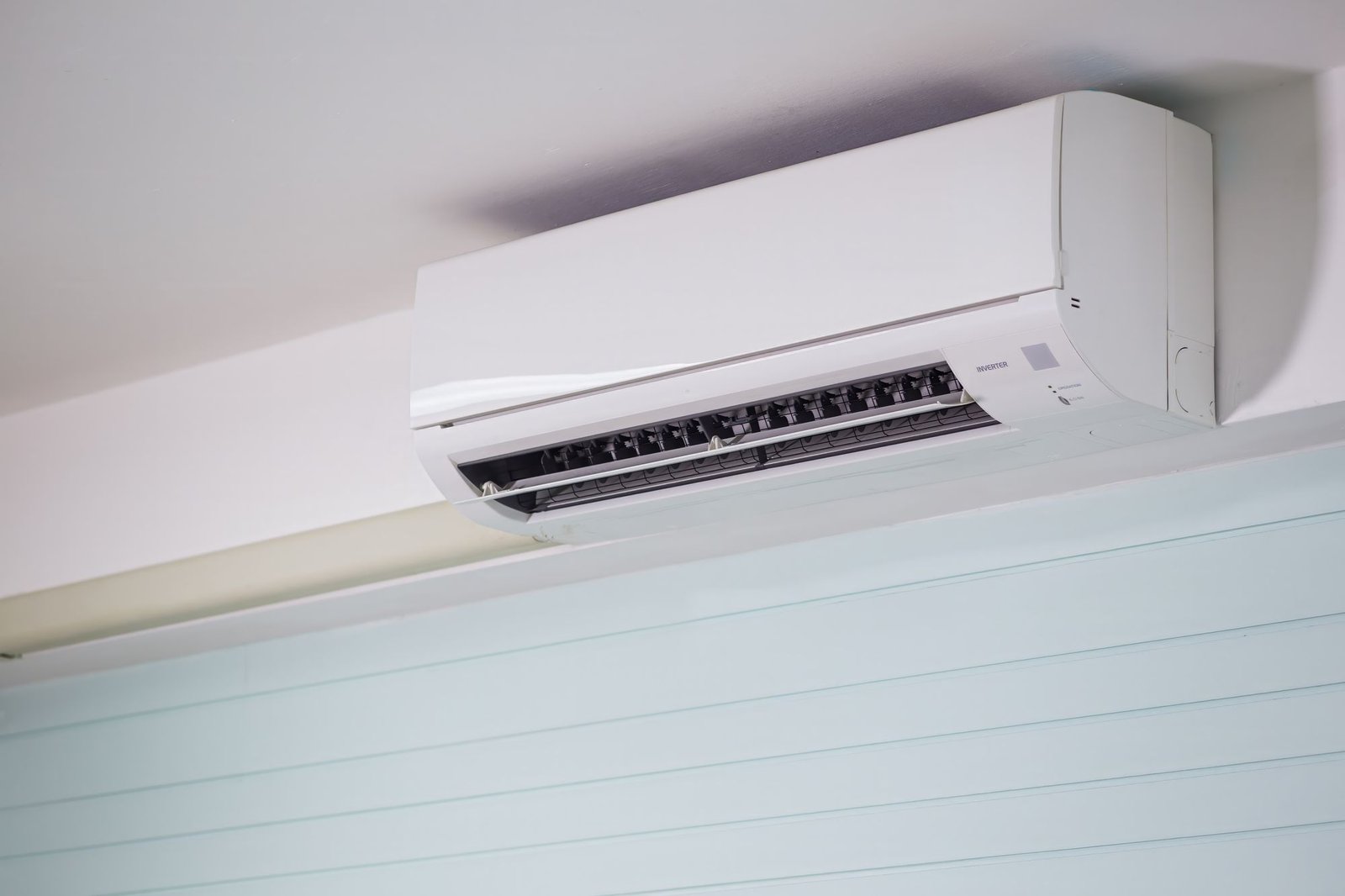
If you're choosing between a Midea and a Senville mini split, you're comparing two brands that share manufacturing DNA but differ in how they reach your house, what you pay, and how warranty claims work. Midea is a global HVAC manufacturer that builds hardware for various brands, including systems sold under its own name through contractors and big-box retailers. Senville sources units from Midea's manufacturing platform but sells them directly to homeowners online at lower prices. The single biggest difference: cost vs. warranty structure and the sales channel that ties them together.
The short answer: For a mini split in a main living area, Midea is likely the safer choice. With a contractor-based model, warranty coverage can be simpler, and there are more high-efficiency and cold-climate options. Senville might work for you if your budget is tight, you're buying for a bedroom, garage or secondary room, and you're willing to find and coordinate a licensed HVAC installer yourself. Senville units usually cost a lot less than Daikin or Mitsubishi alternatives, but Senville's published 5-year parts / 10-year compressor warranty needs a licensed HVAC pro to pressure-test and evacuate the line sets. If you install it yourself, you will lose that coverage.
What Is Midea in Mini Splits?
The brand's main strong points are a wide model range that runs from builder-grade ductless systems up to high-SEER2 cold-climate heat pumps. You can expect solid performance with an established parts and service network through U.S. suppliers. Prices are competitive when you compare them to premium Japanese brands like Mitsubishi and Daikin. Midea's premium ductless systems say they can reach up to 27.5 SEER2 efficiency. Midea's warranties can vary by model, but many residential ductless units come with about 5 years on parts and 7 years on the compressor. You can extend that to around 12 years on both if you register within 60 days and have a licensed contractor do the install.
What Is Senville and Its Midea Tie?
The core product range is split into two levels. Senville types include the budget LETO and the high-efficiency Aura series. The LETO series covers common single-zone sizes from 9k to 24k BTU at prices that are hard to beat. Senville's SEER ratings are from 16 to 22 depending on the model and series. Going after cold-climate buyers, the Senville Aura has some units rated to work at temperatures as low as -30°C (-22°F). Senville also has some multi-zone arrangements and indoor units beyond standard wall units.
On warranty coverage: Senville gives you a 5-year compressor warranty on its LETO line and a 10-year compressor warranty on many systems in the AURA and Central tiers. For this coverage to stay valid, a licensed HVAC professional has to pressure-test and evacuate the line sets. Skip that step, and the warranty is void. DIY installation voids the warranty, and this is something that's often buried under marketing that goes after budget and DIY-minded buyers. Senville units are built for Canadian market requirements and ship mainly through the brand's own website and online stores.
Midea vs Senville Mini Split Comparison
| Factor | Midea Mini Split Systems | Senville Mini Split Systems |
|---|---|---|
| Best for | Homeowners working with contractors; primary living spaces; whole-home zoning | Budget buyers shopping online; secondary spaces like a garage, office, or bedroom; buyers who can coordinate a licensed installer |
| Typical price for 12,000 BTU single-zone (equipment only) | $1,200 to $1,800 through retail or contractor; cold-climate models push above $2,000 | LETO 12k listed around $799.99; AURA 18k cold-climate around $1,599.99 (mid-2026 pricing) |
| Efficiency options (SEER2) | Broad range from \~14 SEER2 baseline up to 23+ SEER2 in multi-zone high-heat lines; premium ductless systems advertise up to 27.5 SEER2 | LETO \~21.2 SEER2 for 12k; AURA \~21.4 SEER2 for 18k; fewer ultra-high-efficiency SKUs overall |
| Cold-climate capability | Multiple low-ambient models rated to -22°F with heating capacity retained at high percentages | AURA rated to -22°F on select sizes; LETO limited to \~5°F low ambient on smaller units |
| Warranty headline | \~5 years parts / 7 years compressor standard; extendable to \~12/12 with registration and licensed install | AURA: 5 parts / 10 compressor; LETO: 5/5; Elite: 10/10; licensed installer required for line set work or warranty is void |
| Where you buy it | Contractors, wholesalers, big-box stores | Primarily online direct; some online resellers |
The pattern: Midea fits the conventional contractor channel with more model variety and a deeper service network. Senville is positioned as a budget-friendly option built on similar core hardware, sold at a lower price because you handle more of the purchase and installation logistics yourself.
Decisive Factor 1: Upfront Cost and Total Installed Price
For a 12,000 BTU single-zone system (outdoor unit plus wall-mount indoor head), Midea equipment bought through a contractor or big-box store runs about $1,200 to $1,800 depending on the SEER2 rating and whether it's a cold-climate model. Cold-climate or higher-end Midea units go past $2,000 for equipment alone. Senville's LETO 12k, by comparison, is listed at around $799.99 on the brand's website, and even the AURA 18,000 BTU cold-climate model comes in around $1,599.99. Senville units include mounting hardware and installation instructions. This is what helps keep the sticker price low.
Once you add professional labor, the equipment price gap gets smaller. A single-zone mini split installed by a licensed technician in the U.S. (including electrical work, permits, the cost of installing the line set, and mounting) usually ends up between $2,500 and $6,000 depending on site conditions. That labor cost hits you no matter which brand you pick. With Senville, you save money on the equipment but take on the job of finding and scheduling an installer who's willing to do it. With Midea through a contractor, the markup is higher, but you get sizing, design and warranty handling wrapped into one relationship.
Senville is considered a budget-friendly mini-split option, and if you are watching the bottom line, the equipment savings are real. But if you install it wrong, you can end up with system failures, refrigerant leaks and warranties that are no good, so the savings only hold up if you still put money into proper installation.
Winner: Senville on upfront equipment cost. For a 12k single-zone setup, Senville units usually cost $400 to $600 less than similar Midea hardware. This advantage depends on meeting the warranty's installation requirements and making sure the work is done right.
Decisive Factor 2: Efficiency, Climate Performance and Operating Costs
Midea's product range goes from baseline systems near the current federal minimums up through multi-zone and cold-climate lines that go past 23 SEER2. Its 36k BTU 5-zone high-heat system hits 23.1 SEER2, and Midea's direct lineup often pushes higher efficiency numbers than Senville's similar models. Heating COP on Midea's cold-climate outdoor units is around 4.1 to 4.2 at 5°F, with capacity maintained to -22°F on some models.
Senville covers the mid-range well. Delivering 21.2 SEER2 and 8.7 HSPF2, the LETO 12k is solid for a unit in the $800 range. Reaching 21.4 SEER2 and 13.4 HSPF2, the AURA 18k does even better. Compared to the LETO, Senville's Aura series offers superior low-ambient heating capability, with extreme efficiency models that heat down to -22°F. Senville has cold-climate-specific compressor configurations on these units, and this makes them suitable for Canadian buyers and northern U.S. homeowners who are dealing with harsh winter conditions.
For context on regulatory baselines: since January 1, 2023, split-system central air conditioners must meet 13.4 SEER2 in the North, but 14.3 SEER2 (under 45,000 Btu/h) or 13.8 SEER2 (45,000 Btu/h and up) in the Southeast and Southwest. In the Southwest (Arizona, California, Nevada, New Mexico), split ACs under 45,000 Btu/h also need 11.7 EER2, or 9.8 EER2 if rated 15.2 SEER2 or higher. Most modern mini splits from either brand exceed these central-air baselines by a wide margin. This is one reason ductless systems are popular in rebate programs.
Federal rules cap average off-mode power at 33 W for split-system heat pumps and 30 W for split-system air conditioners. Both brands are designed to comply, so off-mode power doesn't set them apart.
Decisive Factor 3: Warranty, Support and Who Installs It
Warranty coverage on a mini split matters because a compressor replacement alone can cost $1,500 to $2,500 in parts and labor. How the warranty works day to day, not just what it says on paper, determines whether you're actually protected.
Senville's main numbers look strong: 5-year parts and 10-year compressor on AURA and Central models. 5/5 on LETO. 10/10 on the Elite line. But dig into the warranty conditions, and a critical requirement comes up. A licensed HVAC professional must perform pressure-testing and evacuation of the line sets and release the refrigerant charge held in the outdoor unit. Skip that step, and the warranty is void. Labor is not covered under any Senville warranty tier. Senville provides "Senville Tech+" 10-year technical support for qualifying models. This helps with troubleshooting after installation, but any claim still needs proof of licensed professional installation.
Midea's warranty structure for residential ductless units usually starts at 5 years parts / 7 years compressor and can extend to about 12/12 when properly registered and installed by a licensed contractor. Labor isn't covered here either, but the warranty process tends to flow through the installing contractor or distributor. This makes claims easier. Parts availability also favors Midea. Its wide distribution network means replacement components (compressors, PCBs, fan motors) often ship from local wholesalers rather than a single warehouse.
The real-world difference: Senville buyers sometimes save money on equipment, then discover they can't file a warranty claim because they didn't hire a licensed technician for the final line set work. With Midea, working through a contractor from the start means the installation and warranty documentation are handled together. That doesn't make the Midea path foolproof. It locks you into that contractor's service relationship, and switching can be a hassle.
Winner: Midea for simple professional-install support. Senville's written warranty is competitive on paper, but the installation conditions make it easy to void. Midea is more naturally integrated into conventional contractor workflows, and parts reach you faster through its distributor network.
Decisive Factor 4: Features, Noise and Everyday Use
On noise, mid-range 12,000 BTU wall units from both brands end up in similar territory. Listed at about 23 dB(A) on low fan speed, Senville's LETO 12k is quiet enough for most rooms. Midea's similar indoor units in the "MIH" line are around 20 to 22 dB(A) on quiet mode. Outdoor units from both brands run in the mid-50s to low-60s dB(A) under load. This is typical for this price level. Honestly, both are quiet enough for a bedroom or any room where you sleep, as long as the system is sized right and the outdoor unit isn't placed directly below a window.
Midea vs Senville: Which Should You Choose?
Both brands share similar core components from the same manufacturing platform, and both give you solid performance when they're installed right. How you buy, how the warranty works and what space you're conditioning is where the difference is.
-
Choose Midea if:
-
You'd want a contractor-installed system for main living areas or whole-home zoning.
-
You prefer a simpler warranty path and don't mind paying more for design, installation and support that are wrapped together.
-
You need access to a wider range of capacities, multi-zone configurations or ultra-high-efficiency models (above 23 SEER2).
-
Choose Senville if:
-
Your top priority is to lower the upfront equipment cost for a bedroom, office, garage or secondary space.
-
You're comfortable buying equipment online and coordinating a licensed HVAC installer yourself so you can preserve the 5-year parts / 10-year compressor warranty.
-
You're in a cold climate and specifically want the AURA line's low-ambient heating down to -22°F at a price that is well below what Midea or Daikin cold-climate units cost through contractors.
Our view at minisplitbrands.com: we'd lean toward Midea for primary living spaces where you want the system working well for a decade-plus and don't want to manage the warranty process yourself. We'd lean toward Senville as a value play where budget is tight, the space is secondary and you're realistic about coordinating a licensed technician for the install. Either way, the research you do on your specific model's AHRI-certified specs matters more than the brand name on the box.
FAQs About Midea vs Senville Mini Splits
Is Senville Good Long-Term?
When they're installed correctly, Senville systems perform well for 3 to 7 years. This makes the brand a reasonable choice for bedrooms, garages, offices or secondary spaces. For primary living areas in harsh weather, the AURA line's cold-climate performance stands out, but the brand still sits below premium Japanese names (Mitsubishi, Daikin) in long-term reliability expectations of 15 to 20 years. Midea sits between Senville and the premium tier. Its higher-end models, sold through contractors, are a stronger bet for longevity.
Can You DIY Install a Senville or Midea Mini Split and Keep the Warranty?
DIY installation is possible but needs refrigerant charging. This is where warranty conditions get strict. Senville units include mounting hardware and installation instructions. You can handle mounting, running lines and drilling the wall yourself. But Senville needs a licensed HVAC professional to pressure-test and evacuate the line sets and release the pre-charged refrigerant. Skip that, and the warranty is void. Most Midea warranties you get through contractors similarly need professional installation for extended coverage. Doing it yourself usually limits you to a shorter base warranty or store return policies only.
Which Is Better for Very Cold Climates, Midea or Senville?
Both offer low-ambient heat pump models. Marketed to Canadian buyers and northern U.S. climates, Senville's extreme efficiency models heat down to -22°F. The AURA line is built for these buyers. Senville provides a 5-year compressor warranty for cold-climate units (10 years on AURA). Midea also makes cold-climate systems rated to -22°F, sometimes sold under other brands, with heating COP around 4.1 to 4.2 at 5°F in its MIH line. Choosing a specific low-ambient model with verified HSPF2 data matters more than the brand name alone.
Do Midea or Senville Mini Splits Qualify for Rebates?
Eligibility depends on the unit's SEER2 and HSPF2 ratings, capacity and whether the specific model number shows up on your utility or state program's qualified product list. Higher-efficiency Midea models appear more often on utility QPLs because Midea has more SKUs above the typical rebate cutoff. Some Senville AURA models may qualify if they meet the same cutoffs. Always check the exact model number on your local program's site before you buy.