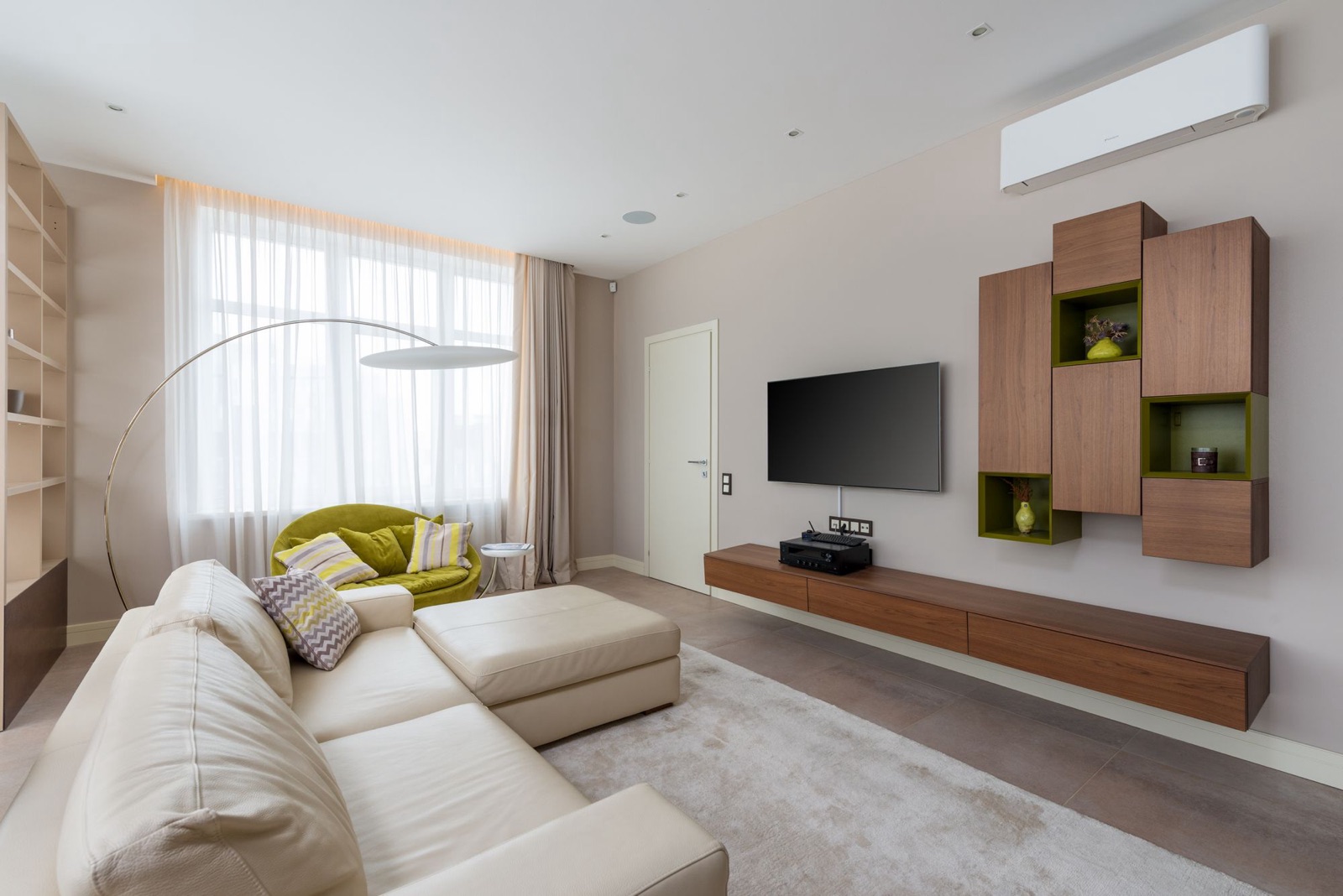
The best 18000 BTU DIY mini split for most homes in 2026 is the Zone Air 18K single-zone wall system: 23 SEER2, heating down to −13°F, a pre-charged line set made to the length you need, and final assembly, testing, and inspection in the USA. An 18,000 BTU DIY mini split is a ductless heat pump that ships pre charged with refrigerant and connects with quick-connect fittings, so a homeowner can skip the vacuum pump and the professional install. At 1.5 tons of cooling and heating capacity, these systems cover roughly 700 to 1,000 square feet, which makes them a natural fit for bonus rooms, open basements, garage workshops, and small apartments. SEER2 measures cooling efficiency, and the best 18K DIY models in 2026 now exceed 22 SEER2, cutting electricity bills compared with older ac equipment.
This article reviews the strongest 18,000 BTU DIY options available right now. Zone Air leads with US final assembly and testing, 23 SEER2 on its 18K single-zone (24 SEER2 on its 18K dual-zone wall system), custom line set fabrication up to 75 feet, and a 4.8/5 average across 157 verified customer reviews. MRCOOL's DIY 5th Gen and a handful of value imports round out the field for context. You will learn how installation works in practice, how warranties differ between brands, and how to pick the right system for your house, shop, or addition.
How We Chose the Best 18,000 BTU DIY Mini Splits (2026)
Every system on this list was evaluated using 2026 spec sheets, AHRI and ENERGY STAR efficiency data, published warranty documents and verified customer reviews. Rather than padding a generic top-10 list, we limited the selection to a few distinct choices that represent real categories of buyer need.
Key Evaluation Criteria
Performance and efficiency. SEER2 ratings above 20 are considered high-efficiency for 18K units. Inverter technology allows variable-speed operation to conserve energy, and the top DIY models now reach 23 to 24 SEER2. Zone Air's 18,000 BTU single zone wall mount is rated 23 SEER2 on its published spec sheet, above the MRCOOL DIY 5th Gen 18K wall system's 22.5. For reference, Mitsubishi's Hyper-Heating INVERTER systems achieve high SEER2 ratings as well, and the Fujitsu Altair 500 Series has SEER2 ratings between 21 and 26, but neither offers a true DIY install path.
True DIY installability. True DIY systems do not require HVAC certification for installation. Pre charged lines, quick-connect fittings, and clear manuals separate real DIY kits from units that still need a vacuum pump or an epa license. Zone Air is the only brand that offers a plug-in outlet solution for homeowners who want a system that plugs into an outlet (as of November 2026). Zone Air's plug-in kit for its 115V DIY systems lets you plug the system into an outlet. The plug-in kit combined with the 115V system makes Zone Air's the easiest systems to install on the market. The 18K itself runs on 230V, so it is hardwired.
Reliability and build quality. Zone Air is the only DIY mini split brand compared here that does final assembly, testing, and inspection in the USA (as of November 2026), so every system is checked before it ships. That is the reason the company can stand behind its warranty. MRCOOL's equipment is manufactured overseas.
Warranty strength. A warranty is only as good as the company behind it. Zone Air ships every system direct to consumer, and all warranty claims and returns / exchanges are handled directly with Zone Air. MRCOOL has no direct-to-consumer option, so you buy through a third party (dealers and distributors) and deal with that third party for warranty, replacement parts, returns and exchanges.
Owner reviews and support. Zone Air averages 4.8/5 across 157 verified customer reviews, and reviewers often mention the help they got from support ("Great customer service and support," one buyer wrote). MRCOOL's Trustpilot profile shows 3.0/5 across 94 reviews (November 2026). Customer feedback themes matter: speed of response, willingness to walk DIYers through error codes on a remote control or control board issue, and hassle-free exchanges.
Total cost of ownership. Equipment price, electrical work, accessories, and energy cost over 10+ years. Zone Air is often 15–30% cheaper than MRCOOL while delivering higher efficiency on comparable systems, before factoring in lower electricity consumption from the higher SEER2 rating.
Future-proofing. R-454B is the current refrigerant standard, with lower global warming potential than what came before. Both Zone Air and MRCOOL ship with R-454B, which sits under the EPA's global warming limit for residential air conditioners and heat pumps made since 2025.
Best 18,000 BTU DIY Mini Split Systems for 2026
Below are three picks at the 18,000 BTU size, led by Zone Air, followed by a look at how MRCOOL's DIY 5th Gen compares. Rankings prioritize DIY-friendliness, efficiency and warranty, not brand name recognition.
1. Zone Air 18,000 BTU DIY Inverter (Single Zone)
Zone Air's 18K BTU single zone system is built for homeowners who want high efficiency and a warranty handled by the company that built the unit. Every system goes through final assembly, testing, and inspection in the USA before shipping, and verified customer ratings average 4.8 out of 5 stars.
The system uses pre-charged R-454B refrigerant with quick-connect fittings, so you can install it yourself without a vacuum pump, gauges, or EPA Section 608 certification. It ships direct to your door from Zone Air, and all warranty claims, returns, and exchanges go through the same company.
Why It Stands Out
Zone Air does final assembly, testing, and inspection in the USA, so every system is checked before it ships. That's why the company can stand behind its 5-year parts / 7-year compressor warranty, which stays in force when you install the system yourself.
Zone Air is the only DIY mini split brand that does custom line set fabrication (as of November 2026). If your outdoor unit sits 47 feet from the indoor head, which is pretty common in ranch homes or detached garages, Zone Air builds a single-run pre-charged line set to that exact length, up to 75 feet. MRCOOL reaches longer runs by joining an extension line set to the first one with a coupler. Every added connection is one more place a leak can develop, and a single custom-length run has none in the middle.
At 23 SEER2, Zone Air's 18K single-zone is more efficient than the MRCOOL DIY 5th Gen 18K wall system at 22.5 SEER2, and it's well above value imports in the 18 to 20 SEER2 range. Higher SEER2 means lower electricity use and lower utility bills, so the gap adds up over a decade of use.
The system heats down to −13°F and cools in outdoor temperatures up to 131°F. It also supports Wi-Fi app control with Alexa and Google Home voice commands, plus Follow Me sensing on the remote.
Best For
- Homeowners who want an 18,000 BTU DIY ductless system that is efficient and comes with a strong warranty and direct support from the manufacturer
- Buyers who want to purchase equipment from the same company that handles warranty, replacement parts and tech support, with no distributor in between
- Installers who need a line set that isn't the usual length (33 ft, 47 ft, 68 ft) for a detached garage workshop, a long ranch home or a bonus room above a roof line
- One large open room that is up to about 900 square feet
Key Strengths
- Final assembly, testing, and inspection in the USA on every system
- 23 SEER2 at 18K BTU capacity
- Custom single-run line sets up to 75 feet, with no couplers in the run
- Direct-to-consumer model: one point of contact for purchase, support, warranty, returns
- 4.8/5 average rating across 157 verified reviews
- Heats down to −13°F for cold weather performance
Possible Limitations
- You won't find it on big-box store shelves. You can buy it from zone-air.com (or through distributors and Amazon)
- DIY still means safe mounting (the indoor head usually goes high on a wall), running the drain line, and planning the electrical. A lot of owners hire an electrician for the dedicated 230V circuit, since the plug-in kit only works with the 115V 9K and 12K models, not the 18K
- Higher upfront price than bare-bones units from abroad
2. Zone Air 18,000 BTU DIY Multi-Handler Ready System
Zone Air's 18,000 BTU dual zone system (9K+9K) runs two indoor heads off one outdoor unit, allowing room-by-room zoning (more in our dual zone DIY guide). It uses the same 27,000 BTU outdoor unit as the rest of Zone Air's 2- and 3-zone line. That outdoor unit takes wall, concealed ducted and ceiling cassette heads. This is the pick for homeowners who want to condition two or three separate spaces without installing two condensers on the roof or pad.
Why It Stands Out
As of November 2026, Zone Air is the only DIY mini split that lets you mix wall-mount, ceiling cassette and concealed ducted units on one outdoor unit. You can build that mix in the system builder. MRCOOL's ducted DIY option is a central air handler that is sized for a whole home. It is not the same thing as Zone Air's concealed ducted mini split. Built to serve a single room, or two or three small ones, Zone Air's concealed ducted mini split is made for that kind of space.
Each zone gets its own pre-charged quick-connect line set, and the line set is cut to the length that room needs (5–75 ft). No daisy-chained extension fittings. For a multi zone DIY setup, the efficiency stays strong: you get 24 SEER2 with wall heads, 21 with cassettes and 19 with a concealed ducted pair.
Best For
- Homeowners converting a finished basement plus a bonus room, or adding both a garage workshop unit and a home office unit off one condenser
- If you care about looks and you're after concealed or cassette indoor units in your main living areas
- DIYers planning step-by-step upgrades. Per Zone Air's FAQ, you can add a head later on a spare port so you don't have to replace the condenser
Key Strengths
- Mixing wall, cassette and concealed indoor unit types on one condenser
- 24 SEER2 with wall heads
- Final assembly, testing, and inspection in the USA, the same as Zone Air's single zone systems
- A custom-length line set for each zone keeps the number of places where you have to make connections down to a minimum
- You get the same 5-year parts warranty and the same 7-year compressor warranty, plus the same direct support model
- Each zone gets its own thermostat to control it and its own Wi-Fi control
Possible Limitations
- Installation complexity increases with each added indoor unit; novice DIYers may want a pro install for layouts with three heads
- You need to be careful with sizing and with planning the layout so you don't oversize the heads for individual rooms
- Compared with a single zone unit, the system costs more and you shouldn't over-zone a small house where one 18K head would cover the whole space.
3. Value Import 18,000 BTU "DIY-Style" Kits (Generic Marketplace Brands)
There's a bunch of low-cost 18K BTU kits on Amazon and similar sites that say "DIY" on the label, but a lot of them still need a vacuum pump, flare fittings or partial professional commissioning. Pioneer is one of the brands here. There are a lot of lesser-known labels too. Senville sells in this space too, though Senville installations need EPA Section 608 certification and a licensed technician to do the refrigerant work. Senville also needs specialized tools like a vacuum pump, so it's not a true pre-charged DIY system.
Why It Stands Out
Upfront price is the draw. Kits sometimes land under four figures. Senville's LETO model is priced around $799.99 for a 12K BTU unit; Senville systems range from $700 to $900 for 12K BTU, though 18K models cost more. SEER2 ratings on these models typically sit around 18 to 20. The Senville LETO is rated 21.2 SEER2, which is respectable but below Zone Air's 23.
Best For
- Highly skilled DIYers who've got HVAC tools and experience, plus an EPA license so they can evacuate and charge a system themselves.
- Situations where you care more about getting the lowest upfront cost than about long-term warranty, support or getting the highest efficiency.
Key Strengths
- The lowest price for the equipment at the 18K BTU size.
- Reasonable starting performance for mild climates and part-time usage, like seasonal cabins or hobby spaces.
- There is a wide variety of basic models out there, though the quality of the documentation varies. When you compare Senville, Pioneer and the others, the features you get are pretty similar.
Possible Limitations
- If you self-install a Senville, it voids the warranty. Senville has a 5-year warranty on parts, but that is only with professional install. That is different from Zone Air and MRCOOL, where a DIY install keeps the warranty intact.
- There's no US final assembly and testing step like Zone Air has.
- Senville's lower price works out if installation runs under $1,150, but once you add a licensed HVAC technician for the refrigerant work and vacuum pump operation, the total often gets close to or passes what you'd pay for a true DIY system like Zone Air.
- It can be tough to find matching replacement parts years later when the brand on the box changes from year to year.
- Efficiency is lower over the system's life. The energy savings from a 23 SEER2 Zone Air system can beat the upfront savings of an 18 SEER2 import within a few years if you use it heavily.
MRCOOL DIY 5th Gen 18K Comparison
MRCOOL's DIY 5th Gen 18K wall system is the other pre charged quick-connect option at this size. Its standard 18K wall mount lists at 22.5 SEER2 and 11.5 HSPF2, and MRCOOL's 18K multi-zone condenser reaches 23.9 SEER2. The single-zone kit comes with a 25 ft pre-charged QuickConnect line set, and MRCOOL says no special tools or training are necessary to install it.
Line sets come in fixed 11.5, 16, 25, 35 and 50 ft lengths, with couplers to join sets when one standard length isn't enough (up to 75 ft per indoor unit). The manual has you coil the excess behind the condenser.
MRCOOL rates the standard DIY 5th Gen to about −13°F, and higher-tier MRCOOL DIY models are rated lower. Zone Air's floor is also −13°F. In ENERGY STAR's listing, the 18K wall system holds 12,800 BTU/h at 5°F, which is about 71% of its rated capacity.
MRCOOL's DIY 5th Gen warranty is 5 years parts and 7 years compressor with no registration required, and self-installation does not void it. That's the same headline term as Zone Air. The difference is who you deal with: MRCOOL sells through dealers and distributors only, so warranty claims, replacement parts, returns and exchanges go through the seller. On Trustpilot it's at 3.0/5 across 94 reviews (November 2026), and reviewer themes include slow or no support response and shipping charges on warranty replacement parts.
MRCOOL's DIY multi-zone mixes wall and ceiling cassette heads, but it has no concealed-duct DIY head. Its ducted DIY option is the Hybrid Air Handler, which is a central unit for a whole home.
For comparison, Mitsubishi Electric makes some of the most reliable systems on the market, and Mitsubishi offers a 10 to 12-year warranty with professional installation. But mitsubishi units require a licensed hvac technician and professional install, so they're a poor fit for the DIY buyer. The same applies to Fujitsu. These are pro-install brands. Zone Air and MRCOOL both sell pre charged systems a homeowner can install, and at 18K Zone Air pairs that with the higher SEER2 and direct support.
Quick Comparison of the Best 18,000 BTU DIY Mini Splits (2026)
If you want a fast answer, here is each option in one line:
- Zone Air 18,000 BTU DIY Inverter (Single Zone): Best overall for homeowners who want 23 SEER2, final assembly, testing, and inspection in the USA, and direct-to-manufacturer warranty support, often at 15–30% less than MRCOOL.
- If you want to expand room by room with mixed wall, cassette and concealed heads on one outdoor unit, the Zone Air 18,000 BTU DIY Multi-Handler Ready is the best choice for flexible expansion.
- Value Import 18,000 BTU Kits: Best for experienced installers who already have hvac tools and are willing to accept limited support and warranty trade-offs in order to get the lowest upfront cost.
- For comparison, the MRCOOL DIY 5th Gen 18K: 22.5 SEER2, a 25 ft pre-charged line set, 5/7-year warranty, sold through dealers and distributors.
How to Choose the Right 18,000 BTU DIY Mini Split
The right pick is going to depend on your room size, electrical setup, climate and how much of the install you plan to handle yourself. Below are the four decisions that matter most.
Pick by Room Size, Layout and Insulation
An 18,000 BTU system is enough for most garages, bonus rooms, open basements and small apartments. But a garage workshop in Phoenix with poor insulation needs a different calculation than a well-sealed bonus room in Virginia. Getting the size right keeps it from short-cycling when it's too big or from not putting out enough when it's too small.
You can use an online BTU calculator as a starting point, such as Zone Air's sizing calculator, then contact Zone Air's support team to confirm the final sizing for your space. If your house layout calls for cooling two separate rooms with different loads, a Zone Air multi zone system with individually sized heads is a better path than one oversized single zone head trying to push cool air around corners.
Pick by Electrical and Installation Path
Most high-efficiency 18K systems operate on 230V power. Zone Air's 18K and MRCOOL's 18K both run on 208/230V and need a dedicated circuit sized to the spec sheet.
If you already have a 230V circuit near the condenser location, the electrical work is pretty minimal. If you don't, hiring an electrician for conduit, disconnect and breaker installation may cost several hundred dollars. Zone Air's 115V models with the plug-in kit solve this for smaller BTU sizes, but the 18K is 230V only.
Zone Air's custom line sets save you from coiling up excess line or buying extension fittings. If your outdoor unit sits 40 feet from the indoor head, Zone Air fabricates a 40-foot pre charged line set. With MRCOOL, you'd join the included 25-foot set to a second set with a coupler and coil whatever is left over, which adds an extra connection point where leaks can develop.
Pick by Efficiency and Long-Term Operating Cost
Electricity consumption is lower with higher SEER2 ratings. A 23 SEER2 Zone Air 18K uses roughly a fifth less cooling energy than an 18 SEER2 import. Over 10 to 15 years of regular use, that gap can amount to hundreds or thousands of dollars, depending on your electricity rate and climate.
If you run the system year-round for both heating and cooling, HSPF2 matters too. Zone Air is rated to −13°F, which is the same floor as MRCOOL's standard DIY 5th Gen, and higher-tier MRCOOL DIY models are rated lower. In climates where winter temperatures regularly drop below 0°F, you should check the rated heating output at 5°F. MRCOOL's 18K delivers about 12,800 BTU/h at that temperature, which is roughly 71% of its rated capacity. Below that, supplemental heat may be needed.
R-454B is common in modern systems from both Zone Air and MRCOOL, and its lower global warming potential is why it replaced the older refrigerant in new equipment.
Pick by Warranty and Support Experience
Zone Air handles every warranty claim, exchange and return directly. You don't get the runaround from a retailer or stuck in a distributor phone tree. Its 5-year parts and 7-year compressor warranty has no registration deadline, and it stands whether you install the system yourself or hire someone, as long as you follow the published specs. You can return uninstalled units within 30 days under the returns policy. Zone Air averages 4.8/5 across 157 verified reviews, and reviewers often mention the help they got from support with installation questions or the occasional error code on a control board.
MRCOOL's DIY 5th Gen warranty terms are the same on paper (5 years parts, 7 years compressor, no registration), but claims go through whichever dealer or distributor sold you the unit. On Trustpilot, reviewer themes as of November 2026 include slow or no support response and shipping charges on warranty replacement parts. This gap in support matters more in DIY installs, because you may need guidance on error codes or remote control pairing that an hvac tech would handle on a professional install.
Zone Air's direct model means one company handles the sale, the warranty, the parts and the returns, and that is a big reason its reviewers keep bringing up support.
Which 18,000 BTU DIY System Is Best for You?
Your priorities determine the answer. Here is a short breakdown:
- Choose the Zone Air 18,000 BTU DIY Inverter if you want the best all-around 18K DIY system in 2026. It delivers 23 SEER2, final assembly, testing, and inspection in the USA, a custom-length line set with no couplers, and a warranty and support experience handled directly by Zone Air. It is also often 15–30% cheaper than MRCOOL on comparable systems. This is the right system if you want to buy once and not worry.
- Choose the Zone Air 18,000 BTU DIY Multi-Handler Ready if you plan to condition multiple rooms with a mix of wall, cassette and concealed indoor units over the next few years using one outdoor unit. As of November 2026, no other DIY mini split has that mix.
- Only choose a value import 18,000 BTU kit if you are an experienced installer with hvac tools, can legally install and commission a non-pre-charged system, and are willing to trade warranty strength and long-term efficiency for the lowest upfront purchase price.
Final Thoughts
The 18,000 BTU DIY mini split market in 2026 splits into two tiers. On one side are brands like Zone Air and MRCOOL that ship genuine pre charged DIY systems with real warranties. On the other are flare-fitting imports that look cheap until you add professional installation, lower efficiency, and weaker support to the total cost.
For most homeowners, a Zone Air 18K DIY system offers the best balance of ease of install, efficiency, warranty, and price. Final assembly, testing, and inspection in the USA means every system is checked before it ships. Custom line sets mean fewer connection points. Direct-to-consumer support means one company for everything.
Before you purchase, take 20 minutes to measure your space, check your electrical panel for available circuits, and reach out to Zone Air's support team for a sizing recommendation and custom line set quote. Getting those details right before you order is the difference between a smooth weekend install and a frustrating callback. Compare Zone Air's 18K DIY models and get a project-specific recommendation at zone-air.com.