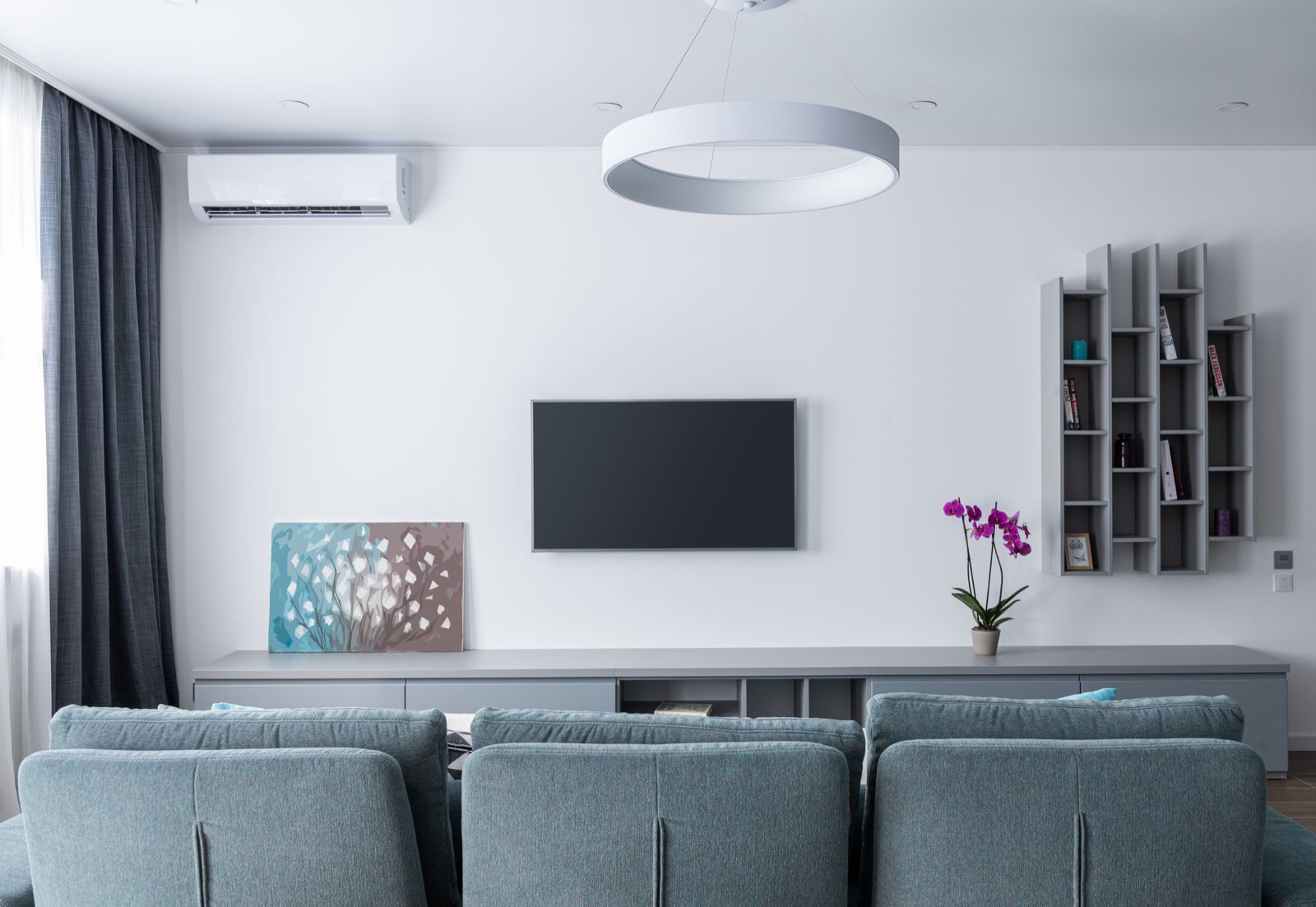
Introduction: The 2026 DIY Multi‑Zone Mini Split Landscape
The best DIY multi zone mini split system for most homeowners in 2026 is Zone Air. It runs at 24 SEER2 with wall-mounted heads, cuts each pre-charged line set to the length you measure, lets you mix wall, ceiling cassette and concealed ducted units on one outdoor unit, and sells direct to the homeowner. The other systems people compare it with are MRCOOL DIY, Pioneer and Senville, each with distinct trade-offs in price, installation complexity and climate performance.
DIY multi zone mini split systems have become one of the fastest-growing categories in home comfort. These ductless heat pumps use a single outdoor condenser to serve multiple indoor air handlers across different rooms, giving homeowners independent temperature control per zone without running ductwork. Multi-zone mini-split systems typically share a single outdoor condenser, which keeps the footprint small and installation manageable for non-professionals. Ductless mini-split systems allow for different indoor unit styles, so you can adjust cooling and heating to each space in your house.
This guide focuses specifically on DIY-friendly multi-zone systems, not general ductless setups or professionally installed equipment from brands like Mitsubishi (whose premium models achieve high SEER2 ratings but require professional installation and carry significantly higher costs). The brands here were selected based on real DIY adoption, feature differentiation, warranty clarity and support quality, with all pricing and specs current to November 2026.
How We Chose the Best DIY Multi Zone Mini Split Systems
Not every line of mini splits from each brand is a true DIY multi-zone solution. Some of them need you to have an EPA license, or special tools or to hire a licensed HVAC technician to do the refrigerant work. We filtered for systems that you can actually install with basic tools and, at most, an electrician for the dedicated circuit.
How We Evaluated These Systems
DIY Install Friendliness. The dividing line is whether a system ships with pre-charged, quick-connect refrigerant line sets or requires a vacuum pump and gauges. DIY mini split kits often need no vacuum pump because pre-charged line sets simplify the installation. Multi-zone systems run on a dedicated 230V electrical circuit, so we also looked at what each brand offers for rooms where a simpler electrical path matters.
Energy Efficiency. High SEER2 ratings indicate energy efficiency in mini-split systems. SEER2 replaced SEER in January 2023 under updated DOE testing, and a SEER2 rating of 18 or higher is good for daily use. In this comparison, Zone Air's multi-zone system is rated 24 SEER2 with wall-mounted heads, MRCOOL DIY multi-zone is rated 21.8 to 23.9 SEER2 depending on the condenser, and Pioneer and Senville multi-zone units often sit in the high teens to low 20s.
System Flexibility. Mix-and-match options for indoor units let you customize multi-zone systems. Zone Air is the only DIY mini split that lets you mix wall-mount, ceiling cassette and concealed ducted units on one outdoor unit (as of November 2026). MRCOOL DIY multi-zone mixes wall-mounted and ceiling cassette heads.
Lineset Options. Line sets for mini-split systems are usually available in fixed lengths, which means extra coiling or coupler extensions. Installation can be affected by line set management in multi-zone setups because each additional connection point is one more place a leak can develop. Zone Air's custom fabrication avoids this by building each line to the exact length, any whole foot from 5 to 75 ft, in a single run.
Cold-Climate Performance. We compared heating floors: standard DIY units rated to -13°F, some higher-tier models rated down to -22°F, and brands only rated to 5°F. In cold climate zones, the ability to produce heat reliably below zero is critical.
Reliability & Warranty. Mitsubishi offers 10 to 12 years warranty on parts at the premium tier, but among DIY brands we compared compressor and parts coverage, claim processes and whether you deal directly with the company or through distributors.
Pricing & Total Value. We compared realistic kit costs for the same number of rooms. Zone Air is often 15–30% cheaper than MRCOOL while delivering higher efficiency on comparable systems.
Support & Reviews. Zone Air averages 4.8/5 across 157 verified customer reviews. MRCOOL's Trustpilot profile shows 3.0/5 across 94 reviews (November 2026). Pioneer and Senville have thinner DIY-specific review bases.
The 4 Best DIY Multi Zone Mini Split Systems in 2026
After you filter out pro-only systems and weak DIY options, four options stay worth comparing for multi-zone projects: Zone Air, Pioneer, Senville and MRCOOL DIY Multi-Zone. For DIY multi-zone use specifically, the first three are listed in order. MRCOOL DIY is covered after them as a side-by-side comparison, because most of you look at it next to Zone Air.
1. Zone Air DIY Multi-Zone - Best Overall DIY Multi Zone System
Zone Air is the top choice for most DIY homeowners planning a multi-zone project. Zone Air does final assembly, testing, and inspection in the USA, at its Salt Lake City, Utah facility, so every system is checked before it ships. That is the reason the company can stand behind its warranty. With 24 SEER2 efficiency on wall-mounted heads, a 4.8/5 average customer rating, and direct-to-consumer support, this is where the DIY mini split wins on nearly every metric that matters.
Why It Stands Out
Zone Air is the only DIY mini split brand compared here that does final assembly, testing, and inspection in the USA (as of November 2026). That quality control is a big part of why their reviews are consistently positive.
Zone Air is also the only DIY mini split brand that does custom line set fabrication. You provide your measurements, and they build each pre-charged refrigerant line to the exact line set length you need, up to 75 ft in a single continuous run. No couplers, no extension kits, no excess coil behind the condenser. MRCOOL reaches longer runs by joining an extension line set to the first one with a line set coupler. Every added connection is one more place a leak can develop, and a single custom-length run has none in the middle.
Zone Air is the only DIY mini split that lets you mix wall-mounted, concealed ducted mini split air handlers, and ceiling cassette heads on the same condenser (as of November 2026). MRCOOL's ducted DIY option is a central air handler sized for a whole home. It's not the same thing as Zone Air's Thin-Air concealed ducted mini split, which is built to serve a single room or two or three small ones. It's important to consider the BTU output matching the room size for mini-split systems: a Zone Air 12,000 BTU head covers up to 600 sq ft, and Zone Air's spec sheet library makes it easy to size each zone correctly.
Zone Air is also the only brand that offers a plug-in outlet solution for homeowners who want a system that plugs into an outlet. Zone Air's plug-in kit for its 115V DIY systems (the 9K and 12K single-zone models) lets you plug the system into a dedicated outlet where local electrical code allows, instead of hardwiring it. The plug-in kit combined with the 115V system makes Zone Air's the easiest systems to install on the market. It's a good fit for one extra room next to a multi-zone system. The multi-zone systems themselves run on 230V.
On price, Zone Air's dual-zone 24,000 BTU wall-mount system is $3,039.99 (November 2026). MRCOOL dual-zone kits built on its 18K condenser with two 9K heads were listed at about $3,110 to $3,230 at retail in October 2026, with lower total BTU capacity. Zone Air is often 15–30% cheaper than MRCOOL while delivering higher efficiency on comparable systems.
Zone Air heats down to -13°F and cools in outdoor temperatures up to 131°F on every system.
Best For
- Homeowners who are planning 2 or 3 zones on one outdoor unit and want the most flexibility in the types of indoor units they can use (wall, concealed or cassette) on a single condenser
- DIYers who want exact-length linesets pre-built for their layout to avoid quick-connect extensions
- Buyers who prefer to deal directly with the manufacturer when they need warranty help, parts, repairs or to make a return
- People in mixed or cold climates who care about long-term efficiency and can get 24 SEER2 with wall-mounted heads
Key Strengths
- 4.8/5 average rating across 157 verified customer reviews
- 24 SEER2 with wall heads on 230V, against MRCOOL's 23.9 (18K condenser) and 23 (27K condenser)
- Custom linesets that come factory-charged for a single run up to 75 ft, with no connection required in the middle of the run
- True mix-and-match of wall heads, concealed ducted mini splits for room-scale use, and ceiling cassette heads
- Optional 115V plug-in kit for the 9K and 12K single-zone systems, so you can use outlet power where the code allows it
- Every system is shipped direct to you as the consumer. All systems come pre-inspected, and all warranty claims and returns / exchanges are handled directly with Zone Air
- 5-year parts and 7-year compressor warranty with no registration deadline, and installing it yourself does not void it
- 30-day returns on uninstalled units and free shipping to the lower 48 states
Possible Limitations
- Sold online, not in big-box stores. Delivery is by freight
- The 115V plug-in kit is limited to the 9K and 12K single-zone systems and must still meet local electrical code
- Custom linesets need accurate measurements up front. Changes after shipment may need replacement lines
- Ceiling cassette heads and concealed ducted heads have lower ratings than wall heads (the cassette has a rating of 21 SEER2, and the concealed ducted has a rating of 19 to 22).
2. Pioneer Multi-Zone (Traditional Install) - Best for Budget Owners with Some HVAC Skills
Pioneer's multi-zone systems are popular online and they have low prices, but they are not true plug-and-play DIY. Pioneer and Senville need traditional installation with specialized tools, including a vacuum pump, gauges and flaring equipment. You'll either need an EPA license or you'll need to pay a local HVAC tech for the refrigerant work. Pioneer has a 5-year warranty on parts.
Why It Stands Out
- There's lower equipment pricing, especially at 3–4 zones
- Pioneer units usually have SEER2 ratings between 19 and 21, and that is enough for most moderate climates.
- Pioneer mini splits need traditional installation with specialized tools, but you can still do the mechanical mounting and the running of the lines yourself as DIY
Best For
- DIYers who've got refrigeration tools, or those who don't mind hiring a local tech for evacuation and charging
- Owners who care most about upfront cost savings over installation ease
- Projects in mild to moderate climates where heating in extreme cold isn't the main thing you need
Key Strengths
- Attractive equipment pricing on similar zone counts
- Decent efficiency numbers for most regions
- A broad catalog with many combinations of capacity and zone count from the Pioneer product catalog
Possible Limitations
- Not a true DIY refrigerant solution. Systems have to use professional installation tools to protect warranty
- Linesets are not custom-fabricated. Installers must manage unused coils and field flaring
- Warranty often depends on having professional documentation, so hybrid DIY installs can get tricky
- Cold-climate heating is generally not as strong as the top low-ambient models. It is not ideal for reliable heat below 0°F
3. Senville Multi-Zone - Best Low-Cost Option with a Tech
Senville goes after you if you are watching your budget with its LETO and Senville Aura lines. With its multi-zone systems, you get solid performance at some of the lowest per-zone prices you'll find from a brand you know.
That said, these are systems that are installed the usual way with no pre-charged quick-connect linesets, so you'll need a licensed HVAC technician or at least someone with refrigerant handling credentials. Senville gives you a 7-year warranty on the compressor and 2 years on parts.
Why It Stands Out
- Some of the lowest per-zone equipment prices, especially during a sale
- Senville Aura mini splits offer heating performance that works in cold climates. The Senville's AURA series can heat down to 5°F on certain models
- Increasingly common in DIY-adjacent installs where you take care of the mounting and a tech takes care of the refrigerant
Best For
- Cost-sensitive homeowners who plan to hire an HVAC technician for the refrigerant part
- Buyers in moderate to cool climates seeking a budget alternative
- DIYers comfortable doing mounting, sleeving and conduit work but not refrigerant handling
Key Strengths
- Competitive SEER2 ratings (often 19–21+) at lower price points
- There is a reasonable compressor warranty with online support channels
- More and more user reviews are coming in. They show these systems working well in moderate climates for you
Possible Limitations
- There are no true DIY quick-connect kits. You still need a vacuum pump, and an EPA-certified tech is still required
- Warranty claims often go through retailers. That adds steps
- Fit, finish and QC can feel less polished
- On budget models, the options for fan speed and inverter control can be more limited than they are on premium brands
MRCOOL DIY Multi-Zone
MRCOOL DIY is not one of the ranked picks. It's here because it's the system you most often compare with Zone Air, and both use pre-charged quick-connect line sets so you don't need a vacuum pump. These are the facts, side by side.
What MRCOOL DIY Multi-Zone Offers
- Multi-zone condensers in 18K (up to 3 zones), 27K (4 zones), 36K (5 zones), 48K (6 zones) and 55K (6 zones). That's more zones on one condenser than Zone Air, which runs 2 or 3
- Pre-charged Quick-Connect line sets. MRCOOL's catalog says no special tools or training are necessary to install
- The MRCOOL 18K condenser has a SEER2 of 23.9, the 27K and 36K are at 23, the 48K is at 21.8 and the 55K is at 22. Zone Air's multi-zone is 24 with wall heads
- The 18K to 48K condensers heat down to -13°F, the same floor as Zone Air. The 55K is rated to -22°F
- 5-year parts and 7-year compressor warranty with no registration required, the same headline term as Zone Air
- You can mix wall-mounted heads and ceiling cassette heads on one condenser.
- There's voice control with Alexa and Google Assistant.
Where It Differs From Zone Air
- Linesets come in fixed lengths (11.5, 16, 25, 35 and 50 ft). For longer runs, up to 75 ft per indoor unit, you use a coupler to join two sets and coil the excess per the manual. With a single run built to the foot, Zone Air gives you one lineset that fits your exact length.
- MRCOOL is a more retail-availability-oriented company. It has no direct-to-consumer option, so you have to purchase through a third party (distributors), which means dealing with that third party for warranty, replacement parts, returns and exchanges
- MRCOOL's Trustpilot profile shows 3.0/5 across 94 reviews (November 2026), and people there describe slow or no support response and warranty claims turned down on self-installed units.
- No concealed ducted DIY head. MRCOOL's ducted DIY unit is the central Hybrid Air Handler. It is not a room-scale concealed mini split like Zone Air's Thin-Air line.
Quick Comparison of the Best DIY Multi Zone Mini Split Systems
Here's a quick overview of how the four systems stack up for DIY multi-zone projects in 2026:
- Zone Air DIY Multi-Zone - Best overall for most DIY homeowners. Top efficiency of the quick-connect systems compared here (24 SEER2 with wall heads), final assembly, testing, and inspection in the USA, custom linesets up to 75 ft single run, true mix-and-match indoor units, and direct-to-consumer support with a 4.8/5 average rating.
- Pioneer Multi-Zone is best for budget-focused owners who have HVAC tools or a local tech who will work with you. You can save good money on the equipment cost, but it is not a true DIY refrigerant solution.
- Senville Multi-Zone - Best low-cost multi-zone if you'll hire a pro. It's a strong value for hybrid DIY plus contractor projects in non-extreme climates.
- MRCOOL DIY Multi-Zone is compared, not ranked. It has pre charged Quick-Connect lines, and you can put up to 6 zones on one condenser. It has wall heads and cassette heads, and the line sets come in fixed lengths with couplers you can use for longer runs. The warranty is handled through distributors, and the brand has a Trustpilot score of 3.0/5.
How to Choose the Right DIY Multi Zone Mini Split System
Specs matter, but translating them into the right purchase decision means weighing three factors against your specific situation.
Choose Based on Installation Path & Tools
The fundamental question is whether you want a true DIY refrigerant-safe system, or if you're fine hiring a tech for part of the job. Zone Air and MRCOOL DIY both ship with pre charged quick-connect lines, so you don't need a vacuum pump or gauge set for the install. Pioneer and Senville require professional install for the refrigerant side.
Zone Air's custom pre charged lines make it the easiest real-world install for multi-zone, because every line arrives at the length the room needs. You still need to evaluate electrical panel capacity before installing multi-zone systems, and installation requires a dedicated 230V circuit (30A double-pole on Zone Air's multi-zone outdoor unit). If your house doesn't have panel room, that's a conversation with an electrician before you shop.
For most people, the answer is to confirm their panel capacity first, then choose the system.
Choose Based on Efficiency, Cost and Climate
SEER2 is what drives your monthly electric bill. With a 24 SEER2 rating on its wall heads, Zone Air gives you a lower operating cost per BTU than MRCOOL DIY multi-zone at 21.8 to 23.9, or Pioneer and Senville in the high teens to low 20s. Zone Air's cassette and concealed ducted heads rate lower than its wall heads, at 19 to 22 SEER2.
If you're in a cold climate and need to produce heat reliably at sub-zero temperatures, you should prioritize the low-temperature rating and high HSPF2. Heating down to -13°F, Zone Air's DIY multi-zone line hits the same floor as MRCOOL's standard DIY multi-zone condensers, and higher-tier MRCOOL DIY models are actually rated lower. In moderate climates, price and comfort matter more than extreme cold ratings.
Fewer connection points from custom linesets (Zone Air) also help keep operating costs stable over the system's lifespan, since even small refrigerant leaks degrade efficiency gradually.
Choose Based on Support, Warranty and Buying
Zone Air has its own warranty that it handles directly, with no go-betweens and no middleman to deal with. That matters when you're mid-install on a Saturday and you need a quick answer, or when you need a replacement part shipped fast. Reviewers often bring up the help they got from support. One person wrote, "Big thanks to Nate in customer service for helping me choose the 230 volt."
MRCOOL's warranty and replacement parts go through the distributor or retailer you bought from. Pioneer and Senville warranties can need proof of professionally installed systems or specific documentation. That makes hybrid DIY approaches harder.
With the pre-inspected, direct-ship model of Zone Air, you don't have to worry about the unknowns that come with buying through third parties. For state and utility rebates, clear manufacturer documentation makes the paperwork easier regardless of brand. The federal 25C tax credit ended for equipment placed in service after December 31, 2025.
Which system is best for you?
- Choose Zone Air DIY Multi-Zone if you want the best all-around package: final assembly, testing, and inspection in the USA, 24 SEER2 with wall heads (the highest of the pre-charged quick-connect brands compared here), custom linesets, ability to mix wall, concealed, and cassette heads, and direct, highly rated support, often 15–30% cheaper than MRCOOL on comparable systems.
- Choose Pioneer Multi-Zone if what matters most to you is getting the equipment for a low price. You either already own HVAC tools or you know a local tech you trust who can do the evacuation and commissioning for you. With a Pioneer system, the purchase is cheaper upfront, but you'll pay for professional help.
- Choose Senville Multi-Zone if you want the lowest possible price on a multi-zone system and you already plan to have a professional handle the entire refrigerant side of the installation. Senville fits fine in a garage workshop, a guest room or a bonus space that doesn't need premium efficiency.
Final Thoughts
All four brands can cool and heat your house effectively. The separation comes down to installation path, lineset strategy, efficiency, and support. A system that's cheaper to buy but harder to install, adds connection points where a leak can develop, or leaves you working through a distributor on warranty claims isn't actually a good deal.
For most DIY homeowners planning a multi-room or whole-home project in 2026, Zone Air stands out as the strongest overall choice. Final assembly, testing, and inspection in the USA, custom single-run linesets, true mix-and-match indoor options, 24 SEER2 with wall heads, and direct support with a 4.8/5 average rating create a package that none of the other brands compared here matches right now.
Before you order, map your rooms, measure line distances carefully (especially if choosing custom linesets from Zone Air), and confirm your electrical panel can support the system. As refrigerant regulations tighten under the AIM Act and efficiency standards continue climbing, selecting a future-ready, high-efficiency DIY multi-zone system protects both your comfort and your energy costs for the next decade. You can review Zone Air's full spec sheet library to start configuring your system today.