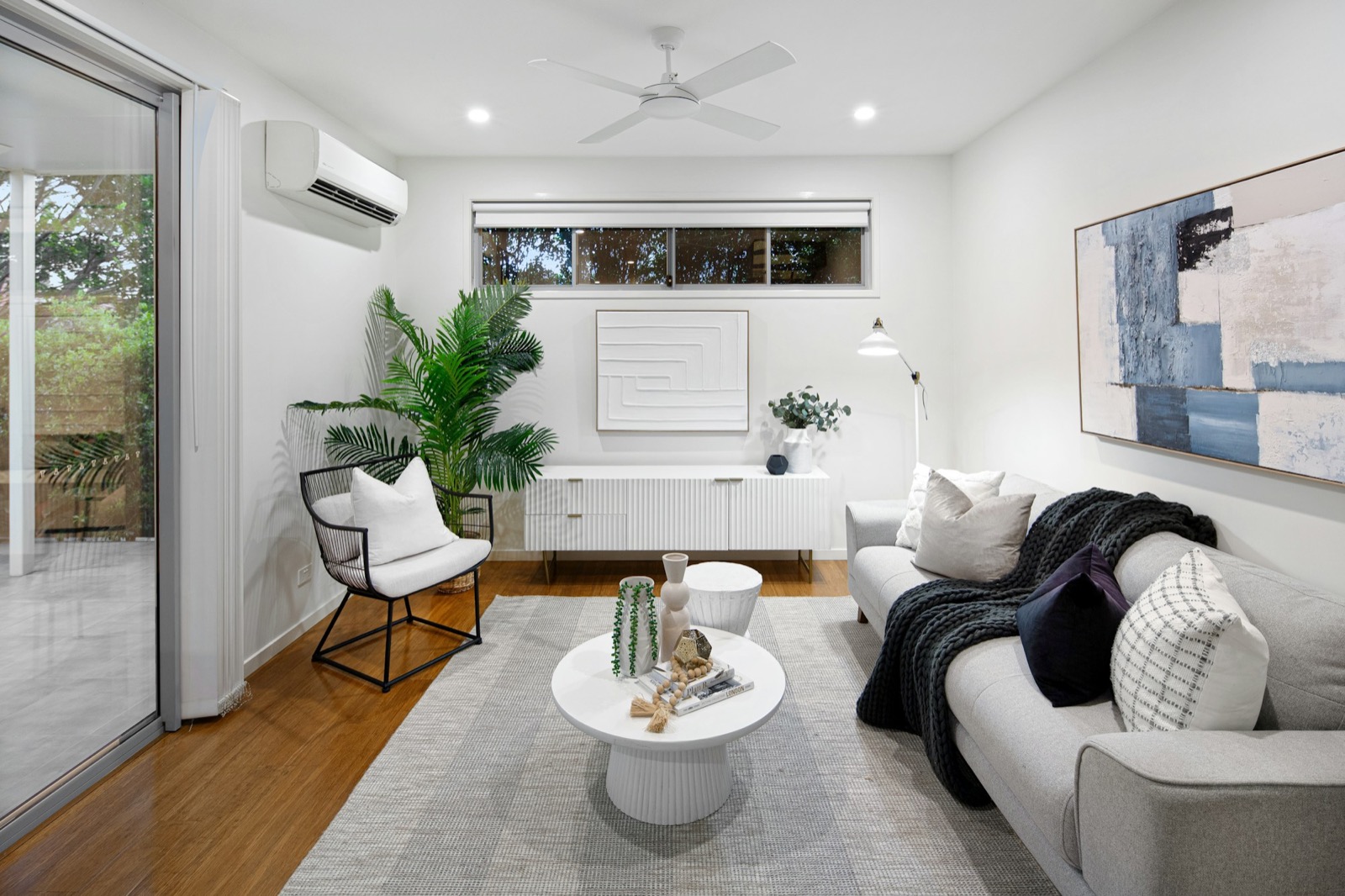
The best 120V DIY mini split in 2026 is the Zone Air 115V system, in 9,000 BTU for small rooms or 12,000 BTU for medium ones. Both run on a dedicated 15A circuit, heat down to −13°F, use pre charged line sets, and can plug into an outlet with Zone Air's optional cord kit. These systems run on standard household voltage, require no ductwork and can be installed by a homeowner in a weekend. This guide breaks down the best 115V DIY mini splits available in 2026, compares real specs and helps you pick the right system for your space.
Why 120V / 115V DIY Mini Split Heat Pumps Matter in 2026
A 115V (also called 110V or 120V) DIY mini split is a ductless heat pump that runs on the same voltage already available at most outlets in your home. Unlike traditional central air conditioning systems or larger 230V mini splits, these units connect to a standard single-phase 15A or 20A circuit. That means many homeowners can add heating and cooling to a garage, bonus room, home office, ADU, or primary bedroom without upgrading their electrical panel or running expensive new wiring.
The appeal goes beyond electrical simplicity. Mini splits require no ductwork, simplifying installation considerably. Traditional ductwork can lose about 30% of conditioned air through leaks and poor insulation, so going ductless also means better efficiency. In fact, mini splits can save about 30% on energy costs compared to conventional forced-air systems. With 2026's higher efficiency standards (SEER2 and HSPF2), new low-GWP refrigerants like R-454B, and cold climate ratings down to −13°F, these compact systems deliver serious performance in a small package. 120V mini-splits run on standard household voltage, making them accessible for the vast majority of homes.
This guide will compare the strongest 115V DIY mini split systems on the market, dig into installation details, and lay out real specs and reviews. Zone Air leads our recommendations for reasons we'll detail shortly: final assembly, testing, and inspection in the USA, a 4.8 out of 5 average customer rating, custom pre charged line sets up to 75 feet, and a plug-in kit that makes their 115V system arguably the easiest to install on the market. Zone Air offers 9,000 and 12,000 BTU models for DIY installation, covering most single-room applications.
How We Chose the Best 120V / 115V DIY Mini Split Heat Pumps
Not every brand that sells a mini split offers a true DIY 115V option. Many require professional installation, specialized tools or 230V circuits. We focused exclusively on 2026 models with current SEER2/HSPF2 ratings and R-454B or R-32 refrigerants-no legacy pre-2023 units using outdated efficiency metrics or phased-out refrigerants.
Key Evaluation Criteria
Here's what we thought about when we put these diy mini splits in order:
- Performance: SEER2 and HSPF2 ratings took the place of older numbers in 2023, and higher SEER2 ratings help cut down on seasonal electricity use. We have looked at real cooling and heating output, including how it does for heating at 5°F and −13°F.
- DIY ease: The market for 120V DIY mini-splits is mostly pre-charged quick-connect systems for good reason. Pre-charged quick-connect line sets get rid of the need for HVAC technician installation. Pre-charged line sets make installation simpler and do not require vacuuming. Most mini-splits need specialized EPA certification, vacuum pumps and flare-flushing tools - true DIY mini-splits usually do not need specialized HVAC tools for installation.
- Electrical ease: Can the unit run on a standard 115V circuit without panel upgrades? What's the breaker size? Is hard-wiring required or is a plug-in option available?
- Installation flexibility: Line set length options matter. With Zone Air, you get custom single runs from 5 to 75 ft, while other brands use fixed lengths with couplers. This has a direct effect on long term reliability and leak risk.
- Reliability and testing: You should look at factory testing, whether final assembly and inspection happens in the USA, and what real customer reviews say over time. Mini-splits usually last 10 to 15 years, so build quality and support matter.
- Value and warranty: What are the price ranges for 9,000 and 12,000 BTU 115V units in 2026? How long is the warranty? Does a DIY install void your coverage? And how are claims handled, directly or through sellers?
- Support and documentation: You need install guides, phone and chat support for DIYers during installation, and technical documentation that is easy to understand.
Best 115V DIY Mini Split Heat Pumps in 2026 (Top Picks)
Compared to the bigger mini split landscape, the 115V DIY market is pretty narrow. Our ranking focuses on the best options available to you right now, with Zone Air leading for overall DIY value. After the picks, we compare MRCOOL's DIY 5th Gen 115V units on specs, with no ranking.
1. Zone Air 9,000 BTU 115V DIY Heat Pump (Single Zone) – Best Overall for Small Rooms
Zone Air's 9,000 BTU 115V wall-mount system gets its final assembly, testing, and inspection in the USA and is designed for bedrooms, offices, and studios up to roughly 450 square feet. A 9,000 Btu unit suits spaces up to 400 square feet under standard conditions, and Zone Air's unit handles up to 450 with good insulation. Core specs: 23 SEER2, R-454B refrigerant, heating down to −13°F, approximately 30 dB(A) indoor noise on low mode, and a pre charged line set included.
Why It Stands Out
Zone Air is the only DIY mini split brand compared here that does final assembly, testing, and inspection in the USA (as of November 2026), so every system is checked before it ships. That level of quality control is rare among diy models and is the reason the company can stand behind its warranty.
The custom pre charged line sets are a major differentiator. Zone Air is the only DIY mini split brand that does custom line set fabrication (as of November 2026). It makes single-run line sets from 5 to 75 feet-no couplers, no extension pieces, and fewer potential leak points. Compare that to brands that rely on fixed-length kits and quick connect fittings extensions, where each additional connection is another place a refrigerant line leak could develop.
Zone Air also offers an optional 115V plug-in kit, letting the outdoor unit connect to a dedicated GFCI outlet where local code permits. This makes diy installation about as simple as it gets for a heat pump system.
Customer satisfaction backs all of this up: Zone Air holds a 4.8 out of 5 average rating across verified customer reviews.
Both Zone Air and current MRCOOL DIY units use R-454B refrigerant, which has a low global warming potential. Most mini-splits use R-32 or R-454B refrigerants in 2026, following the AIM Act phasing down older high-GWP refrigerants. Mini-splits can operate efficiently in temperatures as low as −13°F, and Zone Air's 115V units can heat down to −13°F specifically.
Best For
- Homeowners who are finishing a bedroom, office or small studio that is between 250 and 450 square feet
- DIYers who want a true no-vacuum, quick-connect install at 115V without having to hire an HVAC tech
- Older homes or panels that have limited spare electrical capacity, where adding 230V circuits is difficult or expensive
Key Strengths
- High energy efficiency for 115V: 23 SEER2, and it is AHRI certified
- Custom line sets from 5–75 ft in a single pre charged run for clean routing and fewer leak joints
- Plug-in ready with Zone Air's outlet kit, plus a traditional hard-wire option for codes that require it
- Quiet operation at around 30 dB(A) indoors, which makes it suitable for bedrooms. Variable-speed inverter compressor
- Heating performance to −13°F, with clear guidance for when backup heat might be needed in extreme cold
- Direct-to-consumer shipping with pre-inspection and strong install support, with free shipping to the lower 48 states
- 5-year parts and 7-year compressor warranty with no registration deadline, and installing it yourself does not void it
- 30-day returns on uninstalled units
- Price is $1,899.99 for the complete system with the line set (November 2026)
Possible Limitations
- Single zone only. Not designed for whole-house coverage or for connecting multiple indoor units
- Installing 120V mini-splits requires a dedicated circuit, so you cannot share a breaker with other loads
- There's less extra capacity if the room is over 450 square feet, or if it's got bad insulation or a lot of west-facing glass.
2. Zone Air 12,000 BTU 115V DIY Heat Pump (Single Zone) – Best 115V for Medium Rooms
The 12,000 BTU version covers bigger spaces, about 350 to 600 square feet, and it keeps the same DIY install approach and plug-in options. A 12,000 Btu unit covers 350 to 550 square feet in most conditions. The key specs are 12,000 BTU cooling, 12,400 BTU heating output, 23 SEER2, R-454B, −13°F low-ambient heating, and a standard 16 ft pre charged line set with custom lengths available.
Why It Stands Out
This unit delivers near-230V performance while staying on 115V, making it the go-to for garages, big bedrooms, finished basements, and detached offices. Installation involves connecting indoor and outdoor units with refrigerant lines through a small hole in the wall. Specifically, a hole of about 3 inches must be drilled through the wall for installation. Installation usually takes about 4 to 6 hours for two people, and efficient installation requires proper handling of refrigerant lines in DIY applications.
It shares all the DIY features of the 9K model: quick connect fittings, custom line set fabrication, the plug-in kit option, and final assembly, testing, and inspection in the USA. Mini-splits range from 9,000 to 24,000 Btu across the market, and this 12K model hits the sweet spot for single zone applications that need more headroom. Think of it as the replacement for the old "ceiling fan plus window unit" setup. Except this system adds year-round home heating, dramatically lower noise, and better efficiency across the board.
Best For
- Great rooms, large primary bedrooms or open-plan living areas that are up to about 600 square feet
- Detached offices or ADUs with 115V service where running a 230V circuit is hard to do or costs too much
- If you are a DIYer in a mixed climate, you need both summer cooling and heating in the shoulder season or mild winter that gets the job done
Key Strengths
- There is more BTU room to work with for high ceilings, big windows or west and south sun
- Same final assembly, testing, and inspection in the USA and high review scores as the 9K model
- Pre charged custom line set options allow neat installs even with long line runs through attics or crawlspaces
- Smart home integration with an app, Wi-Fi and voice control through Alexa and Google, so you have got multiple control options
- Competitive pricing at $1,999.99 (November 2026) against similar 115V diy systems from other brands
- Compared to MRCOOL, Zone Air is often 15 to 30 percent cheaper while it still gives you higher efficiency on similar DIY systems
Possible Limitations
- Same 15A circuit as the 9K, but confirm panel electrical capacity and breaker sizing before purchase
- It's still single zone, so if your home has multiple rooms that need air handlers you're probably better off with a 230V multi-zone system where one outdoor unit sends refrigerant to several indoor units.
- Like all 115V units, extreme cold below −13°F requires supplemental backup heat
- At 23 SEER2 it is a step below Zone Air's own 230V models. Those hit 24 SEER2.
3. Zone Air 115V Plug-In DIY Kit - Easiest 120V Installation Option
This is not a stand-alone heat pump but a purpose-built accessory that goes with Zone Air's 115V mini split systems to create an outlet-ready install on a dedicated GFCI outlet. It has a spot on any "best of" list because of how much it helps the electrical work involved in diy installation.
Why It Stands Out
As of November 2026, Zone Air is the only brand that offers a plug-in outlet solution for homeowners who want a system that plugs into an outlet. While 120V mini-split units do not plug into standard wall outlets in their default configuration, Zone Air's kit changes that equation. For eligible areas, it gets rid of most hard-wiring, which is helpful for condo owners and renters working with landlords and inspectors. Electrical codes may require a licensed electrician for final breaker installation, but adding a dedicated outlet is usually a lot cheaper than running a new 230V circuit.
This kit is Zone Air's claim to the easiest diy install on the market in 2026. DIY mini-split systems require a dedicated electrical line regardless, but plugging into a dedicated outlet is a lot simpler than opening a panel and wiring a breaker.
Best For
- You can mount the indoor air handler and route the lines but don't want to open electrical panels
- Situations where an electrician can add a dedicated GFCI outlet easily but the cost of a new 230V circuit would be too much
Key Strengths
- Designed for Zone Air's own 115V systems, so there is no guesswork about whether things work together
- It has a faster installation time and the cost of electrician labor is lower
- Makes future service or moving the equipment simpler (unplug vs. disconnect electrical wiring)
Possible Limitations
- Must comply with local building codes and local code requirements; some jurisdictions still require hard-wiring the outdoor unit
- It requires a dedicated outlet - never use it on shared circuits or with an extension cord
4. Value Import 115V DIY Mini Splits (Generic Online Brands) - Budget but Higher Risk
These are the 115V DIY kits that don't cost much and that you don't see big brands behind, the kind you see on Amazon, eBay and various import sites. Most brands come and go, so we're treating this as a category rather than calling out one name. To help you understand what you're giving up, here's what to know.
Why we included them
A lot of you run into these during your search. The prices look tempting. You should know what you're giving up for that savings before you commit.
Best for
- DIYers who are on a tight budget and who accept more risk and are comfortable solving problems with little help from the manufacturer
- Temporary installations or spaces that are not critical, like a workshop or a seasonal replacement for a space heater, where long term reliability and air quality are not the main concern
Key strengths
- Lowest up-front cost compared to well-supported mini split brands
- You can sometimes get decent features if you pick carefully, including basic Wi-Fi, a remote control and inverter compressors
Possible limitations
- Short or fuzzy warranties, limited support and difficulty finding replacement parts
- Inconsistent quality control. Few if any units get final assembly or testing in the USA-condensate drains, outdoor coil corrosion protection and electrical components may be bad
- Specs often do not have third-party certification. There are no AHRI listings and no clear data on SEER2 or HSPF2
How the MRCOOL DIY 115V 9K & 12K (5th Gen) compares
MRCOOL's 5th Generation 115V DIY mini splits are the other pre charged quick-connect 115V systems most buyers look at. MRCOOL has no direct-to-consumer option, so these are purchased through retailers and distributors rather than direct from the manufacturer. They are not one of our picks, but the specs are worth setting next to Zone Air's.
The specs
- What does MRCOOL's catalog say about installing its DIY systems? It says that "no special tools or training are necessary to install"
- MRCOOL's 9K and 12K units rate 23.6 and 23.5 SEER2 in that order, against 23 SEER2 for Zone Air's 115V units
- MRCOOL DIY systems come with refrigerant lines that are precharged and they use R-454B
- Smart controls through an app, and MRCOOL's DIY 5th Gen can heat down to about −13°F when it's cold out. Higher-tier DIY models are rated lower
- Most 115V mini-splits recommend a dedicated 20-amp circuit breaker. MRCOOL's 12K requires a minimum circuit ampacity of 18A with a maximum fuse of 20A, while Zone Air's 12K runs on a 15A circuit
- MRCOOL's DIY 5th Gen warranty is 5 years on parts and 7 years on the compressor with no registration required, the same main term as Zone Air's
Where Zone Air Differs
- MRCOOL doesn't do custom single-run line sets. It uses line sets that come in fixed lengths and it uses couplers to connect them, so you end up with more connection points along the refrigerant line.
- Warranty, returns and parts go through third-party sellers or retailers, not MRCOOL directly. All warranty claims and returns or exchanges go through Zone Air itself.
- MRCOOL's Trustpilot profile sits at 3.0 out of 5 across 94 reviews as of November 2026. Reviewers there talk about support delays and warranty denials.
- Standard 120V heat pumps lose a lot of their ability to heat when the temperature drops below about 15°F to 20°F, and that applies to both brands.
- There's no plug-in kit option. MRCOOL's 115V units are hardwired.
Quick Comparison of the Best 115V DIY Mini Split Options
Here's a quick overview if you want a fast look at where each option fits.
- For small rooms and bedrooms, the Zone Air 9,000 BTU 115V DIY is the best overall 115V DIY system
- For medium-sized rooms and garages, the Zone Air 12,000 BTU 115V DIY is the best 115V option.
- For the absolute easiest 120V DIY install, the Zone Air 115V Plug-In Kit is the best accessory.
- Budget Import 115V DIY Kits are best for lowest up-front cost if you can put up with higher risk.
MRCOOL's DIY 115V 9K and 12K are covered above as a spec comparison and aren't put in order.
How to Choose the Right 120V / 115V DIY Mini Split Heat Pump
Even within 115V mini split systems, the right pick depends on your room, your climate and your electrical situation. Specs like SEER2, BTU output and low-temp ratings matter, but so do practical things like panel capacity, room layout, noise sensitivity and how comfortable you are with electrical work.
Choose Based on Room Size & Insulation
The coverage ranges for 2026 models follow a pattern that is pretty standard.
- 9,000 BTU: This is best for about 250–450 square feet with average insulation.
- 12,000 BTU: This is best for about 350–600 square feet with average insulation.
Sizing means you have to think about ceiling height and how much sun hits the room. A garage that isn't insulated well, a room with vaulted or high ceilings, or a space that gets heavy afternoon sun might need the 12K unit even if the square footage says 9K. If you size it wrong, the unit will short cycle and you'll have humidity problems. An oversized unit cools too fast and shuts off before it pulls enough moisture out of the air, so you're left with high humidity and temperatures that don't feel even.
Use an online load calculation tool and go with the higher BTU 115V unit when you're on the fence. If you care about comfort, it's less of a problem to oversize a little than to go too small.
It's useful to know where 115V DIY units fit in the bigger picture. Professional-install brands like Fujitsu have the Altair 500 Series with SEER2 ratings up to 33.7, and between 21 and 26 across the range, with HSPF2 ratings from 10 to 11. Fujitsu mini-splits use R32 refrigerant, and that refrigerant is better for the environment. Mitsubishi Electric gives you a 12-year limited warranty on its systems. They're excellent, but they require professional installation and they usually need 230V circuits. When it comes to the LG Artcool Deluxe series, you get SEER2 ratings between 25.5 and 27, and the LG Artcool Deluxe KNSAL series is in that same 25.5 to 27 SEER2 range. What about the Mirage Ventus X series? That one goes from 9,000 to 36,000 Btu. None of these are DIY 115V options, but they show you what's out there for efficiency. For a homeowner who doesn't want professional installation or central air, Zone Air's 23 SEER2 on 115V is pretty solid energy efficient performance.
Choose by Electrical Capacity & Panel Space
You don't have to upgrade your panel or pay for expensive 230V circuits. That's the whole reason people go with 115V mini split systems. Here's what the electrical requirements actually look like:
- Zone Air 9K 115V: Dedicated 15A circuit with a 15A single-pole breaker
- Zone Air 12K 115V: Dedicated 15A circuit with a 15A single-pole breaker, same straightforward wiring
- MRCOOL 12K 115V: Requires 18A minimum circuit ampacity with a 20A maximum fuse/breaker, hardwired
In all cases, you need a dedicated circuit. You cannot plug a mini split into a shared outlet powering your microwave and space heater. Zone Air's plug-in kit uses a dedicated outlet, but it still must be its own circuit. If you're using the hard-wire approach, an outdoor disconnect is also typically required by code.
When should you consult an electrician? Even with a "DIY" system, consider professional help if:
- You're not sure how much electrical capacity your panel still has left
- You need to add a new GFCI outlet for a plug-in kit in an area like southern California where local code has specific requirements
- Your home has aluminum wiring, a Federal Pacific panel or some other issue that people already know about
Choose Based on Climate & Heating Needs
Zone Air's 115V heat pumps are rated to heat down to −13°F, and MRCOOL's DIY 5th Gen is rated to about the same. But the output at that temperature is a lot lower than at 47°F for any 115V heat pump, so plan around the coldest nights you actually get and not the number on the box.
Here's how you can think about it by climate:
- Climate zones 1–4 (most of the southern and central U.S.): A 115V mini split can work as the main heat source for one zone. You will get real heat well into winter in cold climates across this range.
- Climate zones 5–6 (northern states, moderate mountain areas): This works well as the main heat in the fall and the spring. It works as extra heat in deep winter. You can pair it with backup heat, even just a simple electric space heater, for the coldest weeks.
- Climate zones 7+ (extreme northern, high-altitude): It's best to treat these as extra heat. For primary winter air conditioning and heating, a 230V cold-climate system or a dedicated backup heat source is strongly recommended.
In very humid weather conditions, size with extra room. Defrost cycles and the load from dehumidification reduce the effective capacity, so stepping up from 9K to 12K in edge situations improves comfort.
Choose by Installation Complexity & Comfort
There's a real difference between diy mini splits that truly require no specialized tools and "DIY" imports that still need a vacuum pump, gauges or a refrigerant charge.
- Zone Air and MRCOOL: Both of them ship with line sets that are pre-charged and have quick-connect fittings. You don't need a vacuum pump, you don't need brazing and you don't need EPA 608 certification. You're putting together sealed fittings, not opening up a refrigerant circuit. This is genuinely installation work you can do yourself.
- Generic imports: Some of them claim "DIY" but actually require a vacuum pump and flare connections. Read the fine print carefully before you assume the installation will be easy.
The difference between hard-wired 115V units and Zone Air's outlet-based install using the plug-in kit is substantial for many homeowners. Hard-wiring means opening your breaker panel, running wire and installing a disconnect. The plug-in kit means an electrician adds a dedicated outlet (often a one-hour job) and you plug in the outdoor condenser.
For complex line routes, long vertical lifts or any situation involving a concealed duct or cassette air handler on a multi-zone 230V system, bring in a professional. DIY shines for straightforward single zone wall-mount installs.
Zone Air is the only DIY mini split that lets you mix wall-mount, ceiling cassette and concealed ducted units on one outdoor unit (as of November 2026), though that flexibility applies to their 230V multi-zone mini split systems and not the 115V single zone lineup discussed here.
Which 115V DIY Mini Split Is Best for You?
There's no single answer, but for most of you the decision is simple. Here's a quick decision guide:
- Go with the Zone Air 9,000 BTU 115V DIY if you're cooling or heating a small bedroom, office or studio and you want 23 SEER2 efficiency with the least amount of hassle.
- Pick the Zone Air 12,000 BTU 115V DIY if you've got a larger room, garage or open-plan space and you need more capacity without moving up to 230V.
- Choose the Zone Air 115V Plug-In Kit with either the 9K or 12K if you want the easiest outlet-style installation and little panel work-the system most homeowners can handle alone.
- If you were weighing MRCOOL's DIY 115V against these, the differences come down to final assembly, testing, and inspection in the USA, custom line sets, the plug-in kit, and direct-to-consumer support on the Zone Air side. Dealing with warranty or returns through a third party adds friction.
- Only look at generic import kits if budget is your absolute top concern and you're okay troubleshooting with limited support, plus putting up with lower air quality assurance and iffy long term reliability.
Final Thoughts
The 2026 landscape for 115V DIY mini split heat pumps is more competitive and capable than ever. Better efficiency standards, safer low-GWP refrigerants, and genuinely DIY-friendly designs mean that homeowners can add high-performance heating and cooling to almost any room without a major electrical overhaul or professional installation.
Zone Air stands out as the clear leader for most DIY buyers. Final assembly, testing, and inspection in the USA, a 4.8 out of 5 average across verified customer reviews, custom pre charged line set fabrication that eliminates unnecessary leak points, a plug-in kit no other brand offers, and direct-to-consumer support that handles everything from shipping to warranty claims without a middleman. For most single-room DIY projects, a Zone Air 9K or 12K 115V system delivers the best combination of price, easy installation, and long term reliability. Before purchasing, verify up-to-date specs, check available state and utility rebates (the Federal 25C tax credit ended for systems placed in service after December 31, 2025), and confirm your local code requirements. Then get to work-your most comfortable room is a weekend away.