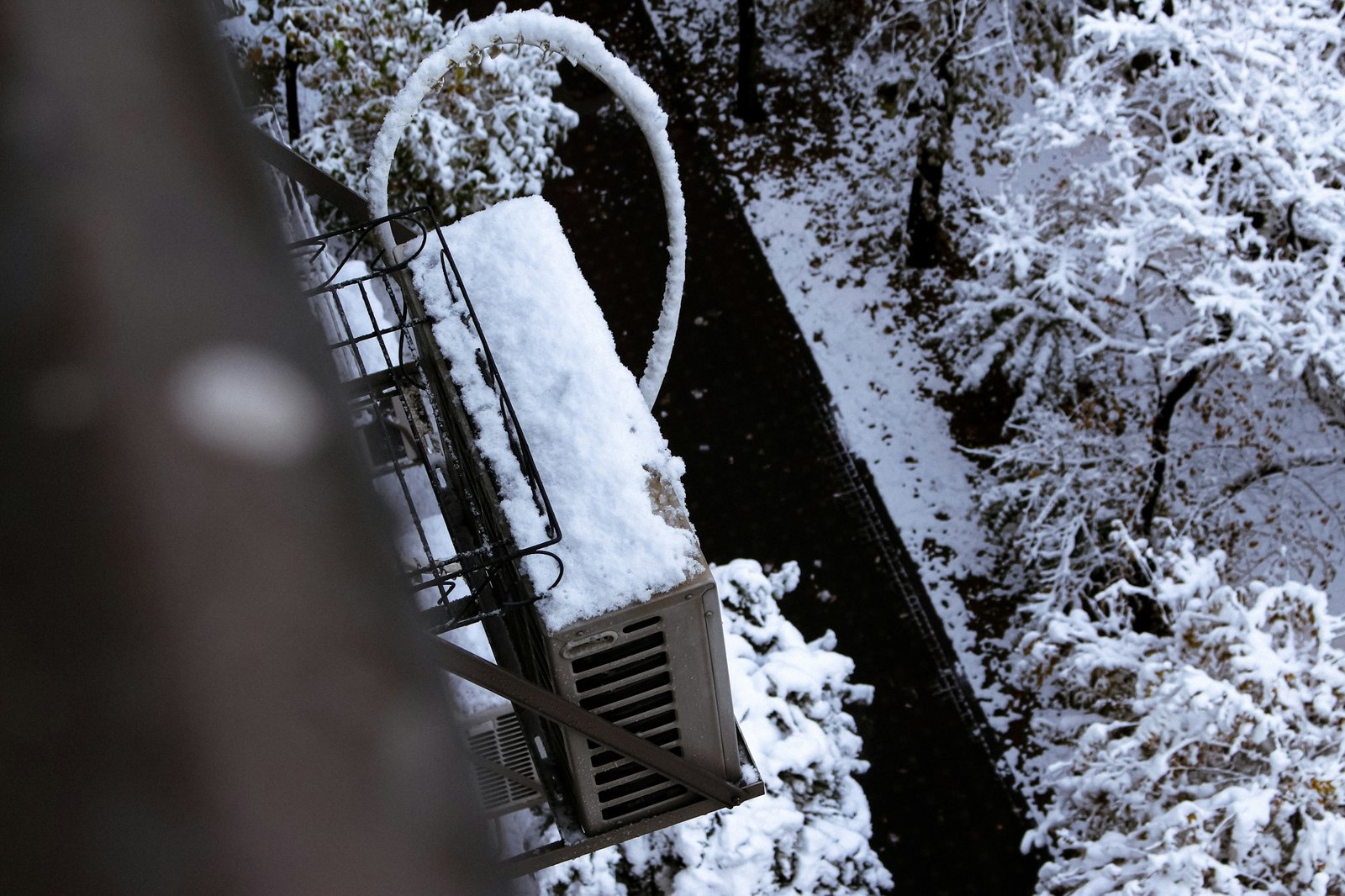
Cold climate mini split energy star criteria need a COP of at least 1.75 at 5°F and delivery of at least 70% of their rated 47°F heating capacity at that same outdoor temperature. They also need higher seasonal efficiency ratings (HSPF2 and SEER2), and they must pass a Controls Verification Procedure that standard models do not have to pass. The ENERGY STAR Cold Climate label shows tested performance in extreme cold conditions, not just efficiency in mild weather.
Key Takeaways
-
Cold-climate mini-split systems are designed to operate efficiently in sub-zero temperatures. The core criteria require COP ≥ 1.75 at 5°F, capacity retention ≥ 70% at 5°F, HSPF2 ≥ 8.5 (non-ducted), and SEER2 ≥ 15.2.
-
These criteria ensure real heating output in cold weather. Mini splits can heat effectively in temperatures below freezing, keeping your home warm when it matters most.
-
Homeowners in cold climates should look for the ENERGY STAR Cold Climate mark, cross-check NEEP's cold-climate ASHP product list, and size heat pumps using ACCA Manual S and DOE guidance.
-
The federal 25C Energy Efficient Home Improvement Credit ended for property placed in service after December 31, 2025, so installations in 2026 no longer qualify under that credit.
What Are the ENERGY STAR Cold Climate Criteria for Mini Splits?
Cold Climate ENERGY STAR heat pumps, including every ductless mini split system carrying the label, must prove they still heat efficiently when the outdoor temperature drops to 5°F. With the standard ENERGY STAR label, the tests are mainly done at warmer conditions, so these criteria are harder to meet.
Here are the main numbers that non-ducted (ductless) cold climate models have to meet:
-
Mini-split heat pumps must have a COP of 1.75 or higher at 5°F. For context, a COP of 3.0 means you get three times the heating efficiency of straight electric resistance, so 1.75 still gives you a lot more heat for each watt than baseboard.
-
Mini-split heat pumps must keep at least 70% of their rated heating capacity at 5°F compared to what they can do at 47°F.
-
Non-ducted mini-split heat pumps must have an HSPF2 of 8.5 or higher. Most mini splits have an HSPF2 rating of 7–14, so the floor for cold climate is well above entry-level units, and premium cold-climate mini-splits reach HSPF2 ratings of 12–14.
-
Cold-climate ENERGY STAR heat pumps have a SEER2 of at least 15.2, which meets the cooling side of the standard. Notably, cold-climate mini-splits have no minimum EER requirement for peak cooling efficiency.
-
To earn the label, cold-climate mini-split systems must pass a Controls Verification Procedure. It shows the unit's native thermostat and control logic actually deliver rated capacity and COP under real cold weather conditions, not just best lab wiring.
-
Electric furnaces have an equivalent HSPF2 of about 3.4. That shows how much more efficient even a basic cold climate mini split is for winter heating.
These numbers translate to fewer hours running backup heat, more reliable indoor comfort on the coldest nights, and more predictable winter energy bills. The tests at 47°F and 5°F simulate typical and design winter conditions across many cold-weather areas in the U.S. and Canada.
How Cold Climate ENERGY STAR Mini Splits Differ from Standard Heat Pumps
A standard ENERGY STAR mini split and a Cold Climate model are both efficient, but only the Cold Climate unit is certified to hold capacity and efficiency at lower temperatures. Here is how they compare:
-
Standard ENERGY STAR ductless mini splits are built to work best in warmer months and moderate climate zones where winter lows rarely hit single numbers Fahrenheit.
-
Using enhanced vapor injection, larger outdoor coils and advanced variable-speed inverter compressors, Cold Climate mini-splits adjust heating output on the fly to keep capacity up as temperature drops.
-
Reduced efficiency occurs as temperatures drop outside for mini-split systems, but cold-climate mini-splits maintain COP above 2.0 down to −13°F. At about 20°F, output starts to drop off for mini splits that had been operating at 100% efficiency.
-
Ductless mini-splits operate efficiently in temperatures as low as -5°F. Mini splits can maintain a COP above 2.0 at -13°F, still far better than the COP of 1.0 you get from electric baseboard or resistance heat.
Some brands put "low ambient" or "hyper heat" on their labels. These may go past ENERGY STAR cold climate criteria, but only units that are tested and listed carry the official name. Always check on the ENERGY STAR product finder.
Homeowners south of IECC zone 5 or in coastal areas may save money with standard energy-efficient mini split systems. People in IECC climate zones 5–8 should strongly prefer Cold Climate ENERGY STAR models.
NEEP Cold-Climate Listings and Regional Cold Weather Guidance
Beyond ENERGY STAR, the Northeast Energy Efficiency Partnerships (NEEP) keeps a list of cold-climate air-source heat pumps. Utilities and rebate programs across the Northeast and upper Midwest use that list a lot.
-
NEEP's Cold-Climate ASHP Specification v4.0 took effect on January 1, 2023. Version 5.0 is in development, so requirements will keep getting tighter.
-
Many Cold Climate ENERGY STAR ductless mini splits also show up in NEEP's list, and it gives capacity and COP data at several outdoor temperatures (47°F, 17°F, 5°F). That level of detail helps contractors size for real winter loads.
-
For colder areas, use NEEP's data to check a unit's capacity at your local design temperature, like -5°F in Minnesota or -14°F in interior Montana, instead of just going by the 47°F rating.
We treat NEEP data as a practical sizing and comparison tool, not just another label to collect.
Sizing Cold Climate Mini Split Systems for Real Winter Loads
Even an ENERGY STAR Cold Climate mini split will do poorly if it's the wrong size. If it's too small, you'll end up using backup heat a lot. If it's too large, it'll start and stop too often. That hurts efficiency and comfort when you're cooling.
-
Per DOE Building America guidance and ACCA Manual S, a heat pump's listed cooling capacity at design conditions should be 95% to 115% of the design cooling load, or 95% to 125% in IECC climate zones 4–8.
-
Start with a Manual J heat loss and heat gain calculation. Don't use the "square feet × BTU" rule of thumb.
-
Check the mini split's capacity at 5°F or your local design temperature. If your building has a -14°F design day, a Mitsubishi or Fujitsu hyper-heat style unit may handle most of the load to around 0°F, with baseboard or a furnace picking up the gap below that.
-
Modern inverter-driven ductless mini splits modulate output, so a slightly oversized unit can still run efficiently, but severely oversized systems short-cycle and provide poor dehumidification in warmer months.
Incentives, Tax Credits, and Timing for Cold Climate Mini Splits
Many homeowners choose ENERGY STAR Cold Climate mini splits partly for rebates and tax credits. The details and schedule matter.
-
The federal 25C credit for qualifying heat pumps ended for property that was put in service after December 31, 2025. If you're installing a heat pump in 2026, that credit is gone. Before you buy, check which federal incentives are still active.
-
Many state programs and local utilities still pay higher rebates for Cold Climate models than they pay for standard units. Some of them look at both ENERGY STAR Cold Climate criteria and NEEP listings, so having both labels can get you better incentives.
-
Check your state energy office or the DSIRE list for current rebate rules, and make sure your specific model is on the qualifying product list.
Even without rebates, cold climate mini splits can save significantly on winter heating compared to oil, propane, or older electric resistance systems, especially in a home with decent insulation and air sealing.
Choosing the Right Cold Climate Mini Split for Your Home
At minisplitbrands.com, we track what different brands are known for and how they handle cold weather. There's what to look at before you choose:
-
Decide whether you need a single-zone ductless mini split for one space or a multi-zone system with multiple indoor heads to serve several rooms. Mini-splits provide personalized temperature control in different rooms, and mini splits can switch between heating and cooling seamlessly via a reverse valve.
-
Mini-split heat pumps deliver conditioned air directly into each room, avoiding duct losses. Ductless mini-splits eliminate the need for costly ductwork installation, which is a major advantage in older homes or additions without existing distribution.
-
Compare each unit's COP and capacity at 5°F, not just its SEER2 cooling rating. The whole point of upgrading is how the unit does in cold weather.
-
Major brands like Mitsubishi, Fujitsu, Daikin and Bosch all have product lines that are built to work in cold weather. The right bet depends on whether there's a local dealer who can help, how much experience the installer has, and what the warranty terms are. Bosch's Climate 5000 ductless line, for example, covers the compressor for 10 years and parts for 7 years, with parts extended to 10 years if the product is registered within 90 days. That matters for long-term reliability in climates with harsh winters.
-
You'll want to look for mini splits that have low-ambient heating modes, built-in base-pan heaters for the outdoor unit if you get heavy snow, and smart controls that keep the unit running when temperatures drop into the single numbers.
-
If your climate regularly sees weather well below 5°F, plan a backup strategy: electric resistance strips, existing baseboard or a furnace for rare extreme cold breaks.
Work with a contractor who knows ENERGY STAR Cold Climate and NEEP specs. Ask for a written load calculation and manufacturer performance tables at multiple outdoor temperatures before you put down a deposit.
FAQ
Does every mini split with "low ambient" or "hyper heat" in the name meet ENERGY STAR Cold Climate criteria?
No. Marketing terms like "low ambient," "hyper heat," or "arctic" are manufacturer labels, not EPA designations. Some of these units do qualify, but many don't. Verify by searching the ENERGY STAR product finder for the "Cold Climate" designation, or check the manufacturer spec sheet for that exact label. In the Northeast or upper Midwest, also cross-check NEEP's cold-climate ASHP list.
Are DIY mini split installs compatible with ENERGY STAR Cold Climate models?
Some DIY-oriented mini split kits are out there, but most high-performance cold-weather models need professional installation if you want to keep the warranty. Even when a ductless mini comes pre-charged with refrigerant, manufacturers and rebate programs usually count it as a professional install so it qualifies for incentives. In very cold climates, it's worth paying a licensed installer who knows charge verification, drain routing and how to mount the unit where snow won't pile up.
Can a Cold Climate ENERGY STAR mini split be my only heating system in very cold regions?
In many well-insulated homes in IECC climate zones 4–6, a properly sized Cold Climate mini split can be your main heat source. Mini splits run efficiently down to -5°F and still put out useful heat well below that. When design temperatures drop below about -15°F, most designers suggest having some backup heat for those rare cold snaps, even though the mini split will probably cover 90–95% of your seasonal heating hours.
Is a Cold Climate ENERGY STAR mini split worth it in mild winters?
Probably not if you're upgrading from a standard efficient unit. In mild climates where winter lows stay around 25–35°F, a standard ENERGY STAR mini split handles heating and cooling fine. Homeowners at higher elevations or on the edge of colder climate zones who get occasional freezing nights may still want the extra margin.
How long do Cold Climate ENERGY STAR mini split systems last?
Most modern ductless mini splits, including cold climate models, are designed for a service life of 12–15 or more years when installed correctly and maintained with regular filter cleaning, coil cleaning and yearly visits. Harsher cold, frequent snow and ice and salt air can shorten life if the outdoor unit is not mounted and protected the right way. Register products quickly to get full warranty coverage, because manufacturers like Bosch offer extended terms for early registration.