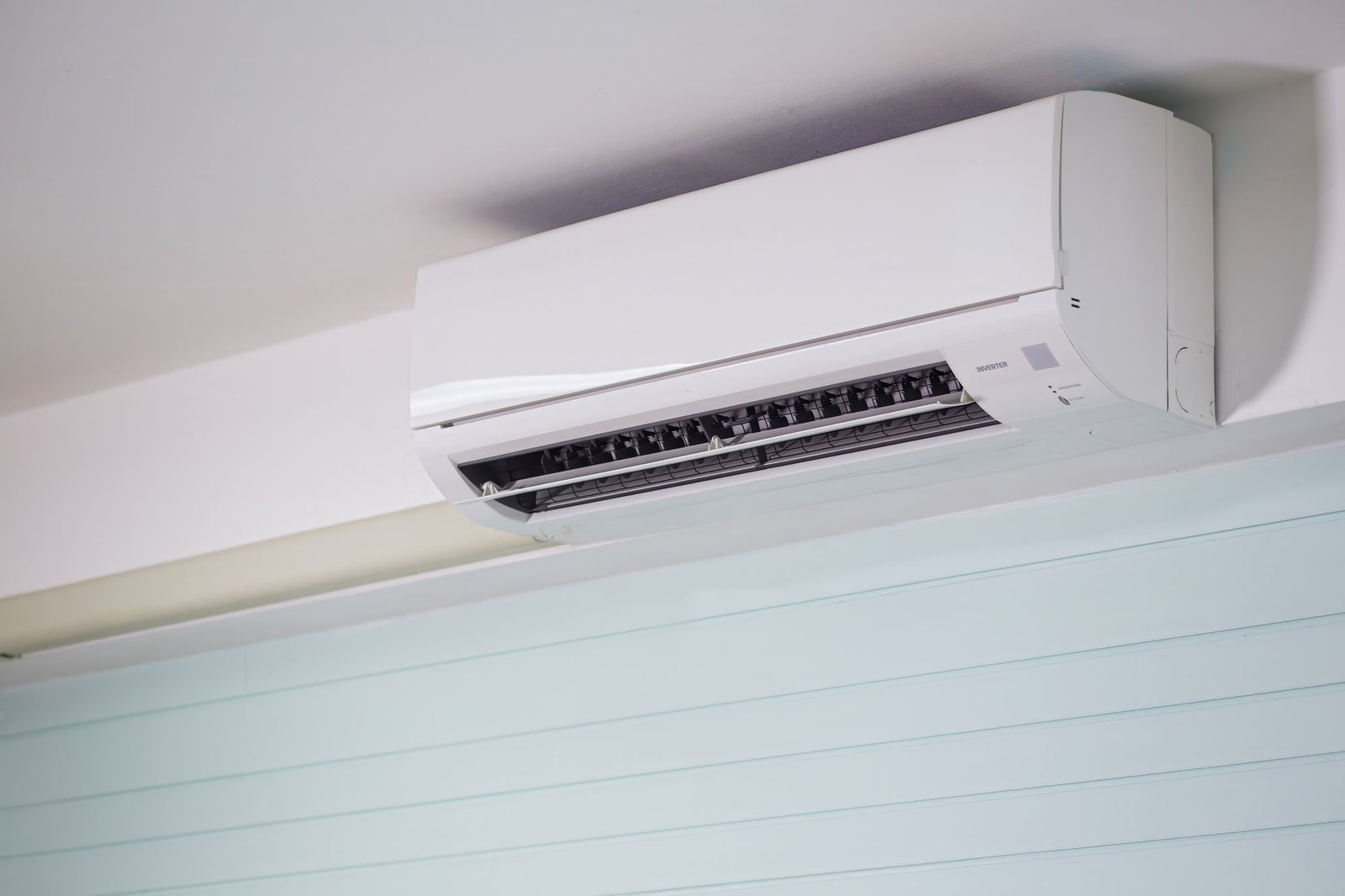
If you have priced ductless mini split systems recently, you have noticed the same outdoor unit shapes, the same app interfaces, and suspiciously similar spec sheets across brands that claim to be competitors. That is not a coincidence. Many brands source or partner with Midea for their mini split systems, and knowing which ones helps you compare equipment on substance instead of stickers.
Which Mini Split Brands Use Midea Equipment?
Here are the brands with confirmed or strongly evidenced Midea manufacturing ties:
Carrier has a joint-venture partnership with Midea in global manufacturing and distribution. In 2026, the two companies launched Carrier Midea North America, a dedicated joint venture for ductless residential heat pump products. Carrier's single-zone Evolution Series ductless units carry outdoor unit model numbers starting with "38MPRB," which map directly to Midea factory platforms.
Bryant ductless products fall under the same corporate family. Bryant's model numbers - "38M," "40M," and "619P" prefixes - correspond with Carrier-Midea OEM bases. If you are comparing a Bryant ductless quote against a Carrier quote, the indoor unit and outdoor unit may come from the same production line.
MRCOOL is another confirmed relationship. MRCOOL's several mini split series are manufactured by Midea, including the DIY 5th Gen, Advantage 5th Gen and Olympus lines. ENERGY STAR certification records show model-for-model matches between MRCOOL and Midea ratings on SEER, HSPF and refrigerant type. According to certification cross-reference data, these are functionally the same hardware.
Senville's popular mini split units are manufactured by Midea. The AURA, ELITE and LETO product families show strong data-level correspondence with Midea-certified equipment.
Pioneer frequently utilizes Midea-built hardware for its ductless systems, though model-specific verification is still recommended.
ACiQ uses Midea-built units for its ductless lines while sourcing conventional split systems from ICP/Carrier heritage equipment.
Bosch is the brand that generates the most debate. Bosch Thermotechnology and Midea signed a joint venture in 2015 for commercial VRF systems built at Midea plants. However, no definitive source confirms that all Bosch residential ductless products are Midea-built. Treat that claim as plausible but unverified for specific residential models.
Brand Relationships Require Model-Level Verification
Before you compare equipment, check the full model number - and pay special attention to the outdoor unit. Letters like "38M" or "MPRAQ" frequently show that a unit is built on a Midea platform. On equipment with Carrier, Bryant, MRCOOL or Senville names on it, if those letter groups show up, the unit is probably Midea-built.
There's a real difference between a unit that has the Midea brand on it and equipment that is built by Midea but sold under another name. The firmware, the control boards, the app systems, the cosmetic panels and the warranty terms can all vary even when the compressor, the coil and the inverter module are the same. One mini split brand can get its equipment from multiple manufacturers across its product line, and those relationships can change between one model generation and the next.
The most reliable way to verify is to cross-reference the AHRI or ENERGY STAR certified data sheet. If the certifier is listed as "GD Midea" or the rating points match a known Midea model exactly, that shows where it was manufactured.
Midea Versus Mitsubishi Electric Mini Split Systems
This is the comparison you eventually get to. For a similar capacity, Midea mini splits cost about 40–50 percent less than Mitsubishi. Installation costs show that gap too: a typical Midea installation runs around $2,500, while a typical Mitsubishi installation runs around $4,500.
That price difference is real, but a Mitsubishi mini split system is not automatically better for every use. Here's where the two actually differ:
| Factor | Midea | Mitsubishi Electric |
|---|---|---|
| Typical cost (installed) | \~$2,500 | \~$4,500 |
| Expected lifespan | 10–15 years | 15–20 years |
| Standard warranty | 5 years | 5 years (without certification) |
| Extended warranty | - | 12 years (with certified install) |
| Partial-load efficiency | Good | Mitsubishi's M-Series holds efficiency better at partial load |
| Installer network | Limited | Larger contractor network |
Mitsubishi systems typically last 15–20 years with proper maintenance. Midea systems generally last 10–15 years, with less long-term data available. That lifespan gap matters most in a primary heating application where the system runs thousands of hours per year. For supplemental cooling in one room or a seasonal space, the shorter service life may never become relevant.
Mitsubishi has a 12-year warranty with certified installation. Midea's standard warranty is 5 years, which is the same as Mitsubishi without certification. The warranty difference is big, but it depends completely on whether you actually use a Mitsubishi Diamond Contractor - otherwise you're comparing the same base coverage.
Both brands qualify for federal 25C tax credits up to $2,000, so the incentive picture is even.
Midea Heat Pumps and Cold-Climate Performance
Midea's H2i line is rated to run at -22°F. Mitsubishi's Hyper Heat line runs effectively at -13°F. On paper, Midea's low-temperature rating is lower, which homeowners in severe climates like.
However, the number that deserves the most attention is how much capacity it keeps at 17°F and 5°F - not the minimum operating temperature. A unit that turns on at -22°F but delivers only 40 percent of rated capacity is less useful than one rated to -13°F that holds 80 percent.
We recommend that you look at the manufacturer's published capacity retention charts rather than relying on marketing claims. For comparing heat pump output without having to trust any single manufacturer's brochure, the NEEP cold-climate heat pump list provides third-party checked data at multiple temperature points.
Ductless Mini Split Installation Versus DIY Equipment
Midea's professional-install units need traditional linesets and vacuum pulling. That means flare connections, a nitrogen pressure test and an evacuation down to at least 500 microns that is written down. If your installer skips the vacuum test, your system's refrigerant charge and how long it lasts are compromised from day one.
Mitsubishi units need certified installers for best performance. This isn't just a warranty detail - Mitsubishi's communication protocols between the outdoor unit and indoor unit are set up during commissioning, and wrong setup leads to error codes and efficiency losses.
Midea Installer Network and After-Sale Support
Mitsubishi's Diamond Contractors complete factory training for installation and ongoing service. Mitsubishi has a larger contractor network for better service access, which means faster diagnosis, faster warranty claim processing and easier parts availability.
When you're looking at a Midea mini split brand, ask contractors about how many Midea units they have installed recently. A company that installed two units three years ago isn't the same as one that installs twenty per season. Check local parts availability - compressor replacements for Midea can cost $800–$1,500, and lead times vary by region.
You should look at technical support before you buy. Call the manufacturer's support line with a question and see how long you wait and how specific the answer is. That experience shows you what warranty service will feel like.
Warranty Differences Among Midea Mini Split Brands
Warranty terms vary not just between Midea and other manufacturers but also between brands that use Midea equipment. Here's how registration requirements affect coverage:
Klimaire needs registration within 45 days of buy. If you don't register, ductless mini splits drop to a 1-year parts and compressor base warranty. Registered systems are getting 5 years parts and 7 years compressor coverage for residential use.
Carrier offers enhanced warranty options through its Consumer Choice plan when you register within 90 days. If you miss the window, you're getting standard coverage.
Mitsubishi offers a 12-year warranty compared to Midea's 5 years when installation is done by a certified Diamond Contractor.
| Brand | Unregistered | Registered / Certified |
|---|---|---|
| Klimaire | 1 year parts + compressor | 5 years parts / 7 years compressor |
| Carrier (ductless) | Standard | Enhanced (90-day registration) |
| Midea (direct) | 5 years standard | - |
| Mitsubishi | 5 years standard | 12 years (Diamond Contractor) |
The bottom line: registration deadlines are easy to miss and expensive to forget. Confirm them before paying.
Air Conditioner Efficiency and Household Energy Use
Inverter-driven mini splits adjust compressor speed to match the actual load rather than cycling on and off like a conventional air conditioner or gas furnace. This partial-load operation is where the energy savings come from - the system runs most of its hours at 30–60 percent capacity, generating climate controlled air with little wasted electricity.
Space heating and air conditioning made up 52 percent of a U.S. household's annual energy use in 2020, per EIA's Residential Energy Consumption Survey. Replacing even a portion of that load with an energy efficient inverter system can reduce energy costs by a lot.
When you're comparing efficiency ratings across equivalent capacities, focus on SEER2 and HSPF2 rather than older SEER/HSPF numbers. A Midea mini split and a Carrier ductless unit with identical model-number roots will post the same efficiency ratings because they are the same equipment. The premium energy savings are coming from proper sizing and installation quality, not from the label.
Refrigerant Rules for Mini Splits
R-32 use is picking up across pick ductless systems, and some Midea models now ship with R-454B. Both refrigerants have lower global heating potential than R-410A.
EPA now lists no installation compliance date for residential split systems whose components were all made or brought in before January 1, 2025, so leftover R-410A equipment can still be installed. If your contractor quotes an R-410A unit at a discount, that's legal - but confirm the unit's manufacture date and plan for the reality that R-410A refrigerant will get more and more expensive to source for future repairs.
Multi-Zone Heat Pumps and VRF Compliance
Residential multi-zone mini split systems and commercial variable refrigerant flow systems look similar but fall under different regulatory categories. VRF systems have a separate federal installation compliance date of January 1, 2027. Buildings with permits given before October 5, 2023 that authorized HFC use get an extended deadline of January 1, 2028.
Most residential multi-zone ductless systems are not put in the VRF category, but the line gets unclear with larger configurations serving multiple zones across an entire house. If your project involves more than four or five indoor heads on a single outdoor unit cooling and heating a whole building, ask your installer whether the system falls under VRF compliance rules. Getting this wrong can create permitting problems after the equipment is already installed.
Midea Buying Questions
Before you sign a contract, here are five questions to ask:
-
Which company manufactured the quoted model? The brand that is on the proposal isn't always the manufacturer. Get the actual OEM.
-
What is the complete indoor unit and outdoor unit model number? Cross-reference it against AHRI or ENERGY STAR data to confirm the manufacturer and the ratings that are certified.
-
What is the published low-temperature capacity data? You'll want to ask for the capacity at 5°F and 17°F, not just the minimum operating temperature.
-
What is the warranty registration deadline? Confirm it before you pay. A missed 45-day window can cost you years of coverage.
-
Who services this equipment locally? Verify that the installer - or another local company - will perform warranty work and has access to compatible parts.
FAQ About Midea Mini Splits
Does Midea make Carrier ductless equipment? Yes. Carrier has a joint-venture partnership with Midea, formalized in 2026 as Carrier Midea North America. Many Carrier ductless models are built on the Midea platform, identifiable by "38M" and related outdoor unit model-number prefixes.
Do Midea systems require professional installation? It depends on the product line. Midea offers DIY units with precharged quick-connect line sets that a homeowner can install. Professional-install models require traditional linesets, brazing or flaring and vacuum pulling by a trained technician. Even with DIY units, electrical work typically requires a permit and licensed electrician.
How does a Midea mini split compare with a Mitsubishi mini split? Midea costs 40–50 percent less for similar capacity and covers the basics well. Mitsubishi offers longer expected lifespan (15–20 years versus 10–15), stronger warranty coverage with certified installation (12 years versus 5), and a larger service network. The right choice depends on whether the system is your primary heating source or supplemental, and how long you plan to stay in the house. Neither brand is universally better - the difference comes down to what you're willing to pay for and how much after-sale support you need.