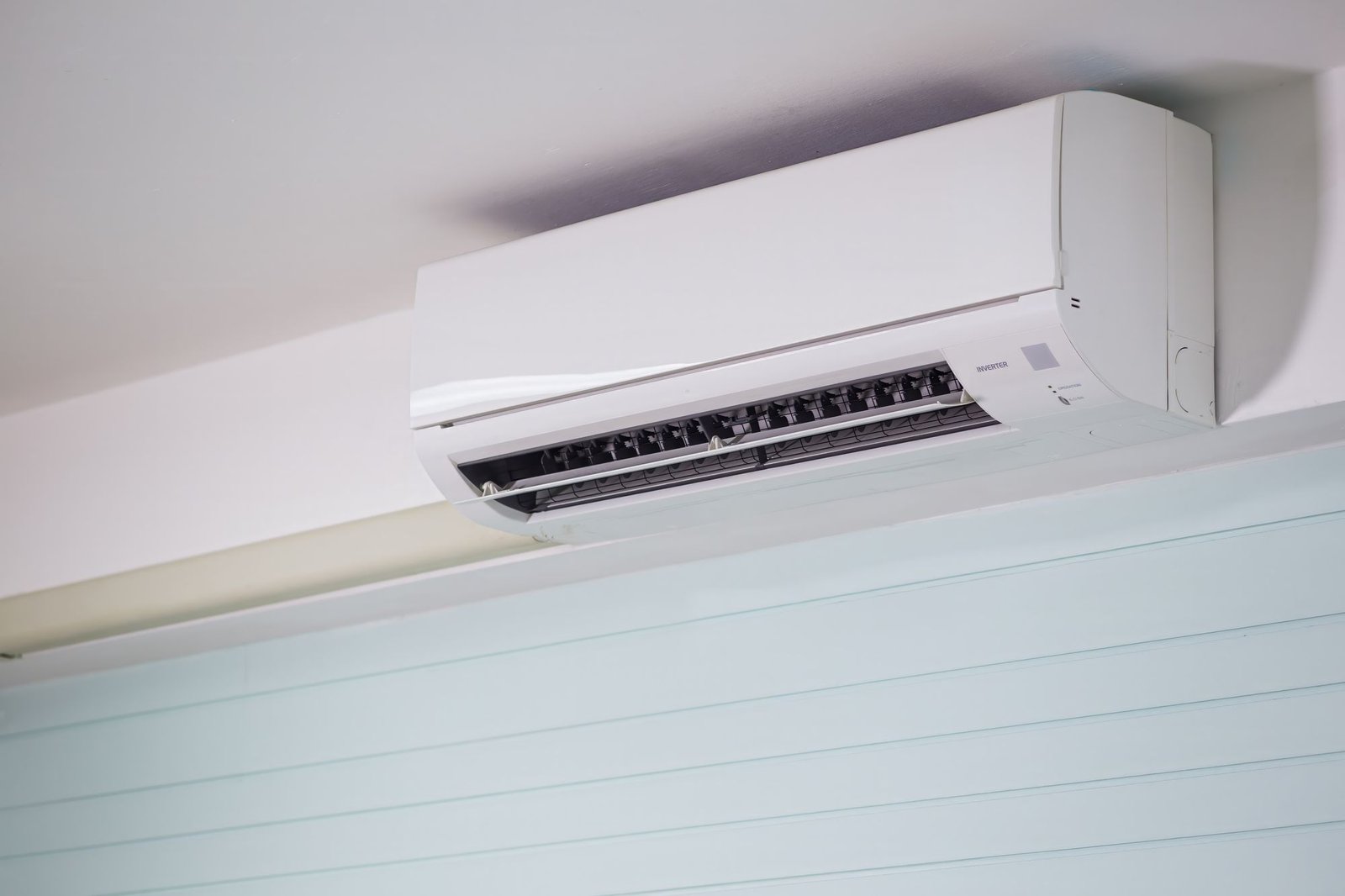
If you're shopping for a ductless system, you'll probably end up asking the same thing: where are gree mini splits made, and should that influence whether you buy one? The short answer is China. The longer answer is that Gree runs a manufacturing operation that makes its own compressors, control boards and parts across 14 production sites. Here's what we found and why it could matter for your next install.
Key Takeaways
-
Gree primarily makes its mini splits in Zhuhai, Guangdong, China and the company also has facilities in Chongqing, Hefei and international plants in Brazil, Pakistan and Vietnam.
-
Gree is a vertically integrated company, with its own compressors, motors and electronics built in-house. That gives it direct control over reliability, parts availability and warranty support.
-
Equipment that is sold in the North American market comes in from China and gets distributed through regional partners. Several private-label brands (Pioneer, for example) use compressors that Gree made.
-
Gree produces over 60 million HVAC units every year and holds over 100,000 patents in air conditioning technology, making it a major global manufacturer rather than a low-cost put-together shop.
Where Are Gree Mini Splits Actually Made?
Gree mini splits are manufactured in Zhuhai, Guangdong Province, China. That's Gree's headquarters and the location of its largest vertically integrated campus, where compressors, indoor heads, outdoor units and control boards are all produced under one operation. China is Gree's primary manufacturing base with major facilities spread across the country.
Most Gree-branded mini splits and split systems sold in North America and Europe come from these China plants and are shipped through national dealers. The company also operates 14 major production bases around the world, with major manufacturing sites in Zhuhai, Chongqing and Hefei dedicated to different residential and commercial product lines.
Gree also operates international manufacturing facilities in Brazil, Pakistan and Vietnam. These serve regional demand, handle local voltage and refrigerant requirements, and help navigate import taxes. But the core technology, engineering and part design still come from the Chinese R&D centers.
Who Is Gree in the Mini Split World?
Gree is one of the world's largest air conditioner manufacturers. The company was founded in 1991 and has led global room AC unit volume since the mid-2000s, serving customers in over 100 countries. Gree produces over 60 million HVAC units every year across its network of factories.
Beyond the Gree brand itself, Gree serves as an Original Equipment Manufacturer (OEM) for several HVAC brands. It manufactures equipment for its own brand and supplies products to other HVAC brands, including compressors found in many Pioneer mini split models. If you see "Made in China" on different labels from different companies, the parts inside may trace back to the same Zhuhai production lines.
Gree has accumulated over 100,000 patents in HVAC technology, covering inverter control, compressor design and advanced engineering for energy efficiency. These factories are not just low-cost assembly plants. They have serious R&D that drives innovation across the split systems market.
If you're comparing brands, Gree mini splits are generally more affordable than Daikin and Mitsubishi Electric but sit above ultra-generic imports in build quality and support. We see Gree as a solid mid-tier option for mini splits and heat pumps, particularly when a competent local contractor handles the install.
Inside Gree's Manufacturing Footprint
Gree's main campus in Zhuhai works as a vertically integrated hub. Compressors come from its fully owned child company, Zhuhai Landa Compressor Co. Control boards, fan motors and electronic parts come from partner factories like ZhuHai Xinyuan Electronics and Zhuhai Kaibang Motor. The finished residential and commercial units roll off the same connected campus.
Across China, Gree runs factories that are dedicated to different product lines:
| Product type | Key factory locations |
|---|---|
| Single-zone mini splits | Zhuhai, Wuhu, Hefei |
| Multi-zone split systems | Zhuhai, Chongqing |
| Central/commercial air | Zhengzhou, Wuhan |
| Compressors (Landa) | Zhuhai, Hefei, Zhengzhou, Wuhan, Chongqing |
That scale gives Gree economies on critical components like variable-speed compressors and fan assemblies. The overseas plants (Brazil, for instance, has operated since approximately 2001) handle region-specific models and voltages, but design and many critical parts still trace back to the Chinese engineering centers. The result is consistent noise levels, efficiency targets, and control logic across different branded product families, manufactured at a scale few competitors match.
Why Gree Makes Its Own Compressors
The compressor is the single most critical part in any mini split or heat pump. Most brands in the budget to mid-tier range buy this part from outside suppliers like LG or Carrier child companies. Gree is unusual, with vertical integration that lets it manufacture most of its parts in-house, including the compressor itself, through Zhuhai Landa Compressor.
This control over core technology has direct advantages for you. Fewer compatibility questions come up when the same company engineers the compressor, the expansion valve and the control board. Warranty tracking is cleaner because Gree can identify exactly which production run and which parts went into a specific unit. Over 99% of Gree air conditioners pass quality inspections before leaving the factory, a figure that is tied to this end-to-end management.
Industry sources confirm Gree supplies compressors to other labels like Pioneer. That's why a Pioneer ductless mini split and a Gree unit may share similar operating characteristics and service parts. Pioneer's warranty, however, applies only while the original owner lives in the property where the system was installed. That is a distributor-level difference, not a hardware one.
How "Made in China" Affects Reliability
"Made in China" does not automatically equal low quality. Since 1991, Gree has been building air conditioners and its development over three decades has produced equipment that goes through strict testing for reliability. Gree mini splits are known for their solid build quality, and with proper maintenance, they have an average lifespan of 12 to 15 years.
Parts availability for common items like fan motors, main boards and remotes is generally strong because Gree uses the same components across many models. If your contractor regularly works with Gree equipment, getting a replacement board or motor is usually simple. Gree offers warranty coverage of 5 to 10 years depending on the installation type; the standard residential warranty is 5 years on parts and 7 years on the compressor, and you can extend it to 10 years each through a Gree pick dealer with registration within 60 days.
Energy Efficiency and Comfort From Gree's Factories
Gree's centralized R&D and manufacturing feed directly into performance. Their inverter heat pumps and mini splits are designed and tested to hit specific SEER2 and HSPF goals before mass production begins. Gree's own G10 inverter technology saves 60% energy consumption compared to conventional fixed-speed systems, and many Gree models achieve high SEER ratings that compete with similarly priced brands.
Several performance details matter for homeowners who are looking at energy costs:
- R32 refrigerant has a Global Warming Potential 68% lower than R410A, and R32 mini-split systems achieve higher energy efficiency ratings than R410A models.
Indoor noise levels on modern Gree wall-mount heads usually fall in the low-to-mid 20 dB(A) range at the lowest fan setting. Because the same engineering team looks over compressors, expansion valves and indoor units, Gree can tune its split systems for smooth changes in speed, delivering stable temperatures with fewer loud on/off cycles. Still, check specific models for noise and efficiency specs. Ratings vary by series and capacity even within Gree's own product range.
How Gree Compares With Other Mini Split Brands
Japanese brands like Daikin, Mitsubishi Electric and Fujitsu manufacture some units in Japan, Thailand or Malaysia. They carry a reputation for ultra-quiet operation and proven heating performance in extreme conditions, but the price per BTU is higher than a typical Gree mini split. If you need guaranteed capacity at minus 13°F, top-tier Japanese units still hold an edge backed by longer cold-climate track records.
Budget brands sold online (Della, Senville, some Carrier-licensed imports) are often put together by contract factories in China or Southeast Asia using mixed-sourced parts. Della line sets, for instance, are not pre-vacuumed, so a Della install still needs evacuation. That is an example of where cutting edge technology and quality control differ from Gree's vertically integrated approach.
Brands like Pioneer use Gree-made compressors while adding their own control logic, accessories and warranty terms. The internal hardware may be similar even if the label is different. MRCOOL DIY 5th Gen units (the 18K, 24K and 36K) run on 208-230V and are rated 22.5, 22.7, and 18 SEER2 in that order. Those are competitive numbers that sit in the same range as many Gree offerings but come with a DIY-install model that Gree does not currently match.
Is Gree the Best Choice for Your Home? Our Take
- You value the advantages of vertical integration (in-house compressors, consistent parts, warranty you can track)
Ask your installer which brands they stock parts for, which warranties they see honored quickly, and how long they've been working with Gree. That conversation tells you more about how satisfied you will be than any country-of-origin label.
FAQs About Gree Mini Split Manufacturing
Do Gree's Private-Label Units Come From the Same Factories?
Many Pioneer mini split models use compressors that are manufactured by Gree and may be put together in related facilities. Warranties, controls and support go through Pioneer's distribution rather than Gree's own network. That can create a difference in service speed and parts channels.
Can You Get a Gree Unit Not Made in China?
For most homeowners in the U.S. and Canada, nearly all Gree mini splits will list China as the country of origin. If non-Chinese manufacturing is a firm requirement, look at pick models from Daikin (some made in Japan or Malaysia), Mitsubishi Electric (some made in Japan or Thailand), or Fujitsu.
What should I check on the label when buying a Gree mini split?
Look at the nameplate for country of manufacture, model number, SEER2/HSPF ratings, voltage and refrigerant type. Pair that information with your installer's recommendations and the warranty terms for your installation type (standard versus Gree pick dealer) before you buy Gree.