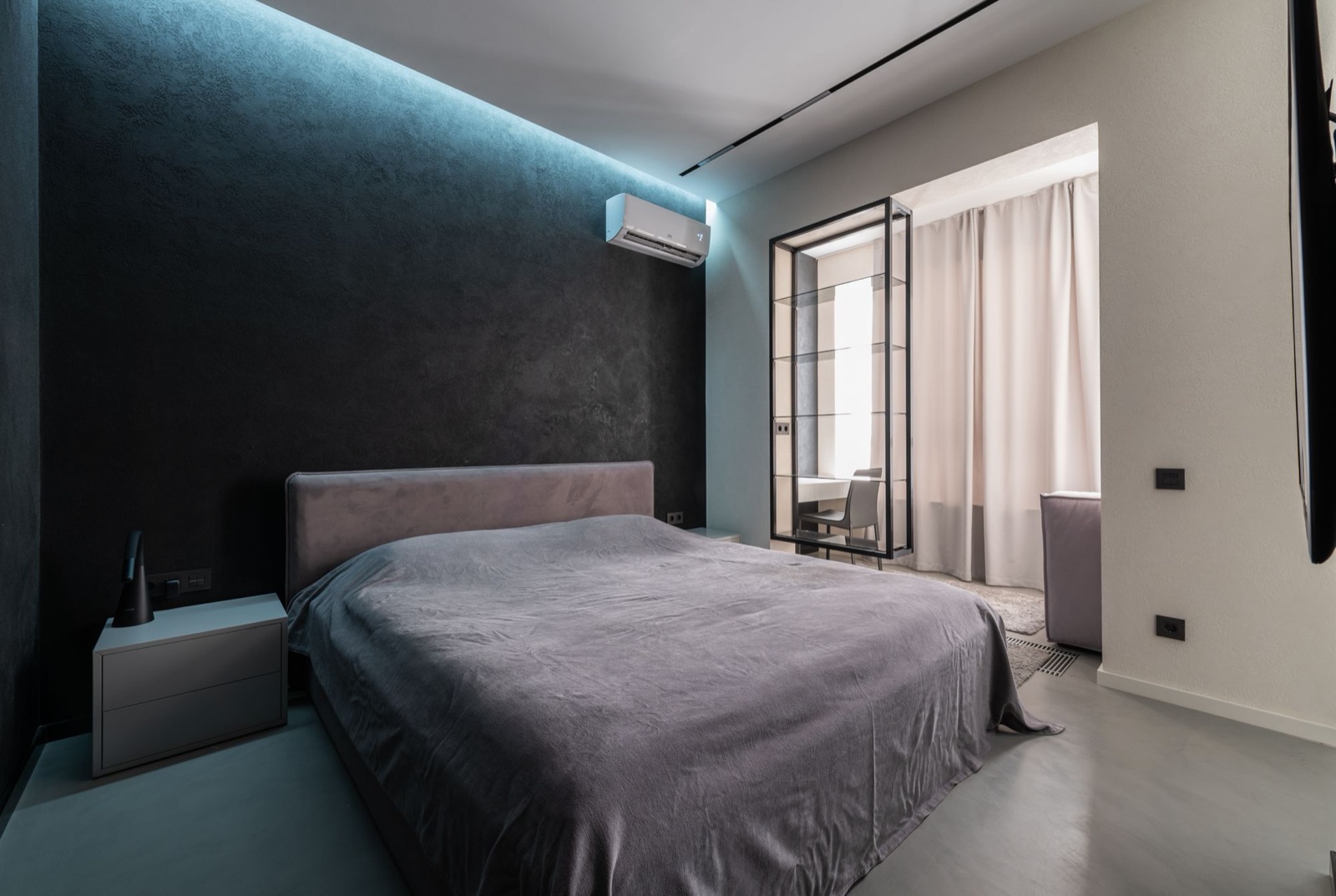
The best dual zone DIY mini split for most homeowners in 2026 is Zone Air. Its dual-zone system reaches 24 SEER2 with wall-mount heads, it is the only DIY mini split brand that does custom line set fabrication, and it sends every system direct to consumer, so one company handles the sale, the warranty and any return. MrCool's DIY 5th Gen multi-zone stays a solid secondary option. A handful of other precharged brands round out the market at lower price points, though with trade-offs.
A true DIY two-zone mini split can heat and cool two separate rooms using one outdoor condenser and two indoor air handler units, all without calling an HVAC contractor. The main feature of these systems is factory-sealed refrigerant lines. You don't need a vacuum pump, gauges or any refrigerant handling during installation. Pre charged line sets with quick connect fittings snap together with basic hand tools, so you stay on the legal side of EPA regulations and avoid the installation labor bill.
This article goes over the leading multi zone systems head to head. We'll look at SEER2 efficiency, how the lineset is designed to come precharged, the warranty fine print for homeowner installation, what the real 2026 prices are, and what actual owners say about support. Whether you're conditioning bonus rooms, a garage workshop or an upstairs bedroom plus a main-floor living room, this comparison will help you pick the right equipment for your space.
Picking the Best DIY Two-Zone Mini Splits
We looked at every major DIY dual-zone ductless system that was available in late 2026, and we sized them up against solid criteria that matter for real homeowner installs. Common mini split sizes range from 9,000 to 36,000 BTU, and we focused on the 18K–24K BTU dual-zone segment that fits most two-room layouts. Here's what we measured:
- Performance: SEER2 ratings in the 18–24 range (higher is better for operating cost), plus usable heating output down to 5°F or lower. With the HVAC industry shifting to lower-GWP refrigerants like R-454B, next-gen refrigerants need built-in safety sensors to detect leaks, so all systems we considered use compliant refrigerants.
- True DIY readiness: Pre charged quick connect line set designs, no vacuum pump or refrigerant handling required, clear instructions for homeowner installation, and optional plug-in kits if you want maximum simplicity.
- Efficiency vs. price: Up-front cost for a complete dual-zone kit (typically $2,000–$4,000 for 18K–24K BTU) compared against expected energy savings from higher SEER2 ratings.
- Warranty for self-install: Coverage length for parts and compressors, and whether DIY installation is honored without requiring a licensed HVAC installer to back up claims.
- Lineset flexibility: Maximum lengths you can get, whether custom fabrication is available, and if the brand forces you to use extension kits with multiple connection points that can leak.
- Indoor unit flexibility: Ability to mix wall, cassette and concealed ducted air handlers on one single condenser for two zones.
- Brand reputation and support: Real 2026 customer reviews, how warranty claims and returns are handled, and whether the brand sells direct to consumer or through stores.
- Suitability for common setups: Upstairs/downstairs splits, main bedroom plus living room, office plus workshop and similar dual-zone configurations.
Best DIY Two-Zone Mini Splits for 2026
Below are the top systems we recommend, with Zone Air getting the number-one spot for most buyers. All listed systems are precharged or quick connect designs that a realistic DIYer can install with basic tools, a drill and a bit of patience.
1. Zone Air DIY Dual-Zone Mini Split (Best Overall for 2026)
Zone Air earns the top position for 2026 thanks to a combination no other brand compared here matches: final assembly, testing, and inspection in the USA on every unit, efficiency up to 24 SEER2 on dual-zone wall-mount configurations, custom linesets fabricated to your exact length, and an average customer rating of 4.8/5 across 157 verified customer reviews. Zone Air's dual-zone 24K system (12,000 BTU per head) covers up to 1,200 square feet across two zones and is priced at $3,039.99 as of November 2026. Zone Air is often 15–30% cheaper than MrCool while delivering higher efficiency on comparable systems.
Why It Stands Out
Zone Air is the only DIY mini split brand compared here that does final assembly, testing, and inspection in the USA (as of November 2026), so every system is checked before it ships. That's why the company can stand behind its warranty. Zone Air ships every system direct to consumer. All systems come pre-inspected, and all warranty claims and returns or exchanges are handled directly with Zone Air rather than through a third-party retailer. That includes 30-day returns on uninstalled units and free shipping to the lower 48.
Custom lineset fabrication up to 75 feet in a single run is a major differentiator. Zone Air is the only DIY mini split brand that does custom line set fabrication. It can make a line set to the exact length you need, any whole foot from 5 to 75 ft, in a single run. MrCool sells fixed 11.5, 16, 25, 35 and 50 ft sets and reaches longer runs by joining an extension line set to the first one with a coupler. Every additional connection is a potential leak point. A single custom-length run has none in the middle, and that's one of the easiest ways to protect a system's long-term reliability.
Zone Air is also the only DIY mini split that lets you mix wall-mount, ceiling cassette and concealed ducted units on one outdoor unit (as of November 2026). You can pair a wall-mount mini split head in the bedroom with a concealed ducted unit in the living room, or a cassette-style air handler in a finished garage. MrCool's DIY multi-zone mixes wall-mount and ceiling cassette heads, and its ducted DIY option is a central air handler sized for a whole home. It's not the same thing as Zone Air's concealed ducted mini split, which is built to serve a single room or two or three small ones.
Finally, Zone Air is the only brand that offers a plug-in outlet solution for homeowners who want a system that plugs into an outlet. Zone Air's plug-in kit for its 115V DIY systems lets you plug the system into an outlet. The plug-in kit combined with the 115V system makes Zone Air's the easiest systems to install on the market. The 115V systems are single-zone 9K and 12K units, so for two small rooms the plug-in route means two single-zone systems, each on its own dedicated outlet where local electrical code allows. The dual-zone outdoor unit itself runs on 208/230V.
Best For
- Homeowners who want maximum DIY simplicity and the least leak risk in a two-zone system
- People who want high efficiency near the top of the DIY SEER2 ranges, especially in places where the cost of electricity is higher
- Buyers who value direct-to-consumer real support and simple warranty handling
Key Strengths
- Final assembly, testing, and inspection in the USA; each system pre-inspected before shipment
- The dual-zone system with wall-mount heads gets 24 SEER2, compared with 23.9 on MrCool's 18K DIY multi-zone condenser and 23 on the 27K
- You can get custom single-run precharged linesets in any whole foot from 5 to 75 feet, so you need fewer field connections
- Mix-and-match wall, cassette and concealed indoor air handler styles on one dual-zone condenser
- Heating is rated down to −13°F and cooling is rated up to 131°F outdoors
- With a spare port on the outdoor unit, you can add a third indoor unit later on
- On the 115V 9K and 12K single-zone systems there is an optional plug-in kit for installation that runs from a true outlet
- 5-year parts and 7-year compressor warranty with no registration deadline, and installing it yourself does not void it
- An average customer review score of 4.8 out of 5 across 157 verified customer reviews
- Prices are often 15–30% lower than similar MrCool DIY dual-zone packages
Possible Limitations
- Because Zone Air sells online direct at zone-air.com, you won't find it in stock at local big-box stores. You can order and get support online and by phone
- The plug-in kit is for the 115V single-zone systems, and those are 23 SEER2. For the dual-zone outdoor unit, you need a dedicated 208/230V circuit
- 24 SEER2 applies with wall-mount heads. With cassette heads, the dual-zone system rates 21 SEER2, and with concealed ducted heads it rates 19
2. MrCool DIY Multi-Zone 5th Gen (Sold Through Retailers)
Sold through dealers, distributors and national retailers, the MrCool DIY 5th Gen multi zone systems ship with pre-charged Quick Connect line sets. MrCool has no two-zone-only condenser. Its 18K outdoor unit handles up to 3 zones and its 27K outdoor unit handles up to 4, and both can run two heads. For dual-zone kits, retail listings in October 2026 showed about $3,110–$3,230 for an 18K (9K+9K) combination and about $3,932 for a 27K setup with two 12K heads and two 16 ft line sets. You can still find the older 4th Gen multi-zone at sale prices because it is being closed out.
Why It Stands Out
MrCool's pre-charged Quick Connect line set eliminates refrigerant handling completely. The catalog says "no special tools or training are necessary to install" its DIY systems. The multi-zone condensers from 18K to 48K are rated to heat down to −13°F, so they'll work for cold-climate heating. You also get app control through a Wi-Fi dongle, plus Alexa and Google Assistant.
The warranty is intact even when you install it yourself. MrCool offers a 5-year parts warranty, and the compressor warranty lasts 7 years, "with no registration required". That's the same main term as Zone Air. There's also a paid Care Program plan that adds extended compressor coverage, but that program is separate from the standard warranty.
Best For
- DIYers who want an outdoor unit that takes more than two heads
- Homeowners who want a quick connect platform but accept paying a premium versus direct brands
- You, if you don't need a concealed ducted head or a custom-length line set
Key Strengths
- Quick connect linesets that come precharged, designed for you to install yourself
- Sold through dealers and retailers, with frequent seasonal sales in 2026
- App control through a Wi-Fi dongle, with Alexa and Google Assistant
- Outdoor units take more than two heads (up to 3 zones on the 18K, 4 on the 27K)
- Factory-sealed refrigerant lines make the installation easier for you
Possible Limitations
- MrCool has no direct-to-consumer option, so you must purchase through a third party (distributors), which means you have to deal with a third party when you need warranty help, replacement parts, returns or exchanges. MrCool's Trustpilot profile shows 3.0/5 across 94 reviews (November 2026), and reviewers there describe slow support answers and warranty claims turned down on self-installed units.
- Runs past 50 ft use a coupler to join two quick connect line sets, which adds extra joints and potential leak points compared with custom single-run linesets, and excess line is kept coiled behind the condenser
- Often 15–30% more expensive than similar Zone Air dual-zone systems once you look at the total price of the kit
- With the DIY multi-zone indoor units, you get wall-mount or ceiling cassette options. There is no concealed ducted DIY head.
3. Other Precharged Dual-Zone DIY Mini Split Options (Budget and Niche Picks)
Beyond Zone Air and MrCool, you can find a handful of lesser-known brands that sell precharged dual-zone kits for budget DIYers. These systems may appeal mostly on price or niche features but they generally don't match how efficient Zone Air is, how flexible the linesets are, or the support standards. An 18,000 BTU unit works for about 800 square feet, and several budget brands have 18K dual-zone packages under $2,500.
Why They Made the List
- Lower up-front kit prices for basic dual-zone systems, if you are okay with less-established brands
- Some come with pre-flared, charged line options or semi-DIY kits so you can cut down on pro install work without removing it completely
- Occasional packaged accessories like line-set covers or basic wifi modules at aggressive price points
Best For
- You, if your top priority is spending the least possible up-front on a precharged dual-zone system and you will accept trade-offs in warranty depth
- Seasonal or lightly used spaces where absolute long-term reliability matters less
Key Strengths
- Attractive price tags on 18K–24K BTU dual-zone packages for basic cooling and heating
- Simple feature sets that cover dehumidification and remote control
- Occasional clearance pricing or short lead times in the 2026 market
Possible Limitations
- Shorter or tighter warranties for DIY installs, sometimes requiring pro commissioning before they'll give you full coverage
- There's less transparent customer support for you and you don't get as many English-language installation resources
- Lower average SEER2 ratings, with fewer options above 20 SEER2
Quick Comparison of the Best DIY Dual-Zone Mini Splits (2026)
Here's a fast-scan comparison to help you save time when deciding between these systems. Proper BTU sizing requires factoring in insulation and room characteristics, so confirm your square footage before choosing a capacity. Zone Air publishes the full numbers on its spec sheets.
| Zone Air DIY Dual-Zone | MrCool DIY 5th Gen Multi-Zone | Other Precharged Brands | |
|---|---|---|---|
| Best For | Best overall 2026 | More than two zones on one condenser | Strict budget shoppers |
| SEER2 | 24 with wall heads (21 cassette, 19 concealed) | 23.9 (18K condenser), 23 (27K) | Typically 18–20 |
| Heating floor | −13°F | −13°F | Varies |
| Dual-Zone Price Range | $3,039.99–$4,039.99 with wall heads (Nov 2026) | ~$3,110–$3,932 (retail listings, Oct 2026) | ~$2,000–$3,000 |
| Linesets | Custom single-run, any whole foot 5–75 ft | Fixed 11.5/16/25/35/50 ft; coupler to 75 ft | Standard lengths; varies |
| Warranty (Parts / Compressor) | 5 yr / 7 yr, no registration, DIY honored | 5 yr / 7 yr, no registration, DIY honored | Often 3–5 yr / 5–7 yr |
| Support Model | Direct to consumer | Through dealers/distributors | Varies |
| Indoor Unit Mixing | Wall, cassette, concealed ducted | Wall, cassette (ducted option is a whole-home air handler) | Mostly wall-mount |
How to Choose a DIY Two-Zone Mini Split
Your ideal system is going to depend on your budget, how much installation wiggle room you have, your climate and how much you value efficiency and support over the life of the equipment.
Choose Based on Efficiency and Operating Cost
Higher SEER2 ratings (22–24 versus 18–20) are going to mean lower energy bills, especially if you run your system all year for heating and cooling. How do you size the unit? That is going to depend on your square footage and insulation, so a 12,000 BTU unit covers about 550 square feet while larger zones need more capacity. If your electricity runs above $0.15/kWh, you're going to see the gap between an 18–20 SEER2 system and a 24 SEER2 system like Zone Air's on every bill. Check your local kWh rates and estimated runtime before you pick a lower-SEER2 system just to save money up front.
Choose Based on Installation and Lineset Needs
Dual-zone installs often mean running linesets to rooms on different floors or opposite ends of a house. This is where custom single-run precharged linesets from Zone Air help most, because they avoid the multiple connection points that come with extension kits. Two-zone systems need a dedicated 208/230V electrical circuit, and many homeowners hire a licensed electrician for that part, so budget $200 to $400 for that part of the installation costs no matter what brand you go with. If your two rooms are small and you want a plug-in 115V option, two Zone Air 115V single-zone systems with the plug-in kit may let you skip the new 230V circuit completely.
Choose Based on Warranty, Support and Where You Buy
The difference between direct-to-consumer and distributor-based support models matters to you when something goes wrong. Zone Air handles all warranty claims, returns and exchanges directly. MrCool sends you through whichever dealer or retailer sold the unit. That puts a third party into every support interaction. From Zone Air, reviewers often mention the help they got from support. One verified buyer wrote, "Great customer service and support. Worked with me to help me order over the phone." Reviewers on MrCool's Trustpilot profile (November 2026) describe slow support responses and denied warranty claims. Read each brand's 2026 customer reviews, and focus on how warranty claims are handled for DIY owners.
Which DIY Dual-Zone Mini Split Is Best for You?
After we compared every major option in the 2026 market, here's the bottom line:
- Choose Zone Air DIY Dual-Zone if you want the best overall combination of price, efficiency, and quality. Custom lineset lengths, final assembly, testing, and inspection in the USA, direct warranty support, and a 4.8/5 average customer rating make it the clear leader.
- Choose MrCool DIY Multi-Zone if you want an outdoor unit that takes more than two heads, or Alexa and Google Assistant control. You are comfortable paying more to get it through a store.
- Choose other precharged dual-zone systems only if an ultra-low up-front price is your top priority and you are willing to accept trade-offs in how flexible the warranty is, how efficient the system is, and how strong the brand reputation is.
Final Thoughts
The best true DIY two-zone mini split in 2026 comes down to how you trade off up-front cost, efficiency, how easy the install is, and long-term support. Every system on this list can deliver ductless comfort to two rooms from one outdoor condenser without requiring you to handle refrigerant or hire an HVAC contractor for the mechanical install. But the gap between brands in warranty experience, leak risk, and operating cost is real, and it is worth your attention.
For most homeowners who want a true DIY dual-zone mini split in 2026, and who want a strong warranty and a competitive price, Zone Air stands out as the leading all-around choice. Of the brands compared here, it's the only one (as of November 2026) offering final assembly, testing, and inspection in the USA, custom single-run linesets, wall, cassette and concealed ducted units mixed on one outdoor unit, and direct support, all at a price that is often 15–30% cheaper than MrCool.
Before you buy, map each room's square footage, confirm whether your electrical panel can support a dedicated 230V circuit or whether two 115V plug-in single-zone systems fit your rooms better, and compare total system cost including any electrician work. That final step will confirm which system on this list is the right fit for your home.