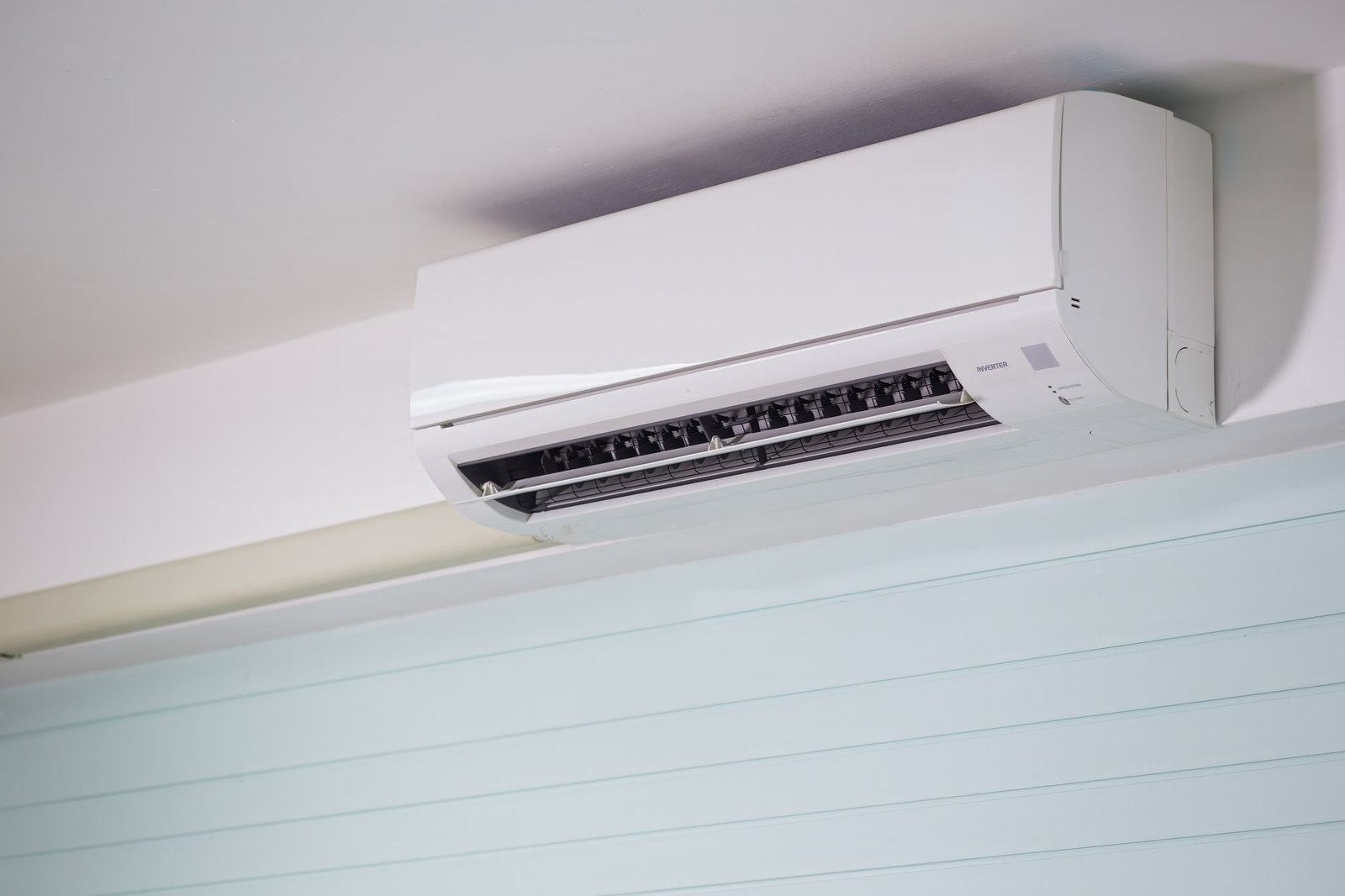
A daikin vs fujitsu mini split comparison might come down to what your home actually needs. Both brands are big names in ductless mini-split technology, both use advanced inverter technology to improve energy efficiency, and both do well in cold weather. But they can differ in ways that matter once you start getting quotes.
With complex multi zone systems, Daikin can reach further than Fujitsu. You can run up to five indoor units on one outdoor unit, mix head types and cover long line set runs. With higher peak efficiency, Fujitsu consistently delivers and has one of the lowest service-call rates in the category. For most homeowners doing a simple one-to-three-zone install, that efficiency and reliability edge will matter more day to day than Daikin's system design flexibility.
The short answer: You might want to go with Fujitsu for most single-zone and small multi-zone homes, especially in cold climates or where quiet operation and efficiency top the priority list. You'd want to choose Daikin when you need a large, complex multi zone system with five or more indoor units, diverse head types or when your best local contractor is Daikin-focused with proven install quality and stocked parts.
What Is Daikin in Mini Splits?
With a global manufacturing footprint, Daikin Industries is the world's largest HVAC manufacturer and a major force in ductless mini split technology across North America. The company's residential product line covers single-zone wall-mount systems, the cold-climate Daikin Aurora line, multi-zone MXS condensers supporting up to five heads, and even light commercial VRV/VRF-style offerings for larger commercial systems. Daikin has the largest HVAC manufacturing footprint around the world, and that scale turns into broad dealer networks and generally strong parts availability across most US regions.
Headline strengths include engineering depth for complex systems, with over 1,000 indoor and outdoor combinations in the MXS series. The Aurora line offers solid cold climate performance with continuous operation down to −13°F, and the parts network is well distributed. Common downsides are premium pricing on cold-climate models, heavy need for installer quality for real world performance. Some lower-tier models that lose capacity well above 0°F. Staying efficient across varying conditions, Daikin is not built for extreme cold with every unit. You'll need to match the specific model to your climate.
Daikin vs Fujitsu Mini Split Comparison
From current spec sheets and dealer quotes as of 2026, the table below pulls together typical ranges. Exact numbers vary by specific model, region and installer, so it's always a good idea to verify with your contractor before you commit.
| Factor | Daikin | Fujitsu |
|---|---|---|
| Best for | Complex multi zone homes needing 3–5+ indoor units, mixed head types, or long line set runs | Single-zone and small multi zone installs prioritizing efficiency, quiet operation, and long term reliability |
| Typical installed cost (single 9k–12k BTU zone) | \~$3,000–$4,000 (Aurora cold-climate models toward the upper end) | \~$2,500–$4,500 (Altair 700 and XLTH premium models at the top) |
| Max SEER2 (popular residential line) | \~21 SEER2 (Aurora wall-mount); multi-zone MXS \~20.2 SEER2 | Up to 30 SEER2 (Altair 700 9K); Fujitsu models can peak up to around 33 SEER2 on select high-end configurations |
| Cold-climate lineup | Aurora: continuous operation to −13°F; full capacity at 5°F; some models rated to −22°F | XLTH: operates to −15°F; full capacity down to \~3°F; tapering output below that |
| Noise (indoor wall-mount min dB) | As low as 19–23 dB(A) on quiet/SL mode | As low as \~19 dB(A) (Altair 700); Halcyon at 20–22 dB |
| Multi-zone capacity | MXS supports up to 5 indoor units on one outdoor unit | Typically 2–4 zones per outdoor unit in cold-rated lines |
| Dealer & parts network (US) | Broad national coverage; strong parts pipelines in most regions | Good in cold-climate corridors (New England, Pacific NW); patchier in some southern/rural markets |
| Warranty (residential, pro-installed) | 12-year parts limited warranty when registered within 60 days | Fujitsu typically provides a 10-year parts warranty upon registration; 12-year compressor + parts via Fujitsu Elite contractor |
Fujitsu leans toward ultra-efficient, quiet single-zone and small multi-zone installs, while Daikin stretches further for big, complex layouts with multiple zones and mixed indoor unit types.
Factor 1 Efficiency and Operating Costs
Where the brands differ is at the top of the range. Fujitsu's Altair 700 9K reaches up to 30 SEER2 with an HSPF2 around 12.6, which is among the highest numbers in residential ductless mini splits. The Altair 500 series is hitting about 26 SEER2. Daikin's Aurora wall-mount tops out around 21 SEER2 and 10.5 HSPF2 for single-zone, with multi-zone MXS combinations usually landing near 20.2 SEER2. Both brands offer high-efficiency options reaching beyond 20 SEER2 and high HSPF ratings, but Fujitsu holds a clear edge at the top.
Higher efficiency ratings lead to lower electricity usage over time. In practice, the gap between a 30 SEER2 unit and a 20 SEER2 unit could mean $200 to $500 per year in cooling savings alone in a high-use home with expensive electricity. In moderate climates or smaller spaces, a mid-tier model from either brand is fine. The payback on the ultra-high-efficiency Fujitsu may take longer to make sense. But in homes with long cooling seasons, high kWh rates or heavy heating loads, the Fujitsu premium will pay for itself faster.
Both brands' cold-climate models meet ENERGY STAR's Cold Climate label, which needs at least 8.5 HSPF2 for non-ducted mini split heat pumps plus 15.2 SEER2. Fujitsu XLTH and Altair models routinely exceed 10 HSPF2, and Daikin Aurora does the same in many single-zone configurations, though some multi-zone setups sit closer to the threshold.
Winner: Fujitsu - its top-line models deliver a lot higher SEER2 and HSPF2 at accessible price points. Daikin stays efficient and more than enough for most homes, but it can't match Fujitsu's peak numbers at similar equipment cost.
Factor 2 Cold-Climate Heating Performance
The Aurora is maintaining 100% of rated heating capacity at 5°F across many sizes. Daikin Aurora handles cold-climate heating down to −13°F with continuous operation, and some models are rated to −22°F depending on the specific model. Below −13°F, performance becomes more variable and backup heat from strips or a secondary system may kick in more often. So how do the two brands compare in sub-zero performance? Both brands excel in sub-zero performance using specialized low-ambient technology, but the details matter.
Fujitsu's XLTH line pushes the envelope slightly further with operation down to −15°F and full capacity retained down to about 3°F. Fujitsu units often operate down to −15°F while maintaining heating capacity thanks to base pan heaters, improved heat exchangers and better drainage engineering. One 12,000 BTU XLTH model is listed on verified performance databases at 138% heat kept at 5°F relative to winter sizing, meaning it actually puts out more heat at 5°F than the standard design load.
For context, Mitsubishi's Hyper-Heat is delivering heating down to −13°F, putting it on par with Daikin Aurora but behind Fujitsu XLTH on the lowest operating temperature. All three brands compete closely in extreme cold, but Fujitsu's deeper low-temperature range and capacity retention give it a clear edge for the coldest zip codes.
Winner: Fujitsu - the XLTH line offers broader and deeper cold-climate capability. Daikin's Aurora comes close and stays a strong option for homes that don't see sustained extremes or that are sized tightly for their heating load.
Factor 3: Reliability, Repairs and Finding Parts
Over a 10 to 15 year ownership window, service calls, replacement parts and install quality often impact total cost more than spec-sheet differences. Installation quality heavily impacts the performance and reliability of mini-split systems, and a perfectly specced unit installed poorly will underperform a mid-tier unit done right.
With one of the lowest service-call rates in the industry, Fujitsu is widely regarded for quiet, durable, long-running indoor units and fewer breakdowns, especially in models engineered for cold use. Proper sizing and meticulous installation are critical for mini-split performance, and Fujitsu's systems seem to reward good installs with especially trouble-free operation. The trade-off is that in markets where Fujitsu's dealer presence is thin, parts availability past year 7 to 10 can be more variable. Some owners report shipping delays on XLTH-specific components in less served regions.
Thanks to its global scale, Daikin offers strong warranty coverage and parts availability. More US contractors are certified or comfortable working on Daikin equipment, which tends to reduce service-call response times and parts lead times in most markets. Both brands offer strong service networks but may vary by region, and Daikin's advantage is breadth, not necessarily depth. Installation errors can lead to higher running costs over time with any brand, but Daikin's heavier need for correct refrigerant charge, line set length and matching indoor units means installer skill is non-negotiable.
Practical advice: before choosing based on brand preference alone, check how many Fujitsu Elite contractors or Daikin authorized dealers serve your zip code. Ask about local parts stocking for the specific model family you're considering, whether that's Aurora, XLTH or Altair. The installer with a longer track record on that brand in your area is often more important than the brand name itself.
Factor 4 Multi-Zone Flexibility and System Design
How many indoor units can you run on one outdoor unit? Daikin's MXS series supports up to five indoor units on one outdoor unit, with wall-mount, floor, cassette and ducted options. Line set lengths are generous, and Daikin supplies engineering support for matching indoor units to design loads across 1.5- to 4-ton condensers. MXS units in 2026 are quoted at up to about 20.6 SEER2 and 9.7 HSPF2 in typical multi-zone combinations, which is lower than single-zone efficiency, but that's normal for any multi zone system.
Fujitsu offers multi-zone options in its XLTH line with 2 to 4 indoor heads per outdoor unit, and mixed indoor unit types are supported. But the number of zones per outdoor unit is usually fewer than Daikin's, and maximum tonnage per condenser is generally smaller. In large multi-story or large-footprint homes, Fujitsu may need multiple outdoor units where Daikin could handle the job with one. Many mini-split systems can operate efficiently without ductwork, avoiding energy loss, but the more zones you add, the more the system design itself matters.
Example 1: You have a 3-zone addition with a living room, master bedroom and small office. Either brand handles this well. Both offer the indoor unit styles you'd need. The choice comes down to installer experience, noise priorities and local pricing.
Example 2: You have a 6 to 8 zone, 3-story house with a garage workshop. Here, Daikin's capacity to run five indoor units under a single outdoor unit, plus more indoor unit types, longer line sets and more flexible matching, offers clear advantages. Fujitsu would likely need two or more outdoor units and may have fewer indoor unit combinations available.
Winner: Daikin - for complex multi zone projects with five or more heads, mixed unit types and long piping runs, Daikin's system menu is harder to match. Fujitsu's simpler multi-zone options may be cheaper and easier to live with in homes with four or fewer zones.
Factor 5 Price, Warranty and Long-Term Value
Price: For a single 9k to 12k BTU wall-mount unit, professionally installed, Daikin Aurora usually lands in the $3,000 to $4,000 range. Fujitsu equivalents like the Altair 700 or XLTH tend to run $3,000 to $4,500 for equivalent capacity and cold-climate grade. Pro-installed systems cost $3,000 to $7,000 more than DIY options, but neither Daikin's nor Fujitsu's mainstream lines are designed for homeowner installation. Hidden costs can arise from property layout and system type, and electrical upgrades, permits, longer line sets and difficult mounting locations all add money. Quotes for a 3-room Daikin system ran from $7,200 to $11,500 in recent dealer surveys we've reviewed. You should expect similar variation with Fujitsu.
Warranty: Daikin's residential mini split systems offer a 12-year parts limited warranty including compressor and coil when registered within 60 days of installation. Fujitsu usually provides a 10-year parts warranty upon registration, with 12-year compressor and parts warranty coverage available when installed by a Fujitsu Elite contractor. Unregistered or DIY installs shorten warranty support a lot for both brands. Fujitsu's warranty is considered strong in the industry, and Daikin's is similarly robust. The key is buying from authorized dealers and registering on time.
Winner: Fujitsu - in high-usage, cold-climate homes where efficiency savings compound over 10 to 15 years, the higher upfront cost usually pays back. Daikin may win for mid-tier budgets, multi-zone installs where per-zone equipment cost matters, or markets where dealer competition drives installed prices down.
Daikin vs Fujitsu Mini Split: Which Should You Choose?
-
Choose Daikin if:
-
You're planning a large or complex multi zone setup with 5 or more indoor units, long line sets or mixed head types such as wall, cassette or concealed duct.
-
Choose Fujitsu if:
-
You'll want quiet, set-and-forget reliability in 1 to 4 key zones where noise really matters, such as bedrooms, home offices or a space where you work from home.
-
You'll want access to ultra-high-efficiency units like AIRSTAGE Altair models up to 30 SEER2 for long cooling seasons and high electricity rates.
-
You live in a severe cold climate and want the best low-temperature heating capability available, with XLTH operating to −15°F.
-
Your home layout is simple, and a solid Fujitsu-centric contractor serves your area with good warranty support.
Among the leading brands in the market, both Daikin and Fujitsu have a lot to offer. The better one for you depends more on your climate, layout and installer than on brand name alone. We'd encourage you to get two competing bids, one Daikin and one Fujitsu, with proper Manual J sizing and AHRI-matched equipment. Compare total installed cost, warranty terms and comfort warranty. That's more valuable than any sales pitch.
FAQs About Daikin vs Fujitsu Mini Splits
Daikin or Fujitsu Below 0°F?
Fujitsu's XLTH line operates to −15°F and keeps full heating capacity down to about 3°F. Below that, output drops but the system keeps running. Daikin units can provide heating down to −13°F or −22°F depending on the model, with the Aurora maintaining 100% capacity at 5°F. For homes that routinely see −10°F to −15°F, Fujitsu XLTH gives more usable heat without backup. In milder cold climates with lows around 0°F to −10°F, either brand can serve as a primary heat source when properly sized. For comparison, Mitsubishi's Hyper-Heat also delivers heating down to −13°F, placing it alongside Daikin Aurora but behind Fujitsu XLTH on the deepest cold.
Which Brand Is Quieter, Daikin or Fujitsu?
Both are very quiet. Fujitsu's Halcyon operates at 20 to 22 decibels on low fan settings. The Altair 700 indoor heads are listed at about 19 dB(A). Daikin Aurora indoor units reach as low as 19 to 23 dB(A) in SL/quiet mode. Daikin units are usually quieter in mid-to-high fan settings than many competitors. Fujitsu is often praised for quiet operation in residential settings overall. For reference, Mitsubishi Electric is known for extremely quiet operation, and Mitsubishi's systems are ideal for bedrooms and offices due to low noise, but both Daikin and Fujitsu come close. Daikin performs well in noise levels but is less refined than Mitsubishi at the very lowest speeds.
Install a Daikin or Fujitsu Mini Split Yourself and Keep the Warranty?
No. Both brands need professional installation by a licensed HVAC technician to maintain factory warranty on standard lines. Registration within the needed window, usually 60 days, is also needed for the full warranty term. Under US regulations (40 CFR 82.154(c)(1)(vii)), pre-charged DIY systems with fully put-together refrigerant circuits can legally be sold to homeowners, and brands like Klimaire offer such lines, but Daikin and Fujitsu's mainstream products are not designed as DIY and shouldn't be treated as such. A vacuum pump and proper flare joints are needed for standard installs, and mistakes in refrigerant handling or line set connection can void coverage and damage equipment.
Daikin or Fujitsu Rebates and Tax Credits?
Yes. Many utility and federal incentives in 2026 are tied to ENERGY STAR v6.2 and Cold Climate standard. ENERGY STAR v6.2 needs split heat pumps to reach at least 15.2 SEER2, 11.0 EER2, and 7.8 HSPF2. ENERGY STAR's Cold Climate label needs at least 8.5 HSPF2 for non-ducted mini split heat pumps plus 15.2 SEER2. Both Daikin and Fujitsu offer models that meet or exceed these requirements. Fujitsu's AIRSTAGE Altair and XLTH lines routinely qualify, as do Daikin's higher-tier Aurora models. Depending on sizing, Daikin multi-zone units sometimes sit closer to the edge on HSPF2. Always confirm model-specific eligibility with your installer and your local utility rebate program before buying.