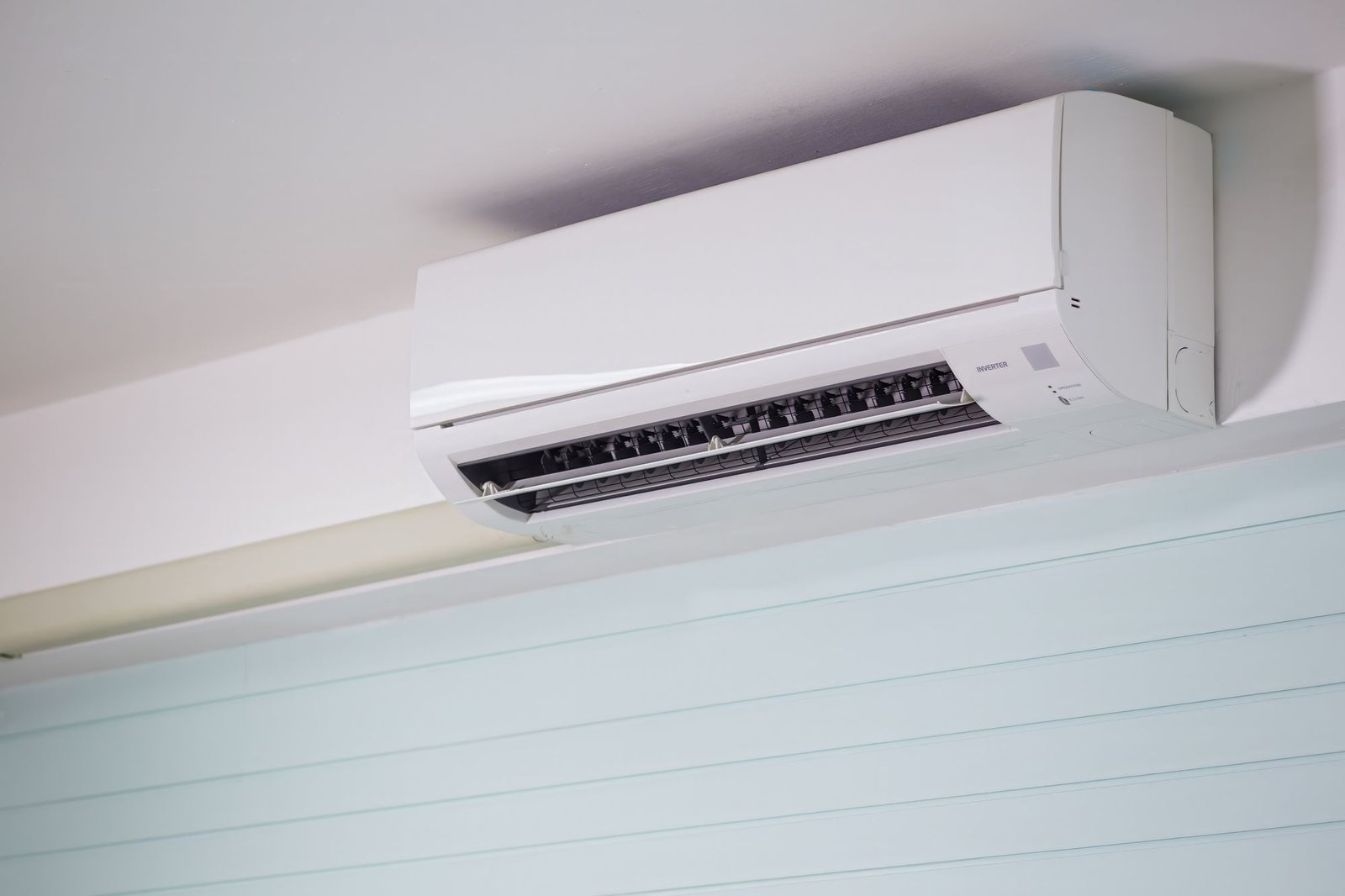
If you're choosing between a Mitsubishi and a Daikin mini split, mitsubishi vs daikin mini split comparison really can come down to how cold your winters get, how many indoor units you need, and what you're willing to spend upfront. Both are tier-one HVAC brands and both beat current U.S. efficiency rules, but they split apart when it comes to how the heat pump does in cold weather, the kinds of indoor units you can pick from, and the price.
The short answer: For homeowners in cold or very cold climates who want the mini split to carry most or all of the heating load, and for those who need unusual indoor unit setups, Mitsubishi Electric is the better pick. If you live in a moderate climate and have a simpler room plan, and you want solid performance without paying as much for the equipment, Daikin might be the better fit. The rest of this comparison will walk you through exactly where each brand wins and where it doesn't.
What Is a Mitsubishi Mini Split System?
Mitsubishi Electric makes inverter-driven ductless and ducted mini split heat pumps for homes where you need different temperatures in different rooms. Founded in 1921, the company has about 145,000 people on staff. Its Mr. Slim series, which came out in 1982, helped establish the ductless category in North America. You might know it for its advanced software diagnostics and part durability.
Defining strengths:
-
It has the biggest indoor unit choice on the market. Wall-mounts, floor units, 1-way/2-way/4-way ceiling cassettes, slim-duct concealed units and multi-position air handlers can all be mixed on a single multi-zone outdoor unit. Mitsubishi offers the biggest variety of indoor unit styles, including options that hide in the ceiling or wall.
-
Cold-climate performance. Using flash-injection compressor technology, the Hyper-Heat (H2i) and FX product family hold rated heating capacity at very low outdoor temperatures. Rated at 33.1 SEER2 and 13.3 HSPF2 on R-454B, the MSZ-FX09NL / MUZ-FX09NLHZ pair holds 100% heating capacity to −10°F and operates down to −22°F.
-
Top-tier efficiency options. Mitsubishi mini splits can achieve SEER ratings up to 33, which puts them near the upper bound of residential split system efficiency. What about efficiency during cooling? The company also has Econo Cool temperature control for that.
Mitsubishi also sells mid-range, code-minimum systems that meet the required 14.3 SEER2 / 7.5 HSPF2 but at lower performance margins than the FX or Hyper-Heat lines.
What Is a Daikin Mini Split System?
Daikin is the biggest HVAC manufacturer in the world and owns Goodman and Amana. Its residential mini split lines include Aurora (the primary cold-climate wall and floor series), Entra (a more budget-friendly line), and Atmosphera. Both it and Mitsubishi are leading manufacturers of ductless mini-split heat pumps. Established in 1924, Daikin is the biggest AC company in the world.
Defining strengths:
-
Strong mid-tier efficiency. In single-zone configurations, Aurora wall-mount units reach up to 21 SEER2 / 10.5 HSPF2. Both brands offer high SEER ratings over 20 on energy-efficient models, though Daikin's high-efficiency models usually range from 24.5 to 26 SEER on older test standards.
-
Good value across many size ranges. Compared to Mitsubishi, Daikin is known for its budget-friendly pricing. For a 12,000 BTU single-zone Aurora unit, equipment cost often runs $2,290 to $2,940, versus $3,100 to $3,300 for a similar Mitsubishi Hyper-Heat FX.
-
Solid but smaller indoor unit range. Wall-mounts, floor-mounts, some cassettes and slim-duct options cover most common room setups. There are fewer niche configurations compared to Mitsubishi, but some design-forward wall units offer a lower visual profile.
-
Smart controls with occasional odd behavior. Daikin's Smart Inverter Technology supports cloud and Wi-Fi control, plus features like Program Dry and hot-start to prevent cold drafts. You may find that Wi-Fi setup is fussier and software compatibility can trip up certain thermostat connections. For energy savings, Daikin uses R-32 refrigerant technology.
Mitsubishi vs Daikin at a Glance
Below is a side-by-side summary based on published specs as of mid-2026. Both companies have advanced inverter-driven compressors that improve energy efficiency. The actual installed cost depends on labor rates, site conditions and climate zone.
| Factor | Mitsubishi (Hyper-Heat / FX) | Daikin (Aurora / Entra) |
|---|---|---|
| Best for | Homes in cold/very cold climates; buyers who need unusual indoor unit types or maximum efficiency | Moderate climates; budget-conscious buyers; straightforward wall-mount or simple multi-zone layouts |
| Typical equipment cost (single-zone, 9–12k BTU) | \~$3,100–$3,300 | \~$2,290–$2,940 |
| Peak efficiency (single-zone) | 33.1 SEER2 / 13.3 HSPF2 (MSZ-FX09NL on R-454B) | 21 SEER2 / 10.5 HSPF2 (Aurora wall-mount on R-32) |
| Cold-climate rating | 100% heating at −10°F; operates to −22°F (FX/Hyper-Heat models) | 100% heating at 5°F; operates to −13°F (Aurora models) |
| Indoor unit variety | Widest: wall, floor, multiple cassette types, slim-duct, multi-position air handler | Solid: wall, floor, some cassette and slim-duct; fewer niche options |
| Noise (indoor) | Low-20s dB(A) on many heads; night mode lowers noise further | As low as 19 dB(A) on select Aurora wall units |
| Parts & service availability | Diamond Contractor network; strong stocking in Northeast, Upper Midwest | Large global scale; growing but more variable coverage in some rural cold-climate markets |
The headline takeaway: Mitsubishi tends to win on flexibility, indoor unit variety, and cold-climate extremes. Daikin often wins on upfront value and simplicity for standard homes in moderate climates.
Factor 1: Efficiency and Operating Cost
SEER2 and HSPF2 ratings are what determine how much electricity a system uses per unit of cooling or heating output. Higher numbers mean lower operating costs and, in many cases, can make you eligible for utility rebates and federal tax credits. Since January 1, 2023, split-system heat pumps sold in the U.S. must meet at least 14.3 SEER2 and 7.5 HSPF2 across the country. Both brands comfortably exceed these floors, but not by the same amount.
Mitsubishi's top FX line pushes well beyond: the MSZ-FX09NL / MUZ-FX09NLHZ pair reaches 33.1 SEER2 and 13.3 HSPF2. Larger FX units drop to about 29.9 SEER2 / 12.4 HSPF2 at 12,000 BTU and mid-20s SEER2 at higher capacities. Even its mid-range pairings tend to land in the mid-to-upper 20s SEER2.
Daikin's best Aurora wall-mount units top out around 21 SEER2 / 10.5 HSPF2, with floor-mount Auroras closer to 19.5 SEER2 / 9.5 HSPF2. These numbers are strong, but the gap to Mitsubishi's top model is real: about 12 SEER2 points at the 9,000 BTU size. Comparative efficiency and reliability depend on specific model comparisons, so always check the product sheet for the exact indoor/outdoor match you're quoted.
What refrigerants do they use? Mitsubishi's newer FX and Hyper-Heat models ship with R-454B, a lower global-warming-potential refrigerant. Daikin's Aurora series uses R-32, another lower-GWP option. The EPA's May 2026 rule change removed the January 1, 2026 installation cutoff for R-410A split systems built before 2025, pointing to leftover inventory. Buyers may find discounted R-410A stock through late 2026 and into 2027, but those units usually have lower efficiency ratings and higher GWP than current R-454B or R-32 equipment.
Winner: Mitsubishi. Its top-end pairings deliver 33.1 SEER2 and 13.3 HSPF2, well above Daikin's 21 SEER2 ceiling. If you're fine with mid-tier efficiency numbers, Daikin stays a cost-effective option. Not every homeowner needs or benefits from 30+ SEER2.
Factor 2: Cold-Climate Heating Performance
In cold climates, SEER2 matters less than how much heating capacity the system holds as outdoor air drops below freezing. The question isn't whether the compressor runs at −5°F. It's how many BTU it delivers at that temperature versus its rated output at 47°F. A mini split needs one load calculation per zone to determine whether the unit can cover design loads without backup heat.
Mitsubishi's Hyper-Heat and FX models are built for this scenario. Many FX matches maintain 100% rated heating capacity at −10°F and continue operating down to −22°F. Its Hyper-Heat units also maintain capacity down to 5°F as a baseline, with the more aggressive models pushing well below that. Capacity tables and defrost behavior are well documented in its product sheets, which makes sizing for severe winters more predictable. These units are known for superior cold-weather performance down to −22°F.
Daikin's Aurora series performs well in cold climates, maintaining full capacity at 5°F and operating continuously to −13°F. Below 5°F, capacity drops off. For homes in the mid-Atlantic, Pacific Northwest or central plains where winter design temps rarely dip below 10°F, Aurora's performance is usually more than enough. For New England, the Upper Midwest or high-elevation Rocky Mountain homes where design temps sit at 0°F or lower, Mitsubishi's deeper cold-ambient floor reduces reliance on electric resistance backup or a furnace.
Winner: Mitsubishi. More models hold full output at 0°F and below, making it the safer choice for full-time heating in cold and very cold climates. Where winters stay above about 5°F, Daikin Aurora is a capable cold-climate system.
Factor 3: Comfort, Noise and Indoor Unit Options
Mitsubishi's indoor unit choice is the biggest in the residential mini split market. Beyond standard wall-mounts, installers can specify 1-way, 2-way and 4-way ceiling cassettes, floor consoles for rooms with limited wall space, slim-duct units that hide behind soffits, and multi-position air handlers for connecting to short duct runs. All of these can be mixed on a single multi-zone outdoor unit, provided line-set lengths, static pressure and capacity matching are correct. That flexibility makes it the go-to when a house has a garage conversion that needs a floor console, a living room that needs a cassette, and a bedroom that needs a quiet wall head. These mini-splits can operate as low as 18 dB on pick wall units. During sleeping hours, the night mode drops noise further.
Winner: Mitsubishi. Better if you care about ultra-quiet operation and having the correct indoor unit for almost any room. For most standard layouts, Daikin is good enough and may be simpler to live with if you don't need special form factors.
Factor 4: Price, Installation and Availability
Total installed cost matters more than equipment sticker price. Labor, line-set routing, condensate handling, electrical work, permits and wall or ceiling patching can easily exceed the cost of the equipment itself. Installation costs for mini-splits range from $3,500 to $8,000 depending on zone count and complexity. Exact pricing depends on model pairing and installation specifics.
For a single-zone 9,000 to 12,000 BTU wall-mount system, Mitsubishi equipment usually runs $3,100 to $3,300 for a Hyper-Heat FX unit, while a similar Daikin Aurora lands around $2,290 to $2,940. Mitsubishi mini-split systems usually cost more than Daikin. The premium reflects the higher SEER2/HSPF2 ratings and deeper cold-climate capability. It carries a premium price due to brand recognition and technology. Installation costs depend on model pairing and zone count. For multi zone systems with two or three heads, the spread can grow by several thousand dollars when the job involves mixed indoor unit types, long line-set runs or electrical upgrades. Rebates can offset the high upfront installation costs.
Installer networks differ. In cold-climate U.S. markets (Northeast, Upper Midwest), Mitsubishi's Diamond Contractor program has deep roots, and parts distributors stock compressors, indoor heads and accessories in those regions. Daikin's installer base is large overall, but in some rural cold-climate areas, fewer contractors specialize in its mini split installation, which can mean longer lead times for service or parts.
On future-proofing: remaining R-410A inventory from both brands may be discounted through late 2026 and 2027, since the EPA's May 2026 rule removed the hard install deadline for units manufactured before January 1, 2025. That creates a buy decision: save now on R-410A stock, or pay more for current R-454B (Mitsubishi) or R-32 (Daikin) equipment with higher efficiency ratings and lower GWP.
Winner: Daikin. It usually edges out Mitsubishi on upfront price for similar performance, especially on simple jobs. The premium for Mitsubishi can be worth it where cold-climate output, parts access and dealer support are priorities.
Factor 5: Warranty, Reliability and Long-Term Support
Both brands are reliable when installed and sized correctly, but warranty terms and parts support vary by installer tier, registration timing and ownership type. High-quality installation impacts the performance and reliability of mini-split systems more than brand choice alone.
Both brands provide up to a 12-year warranty on parts and compressors for registered units. Mitsubishi's full warranty needs installation by a Diamond Contractor and registration within 90 days. Its warranty terms were updated in October 2026, so always request the current manufacturer warranty document before installation. Daikin's full coverage needs a Comfort-Pro dealer install and registration within 60 days. Its warranty may include labor coverage depending on conditions and dealer agreements. Mitsubishi and Daikin warranties vary by model and installation date. Warranty coverage can depend on installer status and ownership.
On reliability track record: Mitsubishi's Hyper-Heat and FX lines have longer field history in sub-zero U.S. winters. Contractors in the Northeast and Upper Midwest have years of data on defrost cycle frequency, compressor longevity and board failures. Its parts network is extensive but can be more proprietary. Daikin Aurora is newer in the coldest markets. Published specs and recent installations show compliance, but less long-term field data exists for winters below −10°F.
Winner: Mitsubishi. Slight edge in documented support and parts availability across cold-climate markets. Where you have a strong Daikin-focused contractor with recent factory training, Daikin can be equally solid.
Which Should You Choose, Mitsubishi or Daikin?
-
Choose Mitsubishi if:
-
You live in a cold or very cold climate and you want the mini split to handle nearly all of your winter heating (design temps at or below 10°F).
-
You need unusual indoor units (floor consoles, multiple cassette types, mixed ducted and ductless zones) on one outdoor unit.
-
You're willing to pay more upfront for maximum energy efficiency (30+ SEER2 options) and strong local parts support.
-
Choose Daikin if:
-
You're in a moderate climate where winter lows rarely approach 0°F and the system is mainly for cooling plus light heating.
-
Your priority is solid performance at a lower price, with simple wall-mount or simple multi zone systems.
-
Your best-reviewed local installer is Daikin-focused and can prove recent factory training on Aurora or Entra lines.
Getting a detailed, room-by-room proposal with exact model numbers, capacity at your design loads, and a line-item breakdown of equipment, electrical and labor costs matters more than debating small differences between two strong brands. You'll want to insist on that level of detail from every contractor you talk to.
Frequently Asked Questions
Is Mitsubishi or Daikin more expensive for a typical single-zone mini split?
For a 9,000 to 12,000 BTU wall-mounted single-zone system, Mitsubishi equipment generally costs 20 to 30 percent more than a similar Daikin Aurora or Entra unit. Equipment alone runs about $3,100 to $3,300 for its Hyper-Heat FX versus $2,290 to $2,940 for Daikin's Aurora. Total installed costs overlap more, since labor, line-set length, electrical work and finish repairs often make up the biggest part of the bill. Compare standard quotes with model numbers, included range and warranty responsibilities listed.
Which brand is better if I want to heat my home with mini splits in a cold climate?
Mitsubishi is the safer choice. Its Hyper-Heat and FX models maintain 100% heating capacity at −10°F and operate to −22°F. Daikin's Aurora series performs well in cold climates, maintaining full capacity down to 5°F and operating to −13°F. For homes with design temps above about 5°F, Aurora works well. For homes that regularly see 0°F or below, Mitsubishi's deeper cold-ambient floor means less need for backup heat. Either way, check the capacity table at your specific design temperature before you buy.
Do Mitsubishi and Daikin Use Different Refrigerants?
Yes. Newer Mitsubishi models like the MSZ-FX09NL / MUZ-FX09NLHZ use R-454B, a lower-GWP refrigerant. Daikin's Aurora line uses R-32, another lower-GWP option. Both still have R-410A systems in the field and on the market. The EPA's May 2026 rule change removed the hard January 1, 2026 installation cutoff for R-410A equipment manufactured or brought in before January 1, 2025. That means buyers may find discounted R-410A units, but those systems generally carry lower efficiency ratings and higher global-warming potential than current R-454B or R-32 equipment.
What should be in a good Mitsubishi or Daikin mini split quote?
Insist on the following, regardless of brand:
-
Scope of electrical work, condensate handling, mounting methods, permits and finish repairs (patching walls, painting).
-
Written warranty terms for parts and labor, plus the registration window and installer certification needed.