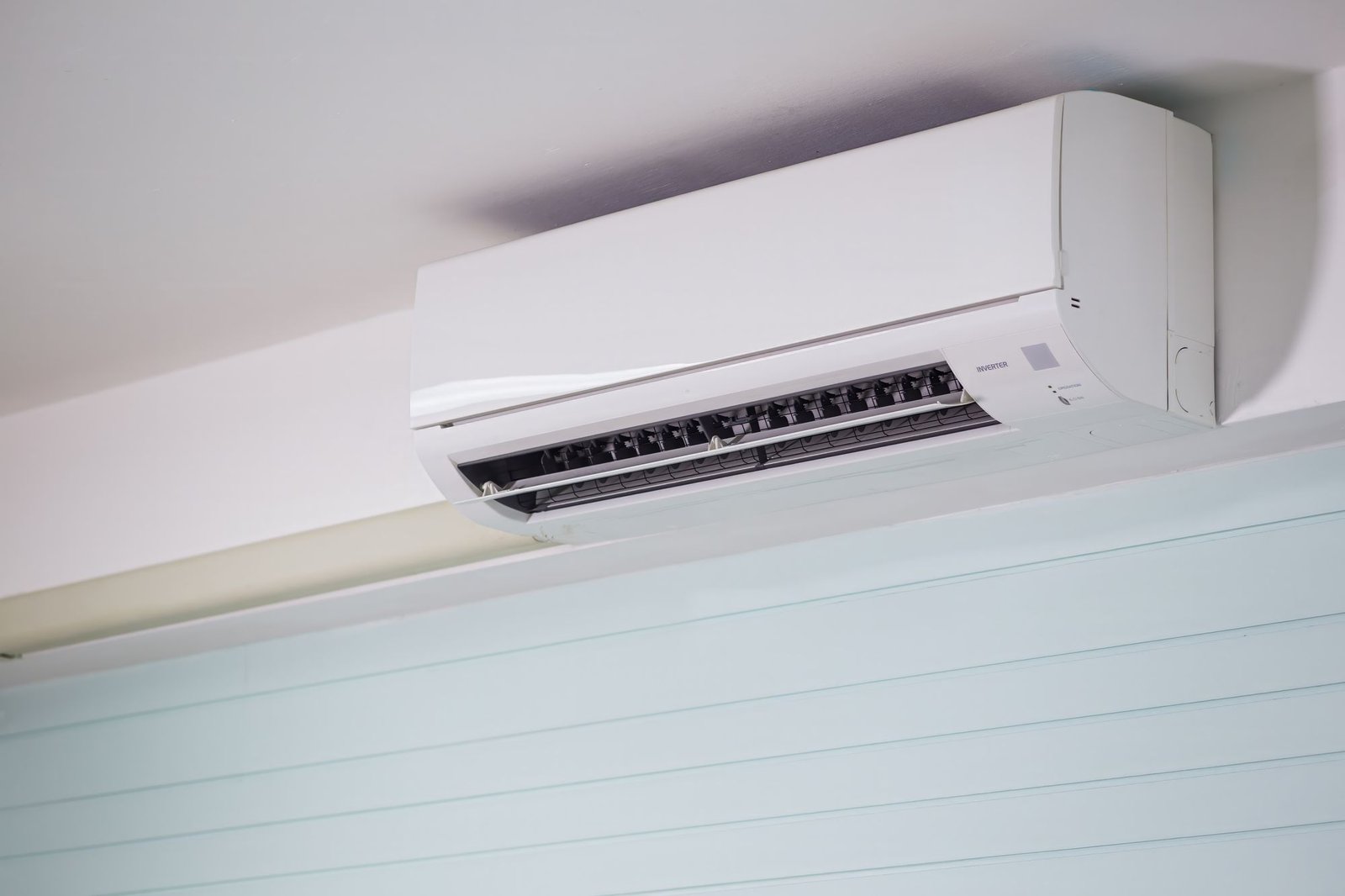
If you're deciding between a senville vs daikin mini split, you're looking at two very different approaches: cheap equipment you can buy online today versus a premium system that stores install and build to last. From what you pay upfront to how your house feels in year 12, that gap is visible everywhere.
The short answer. For most homes where the mini split will be the main heating and cooling system, especially in hot, humid or four-season climates, Daikin is the stronger buy. It has a 12-year parts warranty, a broad dealer network and it does better in cold weather, so the higher price can be worth it if you plan to stay put. Senville can work better for budget-minded buyers who need to condition one room, a garage or a small building where lower upfront cost matters more than how long it lasts. One thing to watch. If you install it yourself with no pro involved, you can lose coverage even if the unit runs fine.
What Is Senville? What to Know
Largely building on OEM platforms from manufacturers like Midea and Gree, Senville is a value-tier mini split brand. You can buy its units online through Amazon and big-box stores, which makes them easy to get if you want to handle some of the installation yourself.
A few things it does well:
-
Lower equipment cost. Senville units usually cost a lot less than Daikin. For a 12,000 BTU single-zone LETO kit, the equipment alone often costs $700–$1,200.
-
Decent efficiency. Across the full range, Senville's SEER ratings usually run from 16 to 22, and on pick high-end units the top models can hit over 27.4 SEER2. Many of them have inverter technology so the compressor can run at variable speeds.
-
Cold-climate "Arctic" lines. Models like the AURA and SENA-HF are rated for heating down to about −22°F. That can give you a way to get into cold-climate heat pumps on a budget.
-
Broad size choice. Single-zone systems span about 9,000 to 24,000 BTU. That is enough to cover most of your room-by-room needs.
Senville puts out a 5-year parts / 10-year compressor warranty, but a licensed HVAC professional has to pressure-test and evacuate the line sets. If you install it yourself, you will void the warranty. The models come with built-in smart features that include Wi-Fi and voice control, and that convenience helps explain why Senville often gets above 4.5 stars with people who buy online.
Typical uses: bonus rooms, garages, finished basements, small apartments and small vacation homes where owners take a 10–12 year expected lifespan rather than 15–20.
What Is Daikin? What to Know
Known for technology reliability and capabilities, Daikin is a premium industry-leading brand. Since 1924, Daikin has been in the HVAC business as a Tier-1 global HVAC manufacturer, and it makes its own compressors and refrigerants-a level of vertical integration few different brands can match. Starting inverter technology for energy savings, Daikin helped create that history. It shows in its current ductless lines.
Core strengths:
-
High efficiency. From 18 to 21+ SEER2, Daikin has a range of high-efficiency cooling and heating systems, with SEER ratings from 20 to 26 depending on the line and capacity.
-
Strong dehumidification. In hot, humid climates, Daikin's precise airflow control and coil design pull more moisture out of the air. That is an area where most brands fall short.
-
Deep multi-zone capabilities. Aurora MXT/MXTH outdoor condensers can feed 2–5+ indoor units. That supports whole-home zoning from a single piece of equipment.
-
Robust U.S. parts and service network. Daikin has the biggest warranty network in the industry. That matters when something fails mid-summer or mid-winter.
From our own knowledge: Daikin's single-zone ductless lines (19 Series, LV Series) carry a 12-year parts limited warranty when you register online within 60 days of installation. But Daikin offers no warranty on equipment that consumers buy over the internet unless a dealer installs it following federal, state and local codes and licensing requirements. That is a deal-breaker if you are tempted by a cheap online buy.
How Senville and Daikin Compare
| Factor | Senville | Daikin |
|---|---|---|
| Best for | Budget projects, secondary spaces, single rooms, outbuildings | Primary living areas, whole-home systems, extreme climates |
| Typical installed cost per zone (2026) | \~$2,000–$3,000 with pro commissioning; equipment alone \~$700–$1,200 | \~$3,500–$5,500 professionally installed; higher for cold-climate or high-BTU units |
| Efficiency (common SEER2 range) | \~19–21.5 SEER2 on popular models; SEER ratings typically 16–22 across the full line | \~20–21 SEER2 for Aurora/MXT lines; SEER ratings 20–26; stronger EER2 and HSPF2 |
| Warranty (when properly registered) | 5-year parts / 10-year compressor; professional install required | Up to 12-year parts limited warranty on single-zone lines; dealer install required |
| Cold-climate performance | Arctic/AURA models rated to −22°F; capacity drops at extremes | Aurora MXT/MXTH: 100% capacity at −5°F WB; continuous operation to −13°F WB |
| Installation approach | Online purchase + hire independent pro for commissioning ("hybrid DIY") | Authorized dealer designs, sells, and installs; code compliance verified |
The headline takeaway: Daikin is stronger for long-term, primary heating and cooling with superior warranty, cold-climate robustness, and service support, while Senville wins on upfront cost and simple, single-zone projects.
Factor 1: Upfront Cost and Total 10-Year Ownership
Sticker price is the first number homeowners see, but it's a poor stand-in for what a mini split system actually costs over a decade. If you add up equipment, labor, energy bills and likely repairs, you will get a far more accurate picture-and the two brands look very different once you run those numbers.
Senville pricing in 2026: A mid-capacity single-zone LETO or AURA kit runs about $700–$1,200 for equipment. Add professional installation-line-set work, electrical, mounting, permitting-and the total will mount to about $2,000–$3,000 for a simple job. For people who are watching their budget, Senville is focused on value and competitive specifications, and that low entry price is its biggest draw. Mounting hardware and installation instructions are included with every unit, though Senville systems have to have refrigerant charging by a technician to keep the warranty valid.
Daikin pricing in 2026: A 12,000 BTU Daikin single-zone system, fully installed through an authorized dealer, usually runs $3,500–$5,500, mounting toward $6,500+ for higher-capacity or cold-climate models. A certified installer is needed by Daikin for proper installation. That labor is wrapped into dealer quotes.
Lifespan changes the math. Before major repairs, Senville units usually last 10 to 12 years-that's about $250–$300 per year at a $3,000 installed cost. With proper maintenance, Daikin systems can last 15 to 20 years, putting a $5,000 system at \~$250–$333 per year. Factor in that mini splits can cut energy bills by 20 to 40 percent versus older systems, and Daikin's consistently higher SEER ratings narrow the gap further. In a hot climate where a household pays $1,200/year on cooling, a Daikin unit with higher SEER2 could save $60–$120 annually over a mid-range Senville-enough to last the price difference within 5–10 years.
Winner: Daikin - For homeowners who plan to stay 10+ years, the combination of longer lifespan, better energy efficiency and stronger warranty will make Daikin the better long-run investment. For anyone who needs to cheaply condition a single room or shed for a few years and will accept replacement later, Senville still wins.
Factor 2: Performance, Comfort and Climate Fit
Cooling efficiency: Across the full range, Senville's SEER ratings usually run from 16 to 22, with popular LETO/AURA models landing around 19–21.5 SEER2. Daikin's SEER ratings range from 20 to 26, and its premium single-zone models consistently deliver solid performance in peak-load conditions thanks to better EER2 numbers. On a 100°F Texas afternoon, that difference matters.
Sound levels: Senville's 15,000 BTU cold-climate SENA-HF model claims indoor noise as low as 18–21 dB at low fan speed, rising to 32–36 dB on higher speeds, with outdoor noise around 57 dB. Sitting around 52–56 dB, Daikin Aurora/MXT outdoor units tend to run quieter in practice because proper line-set sizing and refrigerant charge cut down on vibration.
Factor 3: Reliability, Warranty and Support Network
A mini split is a long-term appliance. The real cost of a cheap compressor failure or a dead inverter board in year 8 can wipe out whatever you saved on the initial buy.
Senville reliability and warranty: Senville provides a 10-year compressor warranty on many systems and covers parts for 5 years, but both depend on a licensed HVAC professional performing pressure-testing and evacuation of line sets. Senville's warranty has to have professional installation to keep it valid. If you install it yourself, you will void coverage completely, even if everything works. Finding local techs who stock Senville-specific parts can be harder than getting generic components, and replacement boards or fan motors may take longer to ship. Before major repairs become likely, Senville units usually last 10 to 12 years.
Daikin reliability and warranty: Daikin offers a 12-year compressor warranty for most models, and from our own knowledge, single-zone ductless lines like the 19 Series and LV Series carry a 12-year parts limited warranty when registered online within 60 days. That's among the best warranty coverage in the industry. Daikin focuses on advanced own-brand technologies in their systems. The brand's broad U.S. dealer and parts network means repairs happen faster. That is critical when your heat pump fails mid-January. Putting them in a reliability tier alongside Mitsubishi Electric, Daikin systems can last 15 to 20 years with proper maintenance. Many HVAC contractors consider Mitsubishi Electric the gold standard for longevity.
Winner: Daikin - Homeowners who want peace of mind, the best warranty coverage available, and a reliable mini split brand with parts on hand should invest in Daikin. Senville's warranty is enough for budget-limited projects where the owner takes the risk of earlier replacement.
Factor 4: Installation, DIY Friendliness and Code Compliance
Proper installation has a big effect on system performance and longevity, and on whether your warranty actually applies. This is where the two brands split most sharply.
Senville's installation reality: Senville markets its units as accessible to handy homeowners. The kits do include mounting hardware and installation instructions. But the fine print is clear: a licensed HVAC professional must pressure-test and evacuate the line sets, or the warranty is void. The typical "hybrid DIY" pattern is the most common approach. You're handling mounting the indoor head and routing the line set, then paying a tech to pull vacuum, pressure-test and commission. Keep invoices and photos. If a tech won't sign off on work you've already done, you could end up paying for labor twice. Pre-charged DIY kits don't carry the same warranty restrictions, which makes them a common alternative if true DIY matters to you.
Daikin's installation model: Daikin needs a certified installer. Systems are sold through authorized dealers who handle Manual J load calculations, indoor/outdoor unit matching, line-set routing and commissioning. From our own knowledge, Daikin offers no warranty on equipment bought by consumers over the internet unless a dealer installs it following federal, state and local codes and licensing requirements. Dealer-installed systems also get you AHRI-listed pairings that utility rebates need, plus proper load calculations so the system isn't oversized or undersized for the space. For superior performance in complex multi-zone home designs, Daikin is regarded and that performance depends on correct installation.
Refrigerant context for 2026: EPA now lists no installation compliance date for residential split systems whose components were all made or imported before January 1, 2025, so leftover R-410A equipment can still be legally installed. However, many current Daikin models use eco-friendly R-32 refrigerant and advanced filtration technologies. They're positioned for long-term regulatory compliance. Both brands have models transitioning to lower-GWP refrigerants. The law isn't the main difference here. Installation quality and brand policies are.
Winner: Daikin . For homeowners who prefer a clean, code-compliant, hands-off install backed by a dealer's accountability. For those willing to coordinate a hybrid DIY approach to save on labor costs, Senville suits them, provided they follow the warranty rules exactly and keep documentation.
Factor 5: System Options, Zoning and Future Expansion
Daikin's product range is far broader. Single-zone wall units pair with the 19 Series or LV Series outdoor condensers. For multi-room projects, the Aurora MXT/MXTH line supports 2–5+ zone configurations with a single outdoor unit, and indoor units come in wall-mount, ceiling cassette, concealed ducted and floor-mount styles. For superior performance in complex multi-zone home designs, Daikin is regarded and its AHRI-listed combinations make rebate qualification simple.
Example expansion path: A homeowner starts by conditioning one bedroom with a 12k BTU wall unit. Two years later, they want to add the living room and a home office, three zones total. With Senville, that likely means three separate outdoor condensers, three wall penetrations and three electrical circuits. With Daikin, a single multi-zone condenser can feed all three indoor units, with the option to mix wall mounts and ceiling cassettes depending on the room. One outdoor unit means less noise, less visual clutter and simpler maintenance.
Which Should You Choose, Senville or Daikin?
-
Choose Senville if:
-
You're conditioning a single room, garage, shed or accessory dwelling unit and want to keep upfront cost as low as possible.
-
You live in a moderate climate, or you're okay using another heat source on the coldest days.
-
You're comfortable coordinating a hybrid DIY + pro-commissioning installation and carefully keeping records of the work to support warranty claims.
-
You view the mini split as a 10-year appliance you'll eventually replace rather than a long-term fixture.
-
Choose Daikin if:
-
You're planning a primary heating and cooling system for main living areas or an entire house, especially in hot, humid or four-season climates.
-
You want dealer support, a strong parts network and up to a 12-year parts limited warranty on eligible single-zone systems with proper registration.
-
You prefer a ready-to-go, professionally designed and installed system with options to expand into multi-zone zoning later.
-
You prioritize long term reliability, quiet operation and superior dehumidification over the lowest possible price tag.
Our overall recommendation: For most of you shopping for a system that will serve as primary air conditioning and heating, Daikin is the better money spent. It's not cheap, but the combination of quality, warranty, energy savings and service support makes it a sound long-term investment. For spaces that are budget-limited and supplemental, Senville is a perfectly reasonable pick. Just go in with realistic expectations about lifespan and do your homework on warranty requirements. And regardless of which brand you decide on, proper installation quality and correct sizing will matter as much as the name on the box.
Senville vs Daikin Mini Split FAQs
Install a Senville Mini Split Yourself and Keep the Warranty?
Not in a true DIY sense. Senville's published terms need a licensed HVAC professional to pressure-test and evacuate the line sets. Pure DIY installs technically void the warranty, even if the unit runs perfectly. The hybrid approach is common: you handle mounting the indoor head and routing the line set, then pay a pro to pull vacuum, do the refrigerant work and commission the system. Keep all bills and documentation, and confirm with Senville's support team that your paperwork meets their requirements before assuming you're covered.
Buy a Daikin Mini Split Online?
This is risky. Daikin's policy is clear: no warranty for equipment bought by consumers over the internet unless a Daikin dealer installs it following applicable federal, state and local codes and licensing requirements. Even if your contractor is licensed and skilled, Daikin may deny warranty claims if the unit wasn't sold through their dealer channel. We recommend contacting a local Daikin dealer before you buy. From a warranty standpoint, a dealer-supplied and dealer-installed system is almost always safer.
Do Both Brands Qualify for Rebates and Tax Credits?
Not automatically. Some models from each brand carry ENERGY STAR certification, but eligibility for rebates and credits depends on the specific model and AHRI-listed system pairing. Utility rebate plans vary by region and may still offer incentives for qualifying high-efficiency heat pumps. Before you buy, verify the exact model number in the ENERGY STAR and AHRI databases, and check current IRS and local utility plan rules. This is especially true for Daikin whole-home projects where rebate savings can meaningfully offset the higher installed cost.