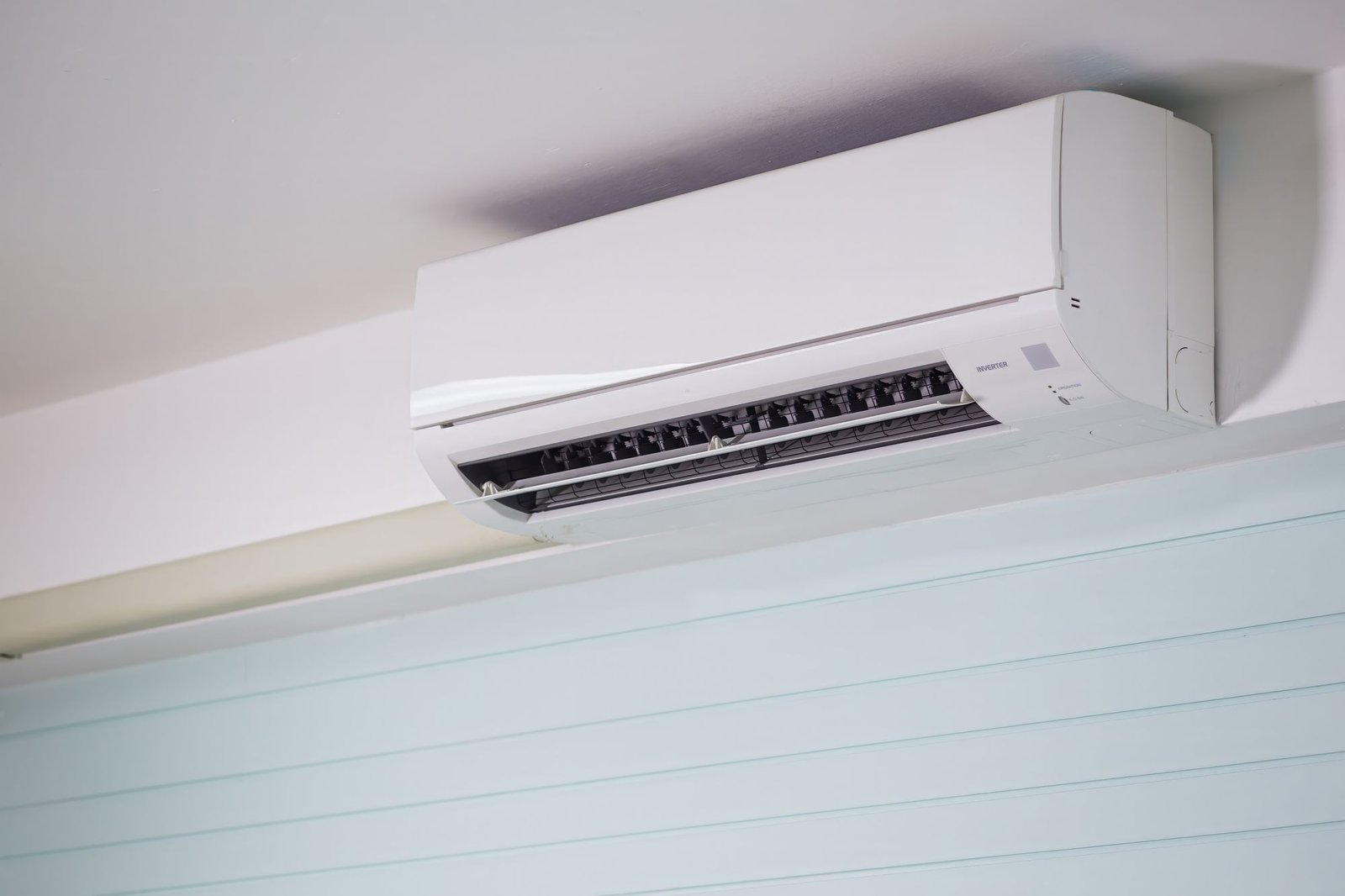
Senville vs cooper and hunter is a comparison that homeowners often make when they want a ductless mini split that is built to save money and they do not want to pay the prices that Mitsubishi or Daikin ask for. Both brands have models with high-efficiency DC inverter technology to save energy, and they will heat down to −22°F. Which one you pick usually depends on whether you care most about the lowest price to buy the unit or about quieter indoor operation and a supply chain that contractors already know.
The short answer: For most budget-conscious homeowners who are putting in a single-zone system, Senville's LETO and AURA lines usually beat Cooper & Hunter on price, while Cooper & Hunter tends to win on indoor noise levels and warranty consistency. This article breaks down price, energy efficiency, cold-climate heating, noise, warranty and installation side by side so you can match each brand to what matters to you.
What Is Senville?
Defining strengths:
-
Aggressive pricing. Equipment-only costs for 9k–12k BTU units often fall in the $800–$1,400 range, with LETO models at the low end. At about $1,599.99, the 18,000 BTU SENA-18HF lists the price for that unit.
-
Decent SEER2/HSPF ratings. The 9,000 BTU AURA posts a seasonal energy efficiency ratio (SEER) of about 25 and an HSPF4 near 11.2. Senville usually has models that reach up to 29 SEER2 efficiency ratings across its range.
-
Cold-climate capability on AURA models. Many SENA units are rated for heating down to −22°F (−30°C).
-
Wi-Fi, app and voice control can come standard on most AURA models. Many mini splits offer Wi-Fi connectivity for remote control, and Senville can include it without an add-on kit on its higher-tier line.
Trade-offs: the LETO series carries a shorter compressor warranty (5 years vs. 10 on AURA), and Senville's support infrastructure is thinner than premium Japanese brands. User reviews on Trustpilot (rated about 4.6/5 across 7,600+ reviews) like the value and quiet operation but flag occasional missing hardware and longer lead times for control boards.
What Is Cooper & Hunter?
Cooper & Hunter (C&H) is an international brand with a growing U.S. presence, distributing through HVAC wholesalers as well as online retailers. Their residential wall-mount lines include the Sophia, Olivia and MIA series, plus a dedicated Hyper Heat line built for cold climates. Single-zone capacities run from about 6,000 BTU up to 36,000 BTU. Multi-zone condensers go higher.
Defining strengths:
-
Quieter indoor heads. The MIA series 9,000 BTU unit lists noise levels of 43.0 / 37.5 / 33.5 / 25.0 / 18.0 dB(A) across Turbo, High, Medium, Low and Silent fan speeds. Even at its top setting, the Cooper & Hunter 9k produces less than 48 dB noise levels.
-
Solid efficiency in the value tier. Hyper Heat models land in the SEER2 21–27 range. The CH-RHP06F9-230VO (variable 6k–12.6k BTU) posts SEER2 of about 25.5 and HSPF2 near 11.5.
-
7-year compressor warranty on many residential models, provided registration and professional install are complete.
-
Multi-zone availability. C&H offers 2–4 zone outdoor condensers alongside cassettes and slim-duct indoor units.
Trade-offs: non-Hyper Heat models lose heating capacity more fast below about 5°F. Upfront cost tends to run slightly above Senville at the same BTU size, in part because some C&H models include a Smart Kit. Senville and Cooper & Hunter source components from major manufacturers like Midea and Gree, so internal hardware is often closer than brand names suggest. On Reddit, you will often see users note similarities between C&H units and Midea-built platforms.
Senville and Cooper & Hunter at a Glance
As of early 2026, the figures below reflect typical specs for 9,000–12,000 BTU single-zone wall-mount systems that are available. Exact numbers vary by model and seller. With excellent efficiency ratings, both brands are often compared to premium brands like Mitsubishi and Daikin, though they sit a tier below in warranty depth and long-term track record.
Quick Comparison Table
| Factor | Senville (AURA / LETO) | Cooper & Hunter (Hyper Heat / MIA) |
|---|---|---|
| Best for | Budget-first buyers who self-source online | Buyers who value quieter operation and contractor channels |
| 9k–12k street price (equipment) | \~$800–$1,400 | \~$700–$1,400 (Hyper Heat models near the top) |
| Typical SEER2 range | 20–25 (AURA 9k ≈ 25) | 21–27 (Hyper Heat 9k ≈ 25.5) |
| Typical HSPF2 / HSPF4 | HSPF4 \~10–13.4 | HSPF2 \~9–11.5 |
| Cold-climate floor (heating) | −22°F (AURA); −5°F (LETO) | −22°F (Hyper Heat); \~5°F (standard) |
| Indoor noise, low fan (9k) | \~24–27 dB(A) | \~17–25 dB(A) (Silent mode as low as 18 dB) |
| Compressor warranty | 10 yr (AURA) / 5 yr (LETO) | 7 yr (most residential models) |
| Parts warranty | 5 yr | 5 yr |
| Primary purchase channel | Amazon, direct online | HVAC wholesalers, online retailers |
Senville leans cheaper on equipment; Cooper & Hunter leans quieter indoors and offers slightly more consistent warranty terms across its lineup.
Price and Overall Value
Senville's LETO 9k–12k units regularly sell for $800–$1,100 on Amazon, beating similar Cooper & Hunter wall-mounts by $50–$150 at the same capacity. The AURA line costs more (the SENA-18HF runs about $1,599.99 for an 18,000 BTU unit) but it has cold-climate capability and a longer compressor warranty in that price.
C&H's 9k–12k equipment sits in a similar $700–$1,400 band. The overlap is real. At certain sale prices, a Cooper & Hunter Hyper Heat 9k can match a Senville AURA 9k. Where C&H often adds value is in included accessories: several models include a Smart Kit for app control, whereas Senville sometimes charges extra for equivalent modules on LETO units.
For context, total installed costs for a 9,000 BTU single-zone system usually run $2,500–$4,300 when you account for labor, line set and electrical work. At 12,000 BTU, expect $2,800–$5,000 installed. Against other value brands we track: TOSOT's 12K 120V GWH12AWCXB-A6DNA1AI (19 SEER2, 8.5 HSPF2, R-32, comes with a 16 ft line set, 5-year whole-unit warranty) sits in a similar equipment price range but on a different refrigerant platform. Della often costs less than both Senville and Cooper & Hunter on price tag, though build quality and support differ.
Who Wins on Price and Value
Senville wins on pure upfront price in most capacity ranges, particularly with the LETO series. Cooper & Hunter costs a bit more but offers a quieter, slightly more polished indoor unit for the premium, with Wi-Fi control included.
Efficiency (SEER2 / HSPF2) and Operating Cost
Your monthly electric bill is directly affected by the seasonal energy efficiency ratio. Mini splits have a federally needed minimum SEER rating of 14, and most mini splits achieve at least a 16 SEER rating. Both Senville and Cooper & Hunter are well above that floor. A higher SEER rating means lower electricity bills: an 18 SEER unit costs about $72 monthly versus $100 for a 14 SEER unit in equivalent cooling loads.
Senville's AURA 9k posts about 25 SEER2. The 18k SENA-18HF comes in around 21.4 SEER2 with HSPF2-4 near 13.4. In the 9k–12k range, Cooper & Hunter's Hyper Heat units reach SEER2 of 25.5 and HSPF2 around 11.5 on models like the CH-RHP06F9-230VO. Cooper & Hunter models also achieve high efficiency ratings with strong heating performance at cold temperatures, giving them a slight edge in the mid-capacity sweet spot.
In practical terms, the gap is narrow. A 12,000 BTU unit at SEER2 25 running about 1,200 cooling hours per year uses about 480 kWh, versus 600 kWh at SEER2 20. At $0.15/kWh, that is about $18–$30 per year in savings. Over ten years, those savings can offset a small equipment premium, but they will not make sense of a $500 price jump on their own.
If ultra-high energy efficiency is your top priority, both brands fall short of the leaders. Mitsubishi's small mini split ac unit holds a record 33.1 SEER rating. Fujitsu's ASUH09KZAS / AOUH09KZAH1 (Orion XLTH) is rated 33.1 SEER2 and 13.3 HSPF2 on R-32. LG's ARTCOOL Deluxe KSSAL091A and KSSAL121A are rated 27 and 25.5 SEER2, putting them a clear step above either value brand.
Who Wins on Efficiency
About a tie. C&H's newer Hyper Heat models edge Senville by a point or two of SEER2 in some capacities, but the real-world operating cost difference between 24 and 25.5 SEER2 is small. If higher energy efficiency is the deciding factor, consider stepping up to a Fujitsu Orion XLTH or LG ARTCOOL model with high SEER ratings above 25.
Cold-Climate Heating Performance
Both brands offer models that perform down to −22°F for cold-climate heating. Senville's AURA / SENA line is rated to −22°F (−30°C). The LETO line drops to about −5°F (−15°C) before output falls off. Cooper & Hunter's Hyper Heat series matches the −22°F floor. The ARCTIC NG line lists a heating range to −25°C (about −13°F). Some mini splits can cool down to 5°F for low ambient cooling, and both brands cover that on their standard models.
Neither brand lists detailed capacity-retention tables the way Fujitsu or Mitsubishi do. In practice, value-tier units operating at −15°F or below lose a big share of rated capacity, so supplemental heat (resistance baseboard, gas furnace) is still needed during deep winter. During shoulder seasons (30–50°F), both brands perform well. That is where a mini split heat pump delivers its best coefficient of performance.
Who Wins for Cold-Climate Heating
Cooper & Hunter's Hyper Heat line is the less risky pick for homeowners who routinely see temps below 15°F, thanks to a wider and more established cold-climate product range. Senville's AURA matches the −22°F rating but has thinner documentation on actual output at those far ends. If your winter regularly dips below −10°F and the mini split is your primary heat source, it makes sense to step up to a dedicated cold-climate system.
Noise Levels and Indoor Comfort
Low noise levels enhance comfort in bedrooms and living spaces, and indoor sound is one area where Cooper & Hunter consistently beats Senville by a clear gap.
Senville's AURA 9,000 BTU indoor head lists 42 / 33 / 24.5 dB(A) at High / Medium / Low fan. That is good for the price. A low-fan reading in the mid-20s is quiet enough for a bedroom at night.
With noise levels of 43.0 / 37.5 / 33.5 / 25.0 / 18.0 dB(A) across Turbo through Silent, Cooper & Hunter's MIA 9,000 BTU head comes in at those numbers. The Silent mode at 18 dB(A) is 6–7 dB quieter than Senville's lowest setting. In human perception, a 6 dB drop sounds about 30–40% quieter. If the unit runs in a bedroom or home office, you will notice the difference.
Outdoor compressor noise is closer. Senville's 18k outdoor unit runs at about 59 dB(A) max. C&H's 9k–12k Hyper Heat outdoor units land around 54–56 dB(A). For tight lot lines, a few decibels of outdoor reduction helps keep neighbors from hearing the condenser.
Who Wins on Quiet Operation
Cooper & Hunter wins on indoor noise. In Silent mode, the MIA and Hyper Heat heads reach 17–18 dB(A), about 6–7 dB below Senville's quietest setting. The trade-off: the quietest C&H models tend to cost more, and Silent mode reduces airflow, so a larger living space may need a higher fan speed anyway.
Reliability, Warranty and Support
Long-term reliability data for either brand is limited. Neither has the 15+ year field history that Mitsubishi, Fujitsu or Daikin carry. Strong customer reviews reflect both brands' quality and performance in home heating and cooling, but reviews skew toward the first 1–3 years of ownership.
Senville's warranty structure splits by series. AURA / SENA: 10-year compressor, 5-year parts. LETO / SENL: 5-year compressor, 5-year parts. Both need professional installation with proper line-set evacuation to protect warranty coverage. Labor is never covered. Registration is needed. If you skip it, full coverage may not apply.
Cooper & Hunter offers a 7-year compressor warranty and 5-year parts warranty on most residential models, with remote controls covered for 1 year. Registration (usually within 30–60 days) and professional install are needed. C&H's warranty page lays out these conditions.
For context, Bosch's Climate 5000 ductless warranty (per the November 2024 document) covers the compressor for 10 years and parts for 7 years, with parts extended to 10 years if the product is registered within 90 days. Della takes a different approach: free extended lifetime parts coverage if the unit is registered within 100 days, and a registered non-professional install gets the same parts treatment as a professional one. Both of those policies are more generous than what Senville or C&H offers.
Warranty and Peace of Mind
Cooper & Hunter wins on warranty consistency. A flat 7-year compressor warranty across most residential models is simpler than Senville's split structure (10 years on AURA, 5 on LETO). Both brands need professional install and registration, so check the fine print before you buy. If a longer warranty is vital, look at Bosch Climate 5000 or Della's lifetime registration offer.
DIY or Professional Installation
Ductless mini splits need professional installation. Installation involves electrical work and refrigerant handling, and both Senville and Cooper & Hunter use traditional flare-fitting connections, not pre-charged quick-connect kits like some DIY models. That means a vacuum pump and manifold gauges are needed to evacuate the line set before charging. A licensed HVAC technician ensures proper installation and keeps the warranty good for both brands.
Labor for a single-zone wall-mount install usually runs $1,000–$2,500 on top of equipment cost, depending on complexity, line-set length and local rates. Whether you save $100 on the unit matters less than whether the installer does the vacuum, leak test and electrical connections correctly.
Who Wins on Ease of Installation
Cooper & Hunter is slightly easier to get installed through conventional channels because contractors already stock it. Senville is simpler to self-source for homeowners comfortable managing the process, but the brand's warranty requires professional install regardless. Skipping that step to save costs can leave you unprotected.
Senville vs Cooper & Hunter - Which Should You Choose?
-
Choose Senville if lowest upfront equipment price is your priority, you are comfortable ordering online and coordinating your own installer, and your climate is mild to moderate (or you pick the AURA line for cold-weather use). With a 10-year compressor warranty and −22°F heating rating, the AURA makes it a competitive cold-climate pick at a budget price.
-
Choose Cooper & Hunter if you value quieter indoor operation (especially for a bedroom or home office), prefer buying through a local HVAC contractor, or want a slightly more consistent warranty structure across the product line. For cold areas, the Hyper Heat series is a solid choice.
-
Consider stepping up to a Bosch Climate 5000, TOSOT, LG ARTCOOL or Fujitsu Orion XLTH if cold-climate primary heating, ultra-high efficiency or maximum long-term reliability is vital. The efficiency and warranty gaps between value brands and mid-tier or premium options are real, and they compound over a 10–15 year ownership period.
Frequently Asked Questions
Are Senville and Cooper & Hunter as Reliable as Premium Brands?
Both are value brands and will not match the multi-decade track record of Mitsubishi, LG (whose ARTCOOL models hit 25–27 SEER2), or Fujitsu's Orion XLTH (33.1 SEER2, 13.3 HSPF2, heating to −15°F). That said, many homeowners run Senville and C&H units for 3–5+ years without issues when the install is done correctly and filters are cleaned regularly. Mini split AC units can operate quietly and well for years. The question is what happens when something fails and you need parts or service.
Can You Install a Senville or Cooper & Hunter Mini Split Yourself?
You can handle mounting the indoor head, drilling the wall penetration, running the line set and wiring the disconnect. The final steps (pulling a vacuum on the line set, checking for leaks and releasing the refrigerant charge) should be done by a licensed HVAC tech. Both brands need professional installation for warranty purposes. Budget at minimum a first visit from a certified technician, even if you do the physical mounting yourself.
How Do Senville and Cooper & Hunter Compare to Ultra-Budget Brands?
Both sit a step above Della in typical build quality and how well contractors know the brand. Della costs less than both on price tag and offers free extended lifetime parts coverage if registered within 100 days (with registered non-professional installs getting the same parts treatment as professional ones). The trade-off: Della's support infrastructure is thinner, and long-term reliability data is even more limited. Paying the $50–$150 premium for Senville or C&H makes sense if you want a slightly more established brand and plan to keep the unit for 7+ years.
How do I size a mini split for my space?
Use the 20 BTU per sq ft rule as a starting point. A 6,000 BTU mini split cools spaces up to 300 sq ft. An 8,000 BTU unit cools a 400 sq ft room. 9,000 BTU units can cool areas up to 450 sq ft, and 10,000+ BTU units are needed for 500+ sq ft areas. Insulation quality, ceiling height, sun exposure and your local climate will shift the real requirement. A Manual J calculation from an HVAC contractor gives the most accurate size for your specific space.