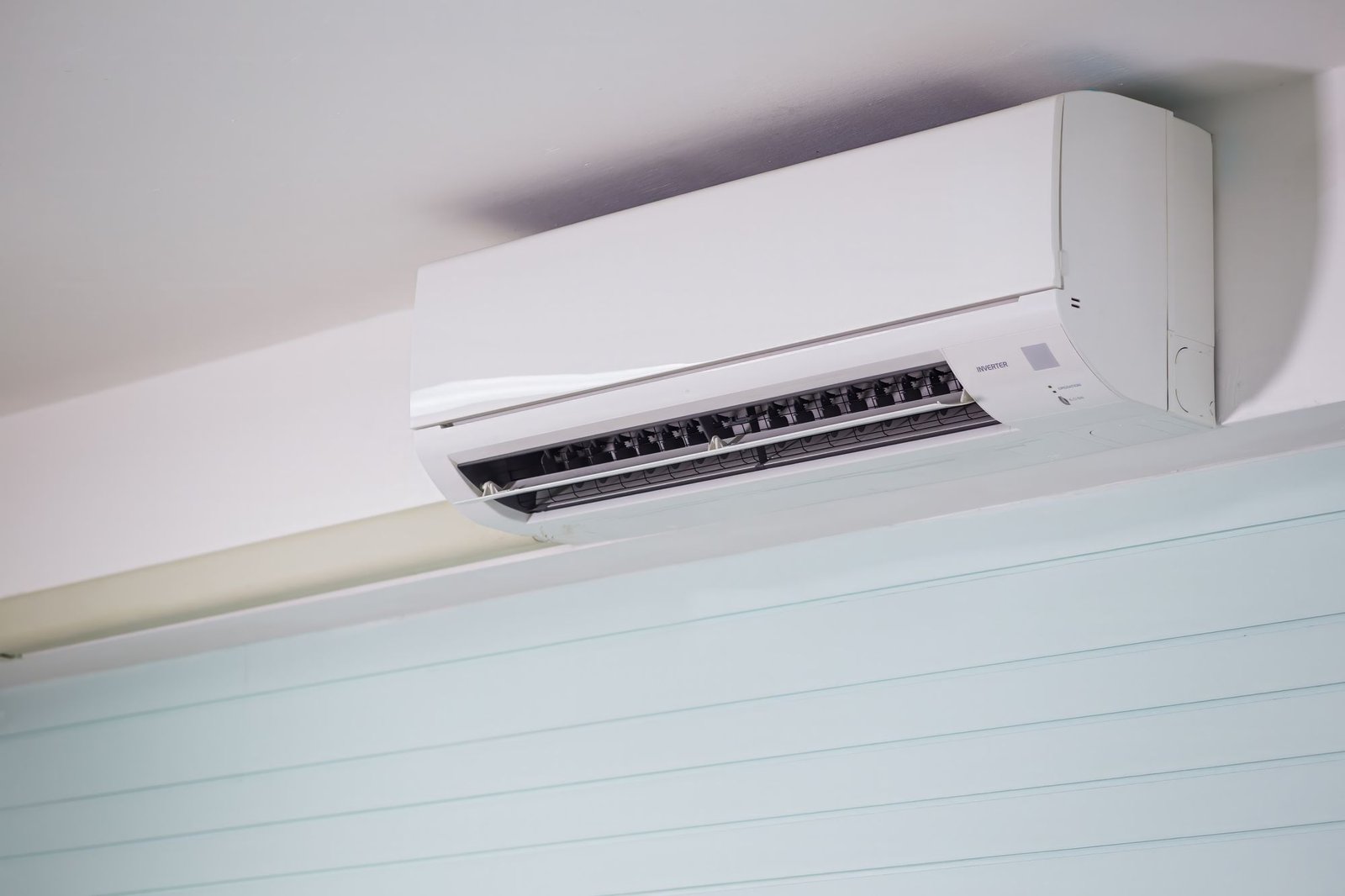
If you are trying to choose between a mitsubishi vs fujitsu mini split, you are looking at what might be the two biggest brands in the North American market for ductless heat pumps. Both brands have inverter-driven compressors so they run efficiently, they both heat and cool in cold climates, and they both last a long time if you get them installed right. Where they differ is what you might care about most. With multi-zone flexibility, indoor unit styles and how easy it is to find a contractor who knows the equipment, Mitsubishi may have the edge. Fujitsu wins on peak efficiency ratings, lower upfront cost and how the heat pump does in cold weather in its XLTH and Orion lines.
The short answer: For single-zone or small multi-zone projects, Fujitsu has the edge on raw efficiency and operating cost, with a SEER rating of 33.1 and an HSPF rating that reaches 14.2. Fujitsu systems are generally 5% to 20% less expensive than similar Mitsubishi systems for equipment and installation. You'd want to pick Mitsubishi when you need a complex multi-zone system, want the biggest contractor network for long-term service, or care about how the indoor units look. With qualified installation and timely registration, both brands offer warranties that can go up to 12 years.
What Is a Mitsubishi Mini Split?
You might call Mitsubishi Electric the brand that sells the most ductless heat pumps in North America. Its M-Series and P-Series lines are built around the Hyper-Heat (H2i) platform for cold climates, and they cover everything from a single wall mount for one room to a multi-zone system for a whole home.
-
Multi-zone MXZ platform: A single outdoor unit can serve up to 8 indoor zones depending on the model, with heads ranging from standard wall units to Designer series metallic finishes, floor units, ceiling cassettes and ducted air handlers.
-
Cold-climate Hyper-Heat: Mitsubishi's H2i technology uses flash injection so the system does better at temperatures below zero. Most Hyper-Heat units are rated to heat down to -13°F.
-
Parts availability: Mitsubishi equipment and replacement parts are stocked by sellers in most regions, including rural areas. That can matter when you need a compressor or control board 10 or 15 years down the road.
What Is a Fujitsu Mini Split?
Fujitsu General (sold under AIRSTAGE and Halcyon) builds some of the most efficient ductless heat pump systems you can find on the market today. In cold and mixed climates, the brand tends to do its best work with single-zone and small multi-zone performance.
-
Top-tier efficiency: Fujitsu's AIRSTAGE Altair 700 9K tops out at 30 SEER2. The Altair 500 reaches up to 26 SEER2. Rated at 33.1 SEER2 and 13.3 HSPF2 on R-32, the Orion XLTH (ASUH09KZAS / AOUH09KZAH1) has a heating range down to -15°F.
-
Cold-climate XLTH/Orion series: Fujitsu's XLTH series includes a built-in base pan heater and an enhanced fan and motor for cold, humid conditions, so you don't need extra accessories.
-
Competitive pricing: Fujitsu units usually cost 10-20% less than Mitsubishi. That makes them a good option if you're watching your budget.
Mitsubishi vs Fujitsu Mini Split
As reference points, the table below uses typical single-zone wall-mounted cold-climate units with 9,000–12,000 BTU of capacity. Specs shift with capacity, and larger units lose efficiency in both brands.
| Factor | Mitsubishi (cold-climate 9K–12K) | Fujitsu (cold-climate 9K–12K) |
|---|---|---|
| Best for | Multi-zone whole-home, rural areas, design-conscious installs | Single-zone or small multi-zone, budget-focused, peak efficiency |
| Upfront price (equipment only, 9K) | \~$2,570–$2,900 | \~$2,100–$2,700 (10-20% lower) |
| Installed cost difference | $400–$800 higher than comparable Fujitsu | Lower by $400–$800 on average |
| Cooling efficiency (SEER2) | Up to 30.5 SEER2 (FX09NL: 33.1 SEER2) | Up to 33.1 SEER2 (Orion XLTH) |
| Heating efficiency (HSPF2) | Up to 13.6 HSPF2 | Up to 14.2 HSPF2 |
| Cold-climate heating range | Down to -13°F (Hyper-Heat); 76% capacity at -13°F | Down to -15°F (Orion XLTH); 60-65% capacity at -15°F |
| Indoor noise (quiet mode) | As low as 19 dB(A) | As low as 21 dB(A) |
| Outdoor noise (rated load) | Mid-40s dB(A) | Mid-40s dB(A) |
| Warranty (max residential) | 12 years parts/compressor (Diamond Contractor + registration within 90 days) | 12 years parts/compressor (Elite Contractor + registration within 60 days) |
| Installer network | 3,000+ Diamond Contractors | Smaller Elite network; density varies by region |
| Multi-zone flexibility | Up to 8 indoor heads; many styles | Fewer head options; strong in 1–3 zone configs |
| Wi-Fi control | Often requires add-on adapter | Built-in Wi-Fi on most newer models |
Fujitsu tends to win on raw efficiency and price. Mitsubishi usually wins on system flexibility and ease of getting service.
Efficiency and Operating Costs
Before 2023, the federal minimum for split heat pumps was 14 SEER and 8.2 HSPF. On the new SEER2/HSPF2 test, the 2023 figures aren't directly similar, so you should ignore old SEER numbers when you're shopping today. Your monthly electric bills are directly affected by both SEER2 (cooling efficiency) and HSPF2 (heating efficiency). Each one point of SEER2 difference is about 3-7% in cooling electricity use for a given load, and each point of HSPF2 shifts winter heating cost by a similar amount.
Mitsubishi systems usually reach up to 30.5 SEER2 and 13.6 HSPF2 ratings on their best single-zone cold-climate models. The FX09NL hits 33.1 SEER2 and 13.3 HSPF2 at the 9K BTU tier. Depending on how many heads are connected, Mitsubishi's multi-zone MXZ condensers drop to around 18–21 SEER2 and 10–11 HSPF2. That is normal for any multi-zone system.
At the top, Fujitsu's range spreads wider. The AIRSTAGE Altair 700 9K reaches 30 SEER2, and the Altair 500 reaches up to 26 SEER2. The Orion XLTH (ASUH09KZAS / AOUH09KZAH1) hits 33.1 SEER2 and 13.3 HSPF2 on R-32. On certain models, Fujitsu's HSPF rating reaches 14.2. That is the highest number we've seen from either brand. Mitsubishi's best HSPF rating is 13.6.
Federal rules cap average off-mode power at 33 W for split-system heat pumps and 30 W for split-system air conditioners. Both brands comply, so standby draw isn't something that separates them.
-
Highest peak cooling efficiency: Fujitsu (Orion XLTH at 33.1 SEER2).
-
Highest peak heating efficiency: Fujitsu (up to 14.2 HSPF2 vs Mitsubishi's 13.6 HSPF2).
-
More efficient multi-zone options: Mitsubishi, because it offers more indoor unit configurations per outdoor unit.
Cold-Climate Heating Performance
A minimum operating temperature on a spec sheet tells you the system won't shut off. It doesn't tell you how much heat you'll actually get. Capacity retention at 0°F and below is what determines whether a ductless heat pump can keep your home warm without backup.
Mitsubishi's Hyper-Heat/H2i line uses a flash-injection compressor cycle that forces extra refrigerant vapor into the compression chamber at low outdoor temperatures. The result: Mitsubishi maintains 76% capacity at -13°F. Single-zone Hyper-Heat units like the FX09NL maintain their full 47°F rated output even at 5°F, with guaranteed operation to -22°F on that specific model. Multi-zone MXZ Hyper-Heat condensers hold 100% capacity down to about 5°F, then drop to about 70-75% at -13°F.
Fujitsu's XLTH series includes a built-in base pan heater, which prevents the outdoor unit's drain pan from freezing over. That's a factory-included feature. Mitsubishi units often need a separate pan heater accessory. Fujitsu operates efficiently down to -15°F, with the Orion XLTH maintaining 60-65% capacity at that temperature. Mitsubishi maintains efficiency down to -13°F. Fujitsu goes 2°F lower.
In climate zones 5-6, both brands perform about the same, where winter lows rarely stay below -5°F for extended periods. In those zones, proper sizing and your installer's experience matter more than brand. In zones 7-8, or locations where nights regularly hit -10°F to -20°F, Fujitsu's Orion XLTH provides a real 2°F advantage in minimum operating temperature. Plan backup heat (electric resistance strips or an existing furnace) with either brand if you're in those extreme zones. No mini split replaces 100% of heating load when outdoor temps sit at -15°F for hours.
System and Indoor Unit Options
Mitsubishi's MXZ multi-zone platform supports up to 8 indoor heads on a single outdoor unit. The indoor unit lineup is the biggest in the industry, with standard wall mounts, the Designer Series with metallic finishes for visible installations, floor-mounted units, four-way ceiling cassettes and slim ducted air handlers that hide in soffits or closets. Mitsubishi provides more indoor unit style options than Fujitsu, and its ability to modulate on multi-zone condensers helps maintain comfort during mild shoulder-season days when only one or two zones call for conditioning.
What does Fujitsu offer? Fujitsu's AIRSTAGE and Halcyon lines cover wall-mounted, slim ducted and some cassette options, but with fewer aesthetic choices. Fujitsu's wall units have a conventional design. Where Fujitsu stands out in system options is large-capacity single-zone equipment. Some residential models reach 48,000 BTU from a single outdoor unit, compared to Mitsubishi's typical 42,000 BTU ceiling for single-zone.
Smart controls differ between the two brands. Fujitsu's Airstage H-Series includes built-in Wi-Fi as standard. It connects to the FGLair app for remote scheduling and monitoring. Mitsubishi usually needs an add-on wi fi adapter (the kumo cloud interface). It adds $100-$180 per indoor unit. Both integrate with basic smart-home platforms, but Fujitsu offers this out of the box.
Noise Levels and Comfort
Mitsubishi's quietest unit operates at 19 dB(A) in low-fan/quiet mode. Fujitsu's quietest unit is operating at 21 dB(A). A 2 dB difference isn't noticeable in normal conditions. You'd need controlled lab conditions to detect it. At low fan speeds, both brands are basically quiet. Outdoors, both sit in the mid-40s dB(A) range at low speed, rising to about 51 dB(A) under full rated load on larger condensers.
Price and Value for Money
Fujitsu's lower price is one of the biggest differences between these two brands. Fujitsu units usually cost 10-20% less than Mitsubishi for similar single-zone systems. Fujitsu's highest capacity mini-splits can be over $1,000 cheaper than Mitsubishi's. At the entry level, the gap gets smaller: Fujitsu's entry-level mini-splits are less than $100 cheaper than Mitsubishi's.
On installed cost, you can expect to pay $400-$800 less for a Fujitsu single-zone 9K-12K cold-climate system than the equivalent Mitsubishi Hyper-Heat unit. Mitsubishi equipment is $300-$800 more than similar Fujitsu units at the equipment-only level. Multi-zone systems push total project costs higher for both brands. A 3-4 zone whole-home install can run $15,000-$25,000+ depending on complexity, line-set lengths and local labor rates.
When models meet minimum SEER2/HSPF2 levels, both brands qualify for the same federal tax credits and utility rebates. Qualification is model-specific. Verify AHRI certificate numbers against your local program's list.
Warranty, Reliability and Long-Term Serviceability
Over a 15-20 year equipment life, warranty coverage and access to qualified technicians matter more than a one-point SEER2 difference.
Both brands offer standard warranties of 5 years on parts and 7 years on compressors. They can be extended to 12 years with registration and qualified installation. The fine print differs:
Fujitsu extends its residential coverage to 10 years with registration within 60 days. The 12-year term needs installation by a Fujitsu Elite Contractor. The base term varies by series, so check the warranty document for your exact model. Fujitsu's base warranty is starting at 7 years for parts on most residential lines.
For full warranty, Mitsubishi needs registration within 90 days. Mitsubishi's warranty is activated by online registration through their product registration site. The 12-year parts warranty and compressor warranty need installation by a Diamond Contractor in a single-family home.
Both brands void warranties for DIY installations. Both are known for high reliability and inverter-driven efficiency. Industry comparisons highlight the trade-offs in efficiency features and pricing between Mitsubishi and Fujitsu, but on reliability, failure rates are similar when units are installed and maintained properly.
Mitsubishi has a robust contractor network, and that helps with service availability. Over 3,000 Diamond Contractors means parts availability and trained technicians in most regions, including rural areas. Fujitsu's Elite network covers metro areas well but can be thinner in regions where fewer people live, and that means longer wait times for warranty service or parts shipping in some locations.
Protect your warranty:
-
Have an EPA 608-certified technician from a reputable hvac company handle all installation and refrigerant work.
-
Register your product within the needed window (90 days for Mitsubishi, 60 days for Fujitsu).
-
Buy equipment through authorized distribution channels.
Winner: Mitsubishi on warranty coverage, parts availability and long-term service, driven by its larger contractor network. Fujitsu buyers should confirm local Elite Contractor availability before they commit. Where that coverage exists, Fujitsu's warranty is competitive.
Installation Practicalities (and Why Brand Isn't the Only Decision)
Neither brand is DIY-friendly. Both require professional installation to preserve warranty, rated performance and safe refrigerant handling.
Both use traditional flared or brazed refrigerant connections. There are no pre-charged quick-connect line sets. Every install requires a vacuum pump, manifold gauges, proper line-set sizing and routing, electrical work to code and condensate management. In cold climates, the outdoor unit's drain pan needs freeze protection. Fujitsu's XLTH handles this with a factory-installed pan heater. Mitsubishi often requires a separate pan heater accessory, which adds $50-$150 and another step to the install.
Your installer's experience with a specific brand matters more than the brand itself. A contractor who has installed 200 Fujitsu units will size, route and commission a Fujitsu system better than one who has done five. Ask your contractor which brand they install most often, what training or certifications they hold (Diamond for Mitsubishi, Elite for Fujitsu), and how many similar projects they've completed in your climate zone.
A proper install starts with a room-by-room load calculation (Manual J or equivalent). Oversizing wastes money and causes short-cycling, and undersizing leaves you cold. Both brands' warranty and performance depend on correct sizing.
Which Mitsubishi vs Fujitsu Mini Split?
Choose Mitsubishi if:
-
You're planning a complex multi-zone or whole-home ductless system with 3+ indoor zones.
-
You're living in an area with multiple Mitsubishi Diamond Contractors and want the easiest path to long-term service and parts.
-
You care about indoor unit aesthetics, and Mitsubishi's Designer Series offers metallic finishes that blend into living spaces.
-
You want the biggest choice of air handlers, cassettes and floor units in a single system.
-
Long-term parts availability (15-20 years out) is a priority.
Choose Fujitsu if:
-
Your top priority is maximum cooling efficiency and heating efficiency at the lowest operating cost. Fujitsu's Orion XLTH and Altair lines deliver up to 33.1 SEER2 and 14.2 HSPF2.
-
You're doing one or two zones and want a lower price. Installed costs for Fujitsu systems are usually $400-$800 lower than Mitsubishi.
-
You live in a cold climate that regularly dips below -10°F and want a system rated to -15°F with a factory-included base pan heater.
-
You prefer built-in wi fi controls without buying a separate adapter.
-
You have access to a Fujitsu Elite Contractor in your area for the full 12-year warranty.
Both brands are reliable, both qualify for current heat pump rebates, and both deliver excellent indoor air quality through multi-stage filtration and steady inverter-driven airflow. Get quotes and design proposals from at least one installer experienced with each brand. Compare total installed cost, warranty terms and the contractor's track record, and that combination will point you to the right system.
Frequently Asked Questions
Which Brand Is Cheaper to Install, Mitsubishi or Fujitsu?
Fujitsu equipment is usually 10-20% cheaper for similar single-zone systems. Installed single-zone costs run about $400-$800 less for Fujitsu than Mitsubishi in most markets. For large multi-zone homes, Mitsubishi's ability to run more indoor heads from one outdoor unit can offset the higher per-unit cost. How should you compare? Always compare full installed quotes (design, labor, permits, accessories) rather than just equipment prices.
Can You Install a Mitsubishi or Fujitsu Mini Split Yourself?
No. Both brands void warranties for DIY installations. Refrigerant handling needs EPA 608 certification, and improper line-set work causes refrigerant leaks, reduced efficiency and premature compressor failure. If DIY installation is important to you, look at purpose-built DIY mini split brands with pre-charged line sets. Understand that you trade off cold climate performance, peak efficiency and long-term reliability compared to Mitsubishi and Fujitsu units installed by a qualified contractor.