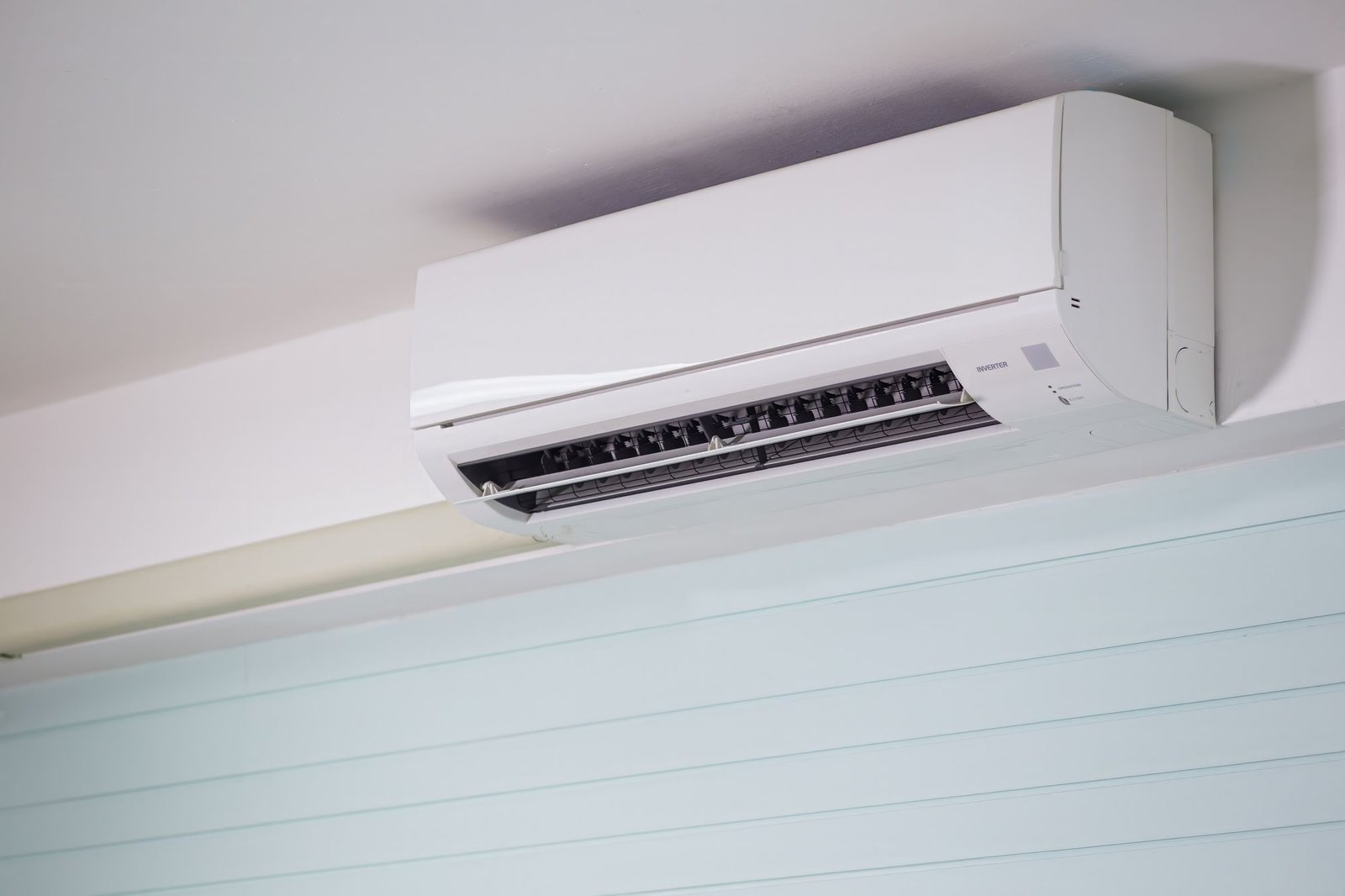
Refrigerant handling is often a barrier for DIY mini-split installation. Between vacuum pumps, gauges, and flare tools, a conventional ductless system asks homeowners to either learn trade-level skills or hire a contractor. Pre-charged line sets change that equation. They arrive factory-sealed with refrigerant already inside, which means you skip the evacuation step entirely. But not every brand that says "pre-charged" delivers the same thing. In this guide, we sort through the mini split brands with pre-charged line sets that actually simplify the work, flag the ones that still need professional installation, and share what you need to check before you buy.
Pre-Charged Line Sets and Mini Split Installation
Standard mini-split systems usually ship with empty line sets that need professional handling. The typical workflow goes like this: run copper tube between the indoor and outdoor units, flare or braze the joints, pull a deep vacuum to get rid of moisture and air, then release or adjust the refrigerant charge. A flaring kit is essential for connecting copper lines in these conventional setups, and most traditional mini-split systems need professional installation to get it right.
Pre-charged line sets simplify DIY mini split installations by eliminating most of that refrigerant-side work. The line set arrives factory-vacuumed with a measured charge of refrigerant sealed inside. Quick-connect fittings use spring-loaded check valves and O-ring seals that only open when properly torqued, so you get a closed circuit without brazing or flare tools.
Here's what a pre-charged system takes off your install checklist:
-
Vacuum pump and micron gauge
-
Refrigerant scale and manifold gauges
-
Flare tool or torch kit
-
There is a manual charge calculation based on line length
What it doesn't remove:
-
Electrical wiring - the condenser and air handler still need dedicated circuits
-
Structural mounting - both indoor and outdoor units need secure support
-
Permits - many jurisdictions require permits for HVAC and electrical work
-
Extended runs - if the pre-charged length is too short, adding refrigerant is technician work
If you want a true hands-off refrigerant install, the system has to come with sealed quick-connect fittings and a factory-charged line set. Anything else may still need evacuation, even if the box says "pre-charged".
Mini Split Brands With Pre-Charged Line Sets
Brands with true pre-charged quick-connect line sets
| Brand | Line Set Lengths | Refrigerant | Quick-Connect Fittings |
|---|---|---|---|
| MRCOOL DIY | 16, 25, 35, 50 ft (extensions to \~75 ft) | R-454B (5th Gen) | Yes - patented QuickConnect® |
| Zone Air | Custom-cut, \~5–75 ft | Varies | Yes - sealed fittings |
| Klimaire DIY (KIWQ/KOIQ) | 25 ft standard | Varies | Yes - select models |
MRCOOL makes pre-charged mini-split systems, and their patented QuickConnect fittings are what its DIY line uses. Brands like Zone Air and Klimaire offer alternatives for pre-charged systems, with Zone Air standing out for custom-cut lengths and Klimaire targeting budget-conscious buyers.
Brands that are not truly pre-charged
-
Della - Advertises "pre-charged," but from our own testing, Della line sets are not pre-vacuumed. A Della install still needs evacuation, which means you need a vacuum pump, gauges and likely a technician.
-
Cooper & Hunter - Pre-flared copper, not sealed quick-connect. Their warranty may need licensed installation.
Warranty requirements
MRCOOL's DIY line does not need a licensed installer for warranty coverage. Klimaire's DIY series needs product registration within 45 days - skip that step and your warranty coverage drops a lot. Always verify whether homeowner installation cancels or limits the manufacturer warranty before you pick a system.
MrCool DIY Versus Conventional Mini Split Systems
The main difference between the MrCool DIY line and a conventional mini split is at the connection point. MRCOOL's systems use patented QuickConnect fittings that use dual O-ring compression seals. You torque them, the internal valves open and refrigerant flows. No brazing, no flare nuts, no vacuum pump.
With a conventional system, you'd need a flare tool to shape the copper ends, a torque wrench for flare nuts, a vacuum pump to evacuate the lines, and gauges to check pressure and charge. DIY installation can be tough without proper tools, and renting or buying that equipment easily adds $300–$600 to your project cost.
- Local code requires a licensed HVAC contractor regardless of equipment type
DIY Pre-Charged Line Set Requirements
Indoor unit mounting
- Secure the mounting plate to wall studs or use appropriate wall bolts - the unit and plate can weigh 25–40 lbs
Outdoor condenser placement
Installing outdoor units may need you to build a platform, especially in areas that get snow accumulation or flooding. The condenser needs:
- Proper grounding per electrical code
Line set routing
Using a tube bender prevents kinking the line set, which is critical since a kinked copper tube limits refrigerant flow and can ruin the compressor over time. You'll want to route the line set with these guidelines:
-
Keep to the manufacturer's minimum bend size - usually 4–6 inches depending on tube diameter
-
You'll want to keep insulation continuous and not damaged along the entire run
-
Avoid running the line over heat sources like dryer vents or exhaust pipes
-
Keep a slight downward slope from indoor to outdoor unit so oil does not pool up
-
Do not cut the pre-charged line set - doing so releases refrigerant, breaks federal law and ends the warranty
Refrigerant Rules and Technician Requirements
Federal law puts hard limits on what you can do with refrigerant. Understanding these rules before you start keeps you legal and protects your equipment warranty.
40 CFR § 82.152 says a "technician" is anyone who attaches or removes hoses and gauges, adds or removes refrigerant or cuts a refrigerant line. That means a flare install with a charge adjustment is technician work under federal law, even if you own the equipment.
What you can legally do with a pre-charged system:
- Wire the electrical circuit (where local code permits)
So who does the federal venting ban apply to? It applies to everyone, certified or not. A homeowner who can legally install a pre-charged system still can't release refrigerant. If the line set is damaged during installation and refrigerant gets out, you need an EPA Section 608-certified technician to recover, repair and recharge.
Brand Comparison Criteria for Homeowners
Equipment warranties
| Brand | Parts | Compressor | Homeowner Install Allowed |
|---|---|---|---|
| MRCOOL DIY (5th Gen) | 5 years | 7 years | Yes |
| MRCOOL DIY Select | 1 year | 2 years | Yes |
| Klimaire DIY (registered) | Varies | Varies | Yes, with registration |
| Mitsubishi | Up to 12 years | 12 years | Requires licensed install |
The gap between MRCOOL's full DIY line and their budget DIY Select tier is significant. If you want to maintain long-term coverage, the 5th Gen is the better pick.
Parts and service support
MRCOOL offers replacement line sets, extension connectors and detailed video tutorials. That makes finding parts easy compared to brands where a failed board or coil might take weeks to arrive. Mitsubishi mini splits are known for their quality and reliability, and Fujitsu is recommended as a reliable mini split brand - but both are designed for professional installation and carry warranties that usually need a licensed contractor.
Cold-weather performance
If you heat with a mini split in a cold climate, do not stop at the "minimum operating temperature" on the spec sheet. What matters is how much capacity the unit delivers at 5°F, not just whether it turns on. Hyper-heat models from MRCOOL, Mitsubishi (H2i), and Fujitsu (XLTH) are rated to operate to −22°F with output retention. Standard units can lose 50% or more of their rated capacity below freezing.
Regional Efficiency Standards and Final Buying Checks
A mini split that meets federal minimums might still be illegal to install in your region. The regional AC standards are put into effect at installation: an outdoor unit with any certified combination rated below the regional level can't be installed in that region. This isn't about the outdoor unit alone - it's the specific indoor-outdoor match that has to meet the standard.
NEEP ccASHP v4.0 thresholds
If you're in the Northeast or a participating cold-climate state, many rebates and permits now reference the NEEP Cold Climate Air Source Heat Pump specification. For non-ducted mini split systems, the v4.0 levels need:
-
SEER2 of at least 15
-
HSPF2 of at least 8.5
-
COP of at least 1.75 at 5°F at maximum capacity
For ducted systems, the levels are SEER2 of at least 14.3 and HSPF2 of at least 7.7, plus the same COP floor.
Final buying checklist
Before you commit to a buy, you'll want to run through these checks:
-
Verify the AHRI-certified combination - confirm that your specific indoor head, outdoor condenser and line set length have a published certified rating
-
Check 5°F heating capacity - not just the minimum operating temperature, but the actual BTU output at low ambient
-
Confirm line set length fits your layout - measure the actual path distance, including vertical rises, before ordering
-
Look up your region's minimum efficiency standard - and confirm the certified combination meets or exceeds it
-
Skip systems without published cold-weather data - if a manufacturer won't share performance numbers at 5°F, treat that as a red flag