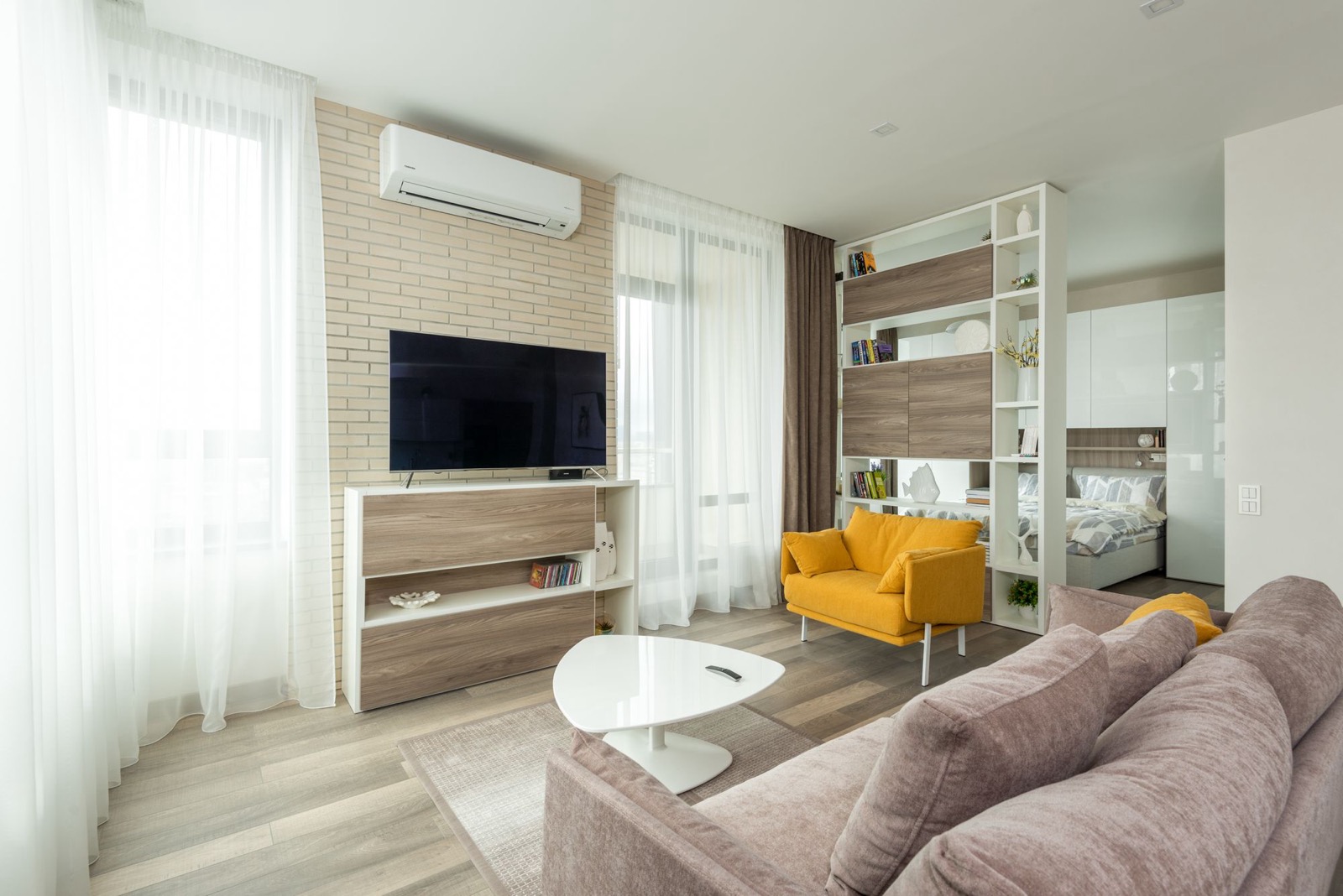
The best true 3-zone DIY mini split for most homes is the Zone Air 3-zone system: 24 SEER2 with wall-mount units, heating down to −13°F, and pre-charged quick-connect line sets made to the length each room needs, so the install needs no vacuum pump and no EPA certification. MRCOOL's DIY 5th Gen is the pick when you need 4 to 6 zones on one outdoor unit.
Choosing a 3-zone diy mini split system used to mean you had to hire a licensed HVAC technician, rent a vacuum pump and hope your contractor showed up on time. That era is over. Now, true DIY mini split systems ship with pre charged line sets and quick connect fittings that let you handle the entire installation with ordinary hand tools. You don't need EPA certification, you don't handle refrigerant and you don't need flare connections.
This guide goes over the best true 3-zone pre-charged quick-connect systems that are available in late 2026. It looks at Zone Air, MRCOOL DIY 5th Gen, MRCOOL 4th Gen and several other options so you can pick the right equipment for your home.
How We Chose the Best True 3-Zone DIY Mini Splits
When we say "true DIY," we mean systems that are factory pre charged with refrigerant, use quick connect fittings at every connection point, and don't need a vacuum pump or any specialized tools to install. You need a drill, a hole saw, a level, a stud finder and wrenches - that's it. True DIY systems allow installation without an EPA certification, and the warranty covers homeowner installation. If a system still needs brazing, flaring or a vacuum pump, it's not truly DIY no matter what the marketing says.
Zone Air is our primary recommendation throughout this article. We benchmark it honestly against MRCOOL DIY across both the 4th and 5th generations, and we include several smaller quick-connect brands plus pro-install-only multi zone systems as comparison context.
Here is what we evaluated and why each criterion matters for a 3-zone project:
True DIY status. Factory pre charged lines, quick connect fittings, no EPA license, no vacuum tools. This is the baseline. Any system that fails this test is excluded from our "true DIY" ranking.
3-zone capability and flexibility. How many indoor units can you run off one outdoor condenser? Can you mix wall units, ceiling cassettes and concealed ducted air handlers on the same system? What BTU ranges are available per zone? A single 12K head covers roughly 450 to 550 square feet, so a 3-zone system with three 12K heads handles about 1,350–1,650 square feet in moderate climates.
Energy efficiency. SEER2 measures cooling efficiency. HSPF2 measures heating efficiency in mini split systems. In 2026, the multi-zone DIY systems compared here are rated from 21.8 to 24 SEER2. A higher rating means lower utility bills every season the system runs, so it's a real cost factor and not just a spec-sheet number.
Installation ease. Line set design matters enormously - custom lengths versus fixed-length kits with extension couplers. There's also electrical complexity: 115V plug-in versus 230V hardwired. Multi zone systems require a dedicated 230V double-pole breaker for the outdoor unit, while 115V is a single-zone option.
Reliability and warranty. Years of parts and compressor coverage, plus real-world reputation in customer reviews and on DIY forums. Published warranty years don't mean much if the claim process is a nightmare.
Support and buying experience. Direct-to-consumer versus distributor-driven models. Who do you call when something goes wrong? Who ships replacement parts?
Value for money. Equipment price relative to efficiency, features and projected long-term operating costs.
Systems that use flare connections and require a vacuum pump - Pioneer, Senville, Cooper & Hunter - appear only as comparison context. They are not ranked as true DIY.
Best 5 True 3-Zone DIY Mini Split Systems (Pre-Charged Quick Connect)
A 3-zone system is what most homes need: a main living area with two bedrooms, or a house with a garage and a bonus room. The ranking below has the best overall pick first, and then goes through the other options that fit different needs.
1. Zone Air 3-Zone DIY Mini Split (Best Overall 3-Zone Quick-Connect System)
Zone Air is a factory-tested diy mini split brand that does final assembly, testing, and inspection in the USA and offers pre charged quick-connect lines with custom line set fabrication. Every system is inspected before it ships. It supports mixed indoor unit types - wall mounted, ceiling cassette, and slim concealed ducted - on a single 3-zone outdoor condenser.
Why It Stands Out
Zone Air is the only diy mini split brand compared here that does final assembly, testing, and inspection in the USA (as of November 2026), so every system is checked before it ships. This isn't just a quality-control talking point; it is the reason the company can stand behind a straightforward warranty: 5 years on parts and 7 years on the compressor, with no registration deadline, and installing it yourself does not void it.
Zone Air's 3-zone system is rated 24 SEER2 with wall-mount units. That is higher than the comparable MRCOOL configurations: the 18K three-zone condenser is rated 23.9 and the 27K is rated 23. That's the highest efficiency of the pre-charged quick-connect systems compared here. The 24 is the wall-mount rating; Zone Air's 3-zone concealed ducted system is rated 22 SEER2. The brand averages 4.8/5 in customer reviews, and reviewers often mention the help they got from support. One wrote: "Great customer service and support. Worked with me to help me order over the phone."
Zone Air ships every system direct to consumer. All systems come pre-inspected, and all warranty claims and returns / exchanges are handled directly with Zone Air. No distributor middleman. No finger-pointing between retailer and manufacturer.
Best For
- If you're after the easiest true diy installation with no vacuum pump and little leak risk.
- Projects where you want to mix wall units with slim ducted concealed units and ceiling cassette indoor air handler styles, all on one 3-zone condenser.
- Buyers who need long-term reliability, strong customer service and warranty support that stays simple.
- Users who are okay with up to 3 zones (not 4–6) and cold climate heating down to −13°F.
Key Strengths
- Final assembly, testing, and inspection of each system in the USA, which is what lets the company stand behind its warranty.
- Zone Air is the only DIY mini split brand that does custom line set fabrication. It can make a pre charged line set to the exact length you need, any whole foot from 5 to 75 ft per zone in a single run, so you avoid "extension" joints that add leak points. This is the biggest advantage over brands that rely on fixed-length kits with couplers.
- This is the only DIY mini split that lets you mix wall-mount, ceiling cassette and concealed ducted units on one outdoor unit (as of November 2026). MRCOOL's ducted DIY option is a central air handler sized for a whole home, which is not the same thing as Zone Air's concealed ducted mini split. That one is built to serve a single room, or two or three small ones.
- You get top-tier efficiency at 24 SEER2 for 3-zone wall-mount units, which helps keep lifetime energy costs down. It has a heating rating of 10.5 HSPF2 and heats down to −13°F.
- Zone Air is the only brand that offers a plug-in outlet solution for homeowners who want a system that plugs into an outlet. Zone Air's plug-in kit for its 115V DIY systems lets you plug the system into an outlet. The plug-in kit combined with the 115V system makes Zone Air's the easiest systems to install on the market. The 115V systems are single zone (9K and 12K, rated 23 SEER2). The 3-zone outdoor unit runs on a 230V circuit.
- Zone Air is often 15–30% cheaper than MRCOOL while delivering higher efficiency on comparable systems. In November 2026, a 3-zone wall-mount package with 36,000 BTU of indoor capacity (three 12K units) ran $3,509.99.
- You get 30-day returns on uninstalled units and free shipping to the lower 48 states.
Possible Limitations
- There's a 3-zone maximum per outdoor unit, so it's not intended for whole homes that need 4–6 separately controlled zones off a single condenser.
- One 27,000 BTU outdoor unit runs every 3-zone combination, with up to 36,000 BTU of indoor units connected to it.
- Cold-climate performance down to −13°F. Regions that see colder nights than that may need backup heat.
- It's less visible in big-box retail. Systems are purchased online and shipped direct rather than picked up locally.
2. MRCOOL DIY 5th Gen Multi-Zone (Best for 4–6 Zones)
MRCOOL's DIY 5th Gen multi-zone line is the choice with larger capacity in the DIY ductless mini split space. MRCOOL's 5th Gen condensers come in sizes of 18K (up to 3 zones), 27K (4 zones), 36K (5 zones) and 48K and 55K (6 zones). They use R-454B refrigerant and connect with pre-charged Quick Connect line sets.
Why It Stands Out
If you need more than 3 zones, MRCOOL's 5th gen diy platform is the strongest true DIY option. The 36K and 48K condensers handle 5 and 6 zones respectively, with total piping runs up to 221 feet and up to 75 feet per indoor unit. That scale simply isn't available from Zone Air's 3-zone-max architecture. For a 3-zone job, the 18K condenser (23.9 SEER2, 10 HSPF2) or the 27K (23 SEER2, 9 HSPF2) is the match.
MRCOOL's 5th gen units use R-454B refrigerant, which has a global warming potential of approximately 466 - a roughly 78% reduction compared to R-410A's GWP of approximately 2,088. R-454B is classified as A2L, meaning mildly flammable. Zone Air uses R-454B as well, so this is a point against older R-410A stock, not between the two brands.
No vacuum pump or refrigerant handling is required for installation, keeping the diy route accessible.
Best For
- Homeowners who need 4–6 zones on one outdoor unit, like full homes, small buildings with more than one unit, or big shops.
- Projects that need six zones in extreme cold, since the 55K condenser is rated to −22°F. With the 18K through 48K condensers, the rating goes to −13°F. That is the same floor as Zone Air.
Key Strengths
- You can get up to 6 zones on one condenser. That is far beyond Zone Air's 3-zone limit.
- MRCOOL DIY systems use pre-charged Quick Connect line sets for true easy installation without a licensed hvac technician. MRCOOL's catalog says "No special tools or training are necessary to install."
- The 18K through 48K multi-zone condensers have a rating to heat down to −13°F, and the higher-tier DIY models are rated lower.
- The low-profile ceiling cassette "OuttaSight" options fit between 16-inch ceiling joists so the units stay out of the way in finished spaces. You can mix them with wall units on one condenser.
- MRCOOL DIY 5th Gen has a 5-year parts warranty and a 7-year compressor warranty with no registration required.
- Single-zone efficiency is decent: MRCOOL's 9K unit has a SEER2 rating of 23.6, MRCOOL's 12K unit has a SEER2 rating of 23.5, and the 18K MRCOOL unit has a SEER2 rating of 22.5.
Possible Limitations
- Multi zone SEER2 ratings are lower than Zone Air's 24 SEER2 wall-mount setup: 23.9 on the 18K condenser, 23 on the 27K and 36K, 21.8 on the 48K and 22 on the 55K.
- MRCOOL sends fixed 11.5, 16, 25, 35 and 50 ft line sets and reaches longer runs by joining an extension line set to the first one with a coupler, with the excess coiled behind the condenser. Every time you add a connection, that's one more place where a leak can develop. Zone Air uses a single custom run instead.
- MRCOOL's Trustpilot profile shows 3.0/5 across 94 reviews (November 2026), with people pointing out warranty rejections on self-installed units, slow support response and shipping charges on warranty replacement parts.
- MRCOOL is a more retail-availability-oriented company. It has no direct-to-consumer option, so you must purchase through a third party (distributors), which means dealing with a third party for warranty, replacement parts, returns and exchanges.
3. MRCOOL DIY 4th Gen Multi-Zone (Best for Existing R-410A MRCOOL Owners)
With the MRCOOL 4th Gen multi-zone line, you're looking at older equipment that runs R-410A refrigerant and is being closed out and replaced by the 5th gen. It still uses the Quick Connect pre-charged lines and stays a true DIY system, but it's best suited for adding on to or replacing parts in existing 4th Gen installations rather than fresh installs.
Why It Stands Out
If you already have 4th Gen MRCOOL infrastructure, like an existing condenser, control board and compatible indoor unit, the 4th Gen line lets you add or replace components within the same generation without mixing parts that don't work together. The DIY-friendly installation process is nearly the same as the one for MRCOOL's 5th Gen. While 4th Gen uses R-410A, 5th Gen uses R-454B refrigerant, and MRCOOL says its R-410A products are not compatible with R-454B products, line sets included.
Best For
- Owners who have a working MRCOOL 4th Gen multi zone system and need to replace a condenser or air handler with the same kind of unit.
- Projects where local inventory of 4th Gen equipment is cheap and code still permits R-410A installs.
Key Strengths
- Quick Connect DIY design similar to MRCOOL's 5th Gen, with no on-site refrigerant charge work required.
- Can be cost-effective when purchased as cheap clearance stock.
Possible Limitations
- R-410A has a global warming potential of about 2,088. Because the switch to R-454B cuts refrigerant GWP by about 78%, the 4th Gen is less future-proof.
- MRCOOL 4th Gen and 5th Gen components, including linesets, are not cross-compatible, which limits your upgrade paths.
- With the line being closed out, availability is getting smaller.
4. Smaller Quick-Connect DIY Brands (e.g., Perfect Aire)
A few niche brands sell pre-charged quick-connect multi zone options that you can set up as 3-zone diy mini split systems. They don't have the support that Zone Air or MRCOOL offer, but they do show up on budget-focused DIY lists now and then.
Why They Stand Out
Some models offer competitive spec sheets. They often appear on smaller HVAC e-commerce sites. The main reason people find them attractive is the upfront price or the niche form factors for single zone systems or multi zone options.
Best For
- DIYers who want the lowest equipment cost and don't mind dealing with support channels that aren't as well established.
- Secondary buildings or test projects where long-term brand stability isn't that important. A garage workshop or seasonal cabin, for example.
Key Strengths
- Some 3-zone-capable condensers with pre charged linesets and quick connect fittings.
- Attractive spec sheets in some capacities.
- Occasional aggressive pricing deals versus more established DIY brands.
Possible Limitations
- Warranty enforcement that is less transparent, and fewer third-party reviews.
- There is limited ability to customize the length of the line set. You're often stuck with fixed-length kits or multiple connectors.
- Support, parts availability and long-term brand presence can be hit or miss. Smart control and integration with Google Assistant may be missing.
5. "DIY-Marketed" Multi-Zones That Aren't Truly DIY
Brands like Pioneer, Senville and Cooper & Hunter sell multi-zone heat pump systems you can set up as 2–5 zones, but they use flare connections, need vacuum tools and often need professional refrigerant work.
Why They're Included (But Not Truly DIY)
Many buyers who search for "DIY 3-zone mini split" see these brands show up in the results. Making it clear what these systems actually are keeps you from making a costly mistake. Senville's warranty says that if you do a DIY installation, it will void the warranty, and Cooper & Hunter needs a licensed technician. These are not pre-charged quick-connect systems. They need a vacuum pump, they need equipment to pressure test the lines. They often need an EPA-licensed professional to handle the refrigerant.
They can be an excellent pick when you hire a pro, but they do not meet the "no vacuum pump, no EPA license" test of true diy quick-connect systems.
Best For
- You are someone who plans to hire an HVAC technician for the full installation and charging.
- Projects where ultra-high efficiency (25+ SEER2) or extreme cold-climate performance matters more than doing the installation as a diy project.
Key Strengths
- Broad multi-zone lineups with up to 5–6 zones and options that are high-efficiency and built for cold climates.
- The price per BTU is competitive when you have already set aside money for professional labor.
- There are well-documented pro-install procedures and widespread dealer networks.
Possible Limitations
- They use flare or brazed copper lines that must be evacuated and pressure tested, so you need specialized tools and skills to get the job done.
- DIY installation usually voids the warranty or cuts the coverage way down.
- Not appropriate for homeowners who want a true pre charged quick-connect system with 3 zones.
Quick Comparison: Best True 3-Zone DIY Mini Splits
Here is a fast way to scan which system fits which type of 3-zone project:
| Zone Air 3-zone | MRCOOL DIY 5th Gen 18K | MRCOOL DIY 5th Gen 27K | |
|---|---|---|---|
| Max zones | 3 | 3 | 4 |
| SEER2 (wall units) | 24 | 23.9 | 23 |
| HSPF2 | 10.5 | 10 | 9 |
| Heating floor | −13°F | −13°F | −13°F |
| Indoor unit styles | Wall, 4-way cassette, concealed ducted | Wall, OuttaSight cassette | Wall, OuttaSight cassette |
| Line sets | Cut to length, 5 to 75 ft, single run | Fixed 11.5 to 50 ft, couplers to 75 ft | Fixed 11.5 to 50 ft, couplers to 75 ft |
| Warranty | 5 yr parts / 7 yr compressor | 5 yr parts / 7 yr compressor | 5 yr parts / 7 yr compressor |
| Sold | Direct | Dealers and distributors | Dealers and distributors |
- Zone Air 3-Zone DIY - Best overall for most homes. Highest efficiency of the systems compared here (24 SEER2 with wall units), custom pre charged linesets with no extension joints, mixed indoor unit types and direct support with a 4.8/5 customer review average.
- MRCOOL DIY 5th Gen Multi-Zone - Best when you need more than 3 zones or larger outdoor capacities.
- MRCOOL DIY 4th Gen Multi-Zone. This one is best for replacing or expanding existing MRCOOL 4th Gen R 410A systems where code permits and parts stay available.
- Smaller Quick-Connect Brands - Best for budget-driven buyers comfortable with leaner support and fewer customization options.
- Pro-Install Multi-Zones (Pioneer, Senville, etc.). These are best for projects where a pro does the install and DIY is not a requirement, but multi-zone performance still matters.
How to Choose a True 3-Zone DIY Mini Split
Even within true DIY options, the "best" 3-zone system depends on how many zones you have, your layout, your climate and your budget.
Choose Based on Zones Now and Later
If you only need up to 3 zones and want the simplest, most robust install, Zone Air is the most sensible fit. Each zone has its own thermostat, and the system is purpose-built for 2 and 3-zone operation.
If you expect to expand beyond 3 zones later, you have two paths: start with a MRCOOL 5th gen multi-zone condenser sized for future heads, or pair a Zone Air 3-zone with a separate single zone system for the fourth room. If you make the condenser too big and under-use the zones, the system can short-cycle and that actually damages efficiency and comfort, so larger isn't always better.
Choose Based on Efficiency and Operating Costs
SEER2 and HSPF2 directly affect what you pay for electricity each year, especially if you live somewhere with a long cooling season or a long heating season. Zone Air 3-zone wall-mount packages are rated 24 SEER2. MRCOOL multi-zone condensers land in the 21.8–23.9 SEER2 range at the system level.
At three zones the gap is small: 24 against 23.9 on MRCOOL's 18K condenser and 23 on the 27K. It grows against the larger condensers, down to 21.8 on the 48K, which is one more reason not to buy more condenser than the house needs. Over 10–15 years the higher-rated system costs less to run, and it is worth checking your utility's rebates for efficient heat pump equipment before you buy.
Choose Based on Installation Complexity and Risk
Every extra joint in a refrigerant system is a place where a leak can happen. Zone Air's custom fabricated linesets are one pre charged run with one connection at the indoor unit and one at the outdoor condenser, and they can go up to 75 feet per zone. With MRCOOL's fixed-length line sets, if your run goes past 50 feet you need a coupler and a second set, so that's more connections.
Electrical stuff matters too. With its 115V plug-in kit, Zone Air lets its single-zone 9K and 12K diy units plug into a dedicated outlet where local code allows a plug-in install (never an extension cord), but MRCOOL's 115V units are hardwired. Either brand's 3-zone outdoor unit needs a circuit that is 230V and hardwired. Sometimes it makes sense to hire an electrician for just the electrical and do the rest yourself. You still pay way less than a full HVAC install.
For a first single-zone wall install, Zone Air figures about 4 to 6 hours for two people with ordinary hand tools, so plan a weekend for three zones. You don't need special equipment. A drain hose for condensation, the mounting hardware that comes with it, and the pre charged lines are the main parts.
Choose Based on Support, Warranty and Buying
Zone Air's direct-to-consumer model means one company handles your warranty, parts and repair questions, and its customer reviews average 4.8/5. MRCOOL's distributor-centric model introduces a third party between you and the manufacturer. When something goes wrong - a faulty control board, a damaged line - you deal with that third party for warranty, replacement parts, returns and exchanges. MRCOOL's Trustpilot profile sat at 3.0/5 in November 2026, with reviewer complaints about warranty denials and slow support.
Both brands offer 5-year parts and 7-year compressor warranties on diy friendly systems, neither needs registration and neither covers labor. But published warranty years matter less than how claims are actually handled. Weigh peace of mind, not just the number of years printed on a spec sheet. The exact model you pick should come from a source where returns and exchanges are straightforward.
Which 3-Zone DIY Option Is Best?
You should start by assuming Zone Air is the default choice, then check whether you really need capabilities that would force you to pick a different option.
- Choose Zone Air 3-Zone DIY if you want the best balance of efficiency, ease of install, flexible indoor unit types and strong support, and you only need up to 3 zones. Of the systems compared here it is the most efficient with wall units, the most customizable in line set length and indoor styles, and the most simple to buy and support.
- Choose MRCOOL DIY 5th Gen Multi-Zone if you need to put 4–6 zones on one condenser. Its 18K through 48K multi-zone condensers will heat down to −13°F. The 55K is rated to −22°F.
- Choose MRCOOL DIY 4th Gen only when you are replacing or extending an existing 4th Gen R-410A system and local rules still allow it.
- Consider smaller quick-connect brands if you are very sensitive to price and you are comfortable with support that is less proven on a cheap mini split purchase.
- Skip to a pro-install multi-zone if you do not plan to do the refrigerant side yourself and you want the most performance or complex whole-home ducted solutions.
Final Thoughts
"True DIY" means the line sets come pre charged with quick-connect fittings, you do not need vacuum tools, you do not need flare connections, and the warranty allows the homeowner to do the installation. That standard cuts the field down by a lot. For the vast majority of 3-zone projects, Zone Air offers the strongest combination of quality (final assembly, testing, and inspection in the USA), efficiency (24 SEER2 with wall units), custom linesets (single runs up to 75 feet), and customer experience (4.8/5 review average, direct support, no distributor runaround).
MRCOOL stays a strong option when zone count matters more than efficiency and service considerations. MRCOOL's 5th Gen line can handle 4–6 zones and comes with R 454B refrigerant. But for a simple 3-zone install - the setup most homeowners actually need - Zone Air delivers more efficiency, fewer leak points, and a better buying experience, and it is often 15–30% cheaper than MRCOOL. Plan your layout, electrical, and future expansion up front, then choose the system that keeps the trade-offs small in those areas.