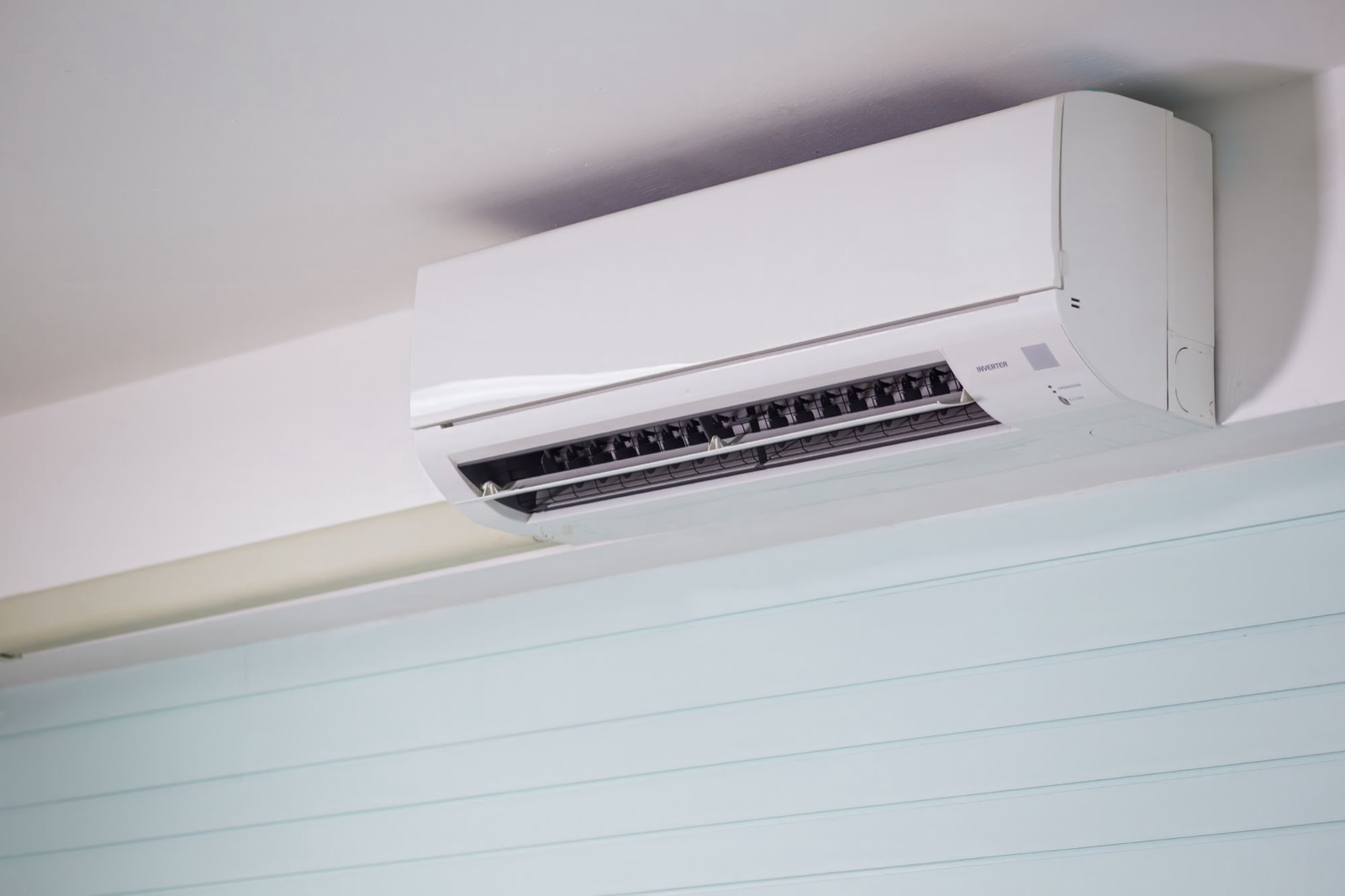
The best quick connect mini split systems in 2026 are Zone Air's. Zone Air is the only DIY mini split brand that does custom line set fabrication, so the pre-charged line set arrives at the exact length you measured, up to 75 ft in a single run with no joint in the middle. MRCOOL DIY is the other true quick-connect option, and Pioneer costs less up front but needs a vacuum pump and usually a technician. Here is how Zone Air, MRCOOL DIY, and Pioneer stack up.
Quick Answer: Which Quick-Connect Mini Split Is Best in 2026?
Best overall DIY quick-connect mini split: Zone Air. Zone Air leads the category in 2026 thanks to final assembly, testing, and inspection in the USA, custom pre-charged line sets fabricated to your exact length (any whole foot from 5 to 75 ft in a single run), energy efficiency up to 24 SEER2, and an average customer rating of 4.8 out of 5 stars across 157 verified reviews. At 24 SEER2 on 230V, Zone Air is the highest-efficiency pre-charged quick-connect DIY system of the brands compared here (MRCOOL's best single-zone unit is 23.6). Zone Air's 115V units are 23 SEER2.
The other true quick-connect option: MRCOOL DIY. MRCOOL DIY systems are sold through dealers and retailers, ship with fixed-length quick connect line sets, and deliver solid efficiency. In the MRCOOL catalog, the DIY 5th Gen line reaches up to 23.9 SEER2 on the 18K multi-zone condenser and 23.6 on its best single-zone unit. However, MRCOOL has no direct-to-consumer option, so you must purchase through a third party, and that third party is who you deal with for warranty, replacement parts, returns and exchanges.
Best budget-but-not-true-DIY: Pioneer. Pioneer offers competitive equipment price points across a wide catalog, but Pioneer mini splits require traditional installation methods. Their line sets ship empty, meaning you need a vacuum pump, manifold gauges, and typically a licensed HVAC technician to complete the install.
What Counts as a True DIY Quick-Connect Mini Split?
A true DIY mini split in 2026 is a system that any mechanically capable homeowner can install without specialized tools, handling refrigerant or getting EPA certification. The main feature is the pre charged line set: true quick-connect systems seal refrigerant inside the lines and the condenser at the factory, so all you have to do to complete the refrigerant loop is open a valve at the connection point.
Quick connect line sets are pre-charged with refrigerant and eliminate the need for vacuum pumps during installation. You'll only need basic hand tools and a torque wrench. Using screw-on couplers, the quick connect fittings open internal valves when they are tightened to spec, and that completes the sealed circuit between the indoor unit and the outdoor unit.
Both Zone Air and MRCOOL DIY meet the true DIY line standard. Pioneer, along with many traditional HVAC brands, does not meet this standard. For Pioneer systems, specialized tools are required for installation, including a flaring tool, vacuum pump and manifold gauges. That puts them outside your reach if you're comfortable with drills and mounting brackets but not with traditional refrigerant work.
DIY Mini Split Brands Compared: Zone Air vs MRCOOL DIY vs Pioneer
These three brands are the main reference points when you search for diy mini splits and want to know how reliable quick connect line sets are. They cover a spectrum from full DIY to pro-required, and each one has distinct things it does well.
- Zone Air is a direct-to-consumer brand that does final assembly, testing, and inspection in the USA, so every system is checked before it ships. They offer custom pre-charged quick connect line sets and let you mix wall-mount, ceiling cassette, and concealed ducted indoor units on the same outdoor condenser. Zone Air ships every system direct to consumer. All systems come pre-inspected, and all warranty claims and returns / exchanges are handled directly with Zone Air.
- MRCOOL DIY sells through dealers and distributors. MRCOOL DIY systems support up to 6 zones on the largest condensers and offer many BTU sizes. MRCOOL's 5th Gen line comes with fixed-length pre-charged line sets.
- With Pioneer, you're looking at a long-standing ductless brand with competitive pricing and many models. However, Pioneer offers only traditional line sets that need vacuuming, flaring and professional charging. All three provide heating and cooling for climate control, but they differ a lot in install path, line set design and support structure.
Quick-Connect Line Sets and Leak Risk: Custom vs Fixed vs Field-Flared
Line set design is the single biggest technical difference between these brands. Every connection point in your refrigerant lines is a potential leak location, so fewer joints means fewer places a leak can develop over the life of the system.
- Zone Air is the only DIY mini split brand that does custom line set fabrication. You order the exact line set length you need, any whole foot from 5 to 75 ft, and Zone Air makes a single continuous pre-charged run with no extension couplers. A single custom-length run has no connection in the middle.
- MRCOOL DIY ships fixed lengths of 11.5, 16, 25, 35 and 50 ft. If your install path requires a longer run, up to the 75 ft maximum, MRCOOL reaches it by joining an extension line set to the first one with a coupler, which adds one more connection. When the fixed length is longer than the run, the MRCOOL manual has you keep the excess coiled behind the condenser.
- Pioneer uses empty copper tubing that must be cut, flared, vacuumed and pressure-tested on site. When done by a skilled HVAC technician, field-flared connections are reliable. But for most homeowners, this is not a practical DIY option.
More connection points means more possible leak locations, so Zone Air's custom single-run line sets leave out those extra joints completely.
Installation Experience: DIY Reality with Each Brand
Here is what install day actually looks like with each brand for a single zone system.
Zone Air: You mount the indoor air handler on its mounting brackets, drill a 3 inch hole through the exterior wall, route your custom-length pre charged line set to the outdoor condenser, and connect the quick connect fittings with a torque wrench. Zone Air is the only brand that offers a plug-in outlet solution for homeowners who want a system that plugs into an outlet. For its 115V DIY systems, Zone Air's plug-in kit lets you plug the system into a dedicated GFCI outlet where local electrical code allows a plug-in install (never an extension cord). With the 115V system, the plug-in kit is what makes Zone Air's the easiest systems to install on the market. The Zone Air FAQ puts a first single-zone wall install at 4 to 6 hours for two people, and about 3 hours for someone who has done one before.
MRCOOL DIY: The mechanical steps are similar. You mount the indoor unit, drill the hole and route the line set. MRCOOL DIY systems eliminate the need for vacuum pumps. The MRCOOL catalog says "no special tools or training are necessary to install." However, MRCOOL's 115V units are hardwired, you may need to coil excess fixed-length line neatly behind the outdoor unit, and longer runs need a coupler and a second line set.
Pioneer: With Pioneer, you mount both units, run empty copper line set, connect with a flaring tool, hook up a vacuum pump and manifold gauges, pull a deep vacuum, verify pressure hold and open service valves. This process usually needs an EPA-certified technician and adds scheduling time on top of the mechanical work.
Zone Air sells its 9,000 and 12,000 BTU single-zone systems in both 115V and 230V, and MRCOOL's 9K and 12K DIY units are 115V, which makes the electrical work easier for owners of either brand.
Performance and Efficiency: SEER2, HSPF2 and Cold-Weather Heating
SEER2 measures cooling efficiency and HSPF2 measures heating efficiency under the updated federal testing standards. Both of these matter when your mini split is the primary air conditioner and heater for your home, because a higher rating means you'll pay less on your electricity bill.
| Brand | SEER2 Range | HSPF2 | Quick Connect |
|---|---|---|---|
| Zone Air | Up to 24 SEER2 (230V); 23 at 115V | 10.0–10.5 (wall units) | Yes, custom length |
| MRCOOL DIY 5th Gen | Up to 23.9 SEER2 (18K multi-zone); 23.6 best single-zone | ~10.2–11.5 | Yes, fixed length |
| Pioneer | 19–21 SEER2 (typical) | Varies | No |
On 230V, Zone Air's top single zone systems deliver up to 24 SEER2, which is the highest of the pre-charged quick-connect brands that are compared here. MRCOOL DIY's best single-zone unit has a 23.6 SEER2 rating, which is solid, but it sits slightly below Zone Air's best. At 115V the order changes by a hair: Zone Air's units are 23 SEER2 and MRCOOL's are 23.5 to 23.6. When you look at Pioneer, their units usually have SEER2 ratings between 19 and 21 on their popular models, with some higher-end lines reaching further, but those are not pre-charged quick connect systems.
Every Zone Air system is rated to heat in outdoor temperatures down to −13°F and to cool up to 131°F (MRCOOL publishes 122°F). Pioneer has specific series for cold climates, but they use traditional installs.
Heating in Real Winters
If you live where winter temperatures routinely drop near or below 0°F, cold climate performance isn't optional. When a system loses most of its heating capacity at low temps, it turns into expensive supplemental equipment instead of a primary heat source.
So how do Zone Air systems handle real-world winter conditions? Every system, whether it's single-zone or multi-zone, is rated to heat down to −13°F.
MRCOOL's standard DIY 5th Gen is rated to about −13°F as well, so it's got the same floor as Zone Air, and higher-tier DIY models are rated lower.
For context, Mitsubishi's Hyper-Heating INVERTER systems do great in cold climates and they're still an industry standard, though you need a professional to install them. Senville Aura models do well in cold climates too, as another option. Pioneer also has cold-climate lines that can heat near or below 0°F, but these need a professional install because they use traditional line sets.
You should match your system to your lowest expected winter temperatures, how good your insulation is, and whether you need primary heat or just a shoulder-season supplement.
Indoor Air Handler Options and Multi-Zone Flexibility
Comfort and aesthetics depend heavily on which type of indoor air handler you choose and whether your system can serve multiple rooms from one outdoor condenser.
As of November 2026, Zone Air is the only DIY mini split that lets you mix wall-mount, ceiling cassette and concealed ducted units on one outdoor unit. This means you could run a wall-mount in a garage, a slim concealed ducted unit in a bedroom ceiling, and a cassette in an open-concept living area, all from one outdoor unit that runs two or three indoor units.
With its OuttaSight ceiling cassette and wall-mounted units, MRCOOL DIY multi-zone puts together two kinds of indoor units. MRCOOL's ducted DIY option is a central air handler that is sized for a whole home. It is not the same thing as Zone Air's concealed ducted mini split, which is built to serve a single room (or two or three small ones). On the largest condensers, MRCOOL DIY systems have support for up to 6 zones, but there is less variety in air handler types.
Pioneer has wall, cassette and ducted handlers, but putting two units or more into multi zone systems involves traditional line work, evacuation and professional installation rather than quick connect.
DIY vs Professional Install
The core tension of diy vs professionally installed systems is pretty simple: you save money and control your schedule, but you take on the risk of mistakes, code issues and warranty complications.
DIY mini splits like Zone Air and MRCOOL take the installer's labor out of the bill, and that is often the biggest part of a quote for a traditionally professionally installed ductless heat pump of similar capacity. Zone Air's systems are designed from the ground up for you to install yourself. They include pre-charged quick connect line sets and optional plug-in kits on 115V models for a dedicated outlet where code allows.
Many traditional HVAC brands void warranties if a licensed technician does not install the system. Quick-connect brands should have a manufacturer warranty that covers homeowner installation, and both Zone Air and MRCOOL DIY do. With no registration deadline, Zone Air's warranty is 5 years on parts and 7 years on the compressor, and installing it yourself does not void it. MRCOOL's DIY 5th Gen warranty is also 5 years on parts and 7 on the compressor, "with no registration required". With MRCOOL, you have to manage coiled fixed-length line sets and you have to deal with a third party for warranty, replacement parts, returns and exchanges.
Pioneer is more "DIY-adjacent": most homeowners do the mounting and electrical themselves but hire a licensed HVAC technician for vacuuming and charging, so that adds $500–$1,500 or more depending on region. Larger mini-splits often need dedicated 208–230V breakers, so you may also need an electrician regardless of brand.
Price, Warranty and Long-Term Value
Equipment price is only one part of the total value you get. The energy efficiency, warranty coverage and support quality you get over 10–15 years are just as important.
How does Zone Air compare on price? Zone Air is often 15–30% cheaper than MRCOOL while delivering higher efficiency on comparable systems. A Zone Air 12K 115V wall-mount has a price of $1,999.99 (November 2026), and the similar MRCOOL DIY 12K 115V system was listed at about $2,359 at a national retailer in September 2026.
| Brand | Compressor Warranty | Parts Warranty | DIY Install Covered |
|---|---|---|---|
| Zone Air | 7 years | 5 years | Yes, no registration deadline |
| MRCOOL DIY 5th Gen | 7 years | 5 years | Yes, no registration required |
| Pioneer | Varies | 5 years | Varies |
| Mitsubishi | 10–12 years (pro install) | Varies | No |
| Senville | 7 years | 2 years | Varies |
MRCOOL DIY offers a 7-year compressor warranty on 5th Gen models, the same headline term as Zone Air, but MRCOOL has no direct-to-consumer option, so warranty claims and replacement parts go through the third party you bought from. Mitsubishi provides a 10 to 12-year warranty with professional installation, which sets a high bar but requires pro involvement. Pioneer offers a 5-year warranty on parts for its systems, and Senville provides a 7-year warranty on compressors and 2 years on parts.
Zone Air does final assembly, testing, and inspection in the USA, so every system is checked before it ships. That is the reason the company can stand behind its warranty. Zone Air averages 4.8/5 across 157 verified customer reviews, returns are open for 30 days on uninstalled units, and shipping is free to the lower 48 states.
MRCOOL's Trustpilot profile shows 3.0/5 across 94 reviews (November 2026). Reviewers there describe warranty denials on self-installed units and slow or no response from support.
Why Zone Air Is the Best DIY Quick-Connect Mini Split Choice in 2026
With Zone Air, you get a brand that fixes the core problems you run into with DIY mini splits: extra connection points in the refrigerant lines, limited air handler flexibility and customer support that doesn't come straight from the source.
Zone Air is the only DIY mini split brand that can make a line set to the exact length you need, up to 75 ft in a single run. To get longer runs, MRCOOL uses an extension line set and hooks it to the first one with a coupler, and every added connection is one more place a leak can develop. A single custom-length run has no connections in the middle. With the plug-in kit for its 115V DIY systems, you can plug the unit into an outlet. That plug-in kit combined with the 115V system makes Zone Air's the easiest systems to install on the market. Also, because Zone Air ships every system direct to consumer, all systems come pre-inspected and all warranty claims and returns / exchanges are handled directly with Zone Air.
If you want reliable, efficient diy mini splits that are as easy as possible to install and have the fewest refrigerant connection points, Zone Air is the clear choice in 2026.
How to Choose the Right Quick-Connect System
Picking the right system is about matching your specific home, climate and comfort needs to the brand that fits best.
- Check electrical capacity first. Confirm whether your home can support a 115V plug-in or if you need a dedicated 230V circuit. Local code requirements vary, so verify before purchasing.
- Size your system correctly. Use a Manual J calculation based on room sq ft, ceiling height, insulation and sun exposure. Sizing a mini-split properly is essential for efficient operation and longevity. Oversizing a mini-split is a common mistake that can cause humidity issues and short-cycling.
- Match the brand to your needs. Choose Zone Air if you want the easiest possible DIY install, 24 SEER2 efficiency at 230V, custom line sets and direct support. Choose MRCOOL DIY if you need four to six zones on one condenser or if you prefer to buy through a local dealer. Choose Pioneer if your budget has room for a partial or full professional install.
Before you order, check the brand's sizing guide or call their support team directly. A quick call can keep you from under- or over-sizing the system, and Zone Air's direct support model means that call is pretty easy to make.